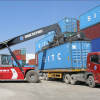
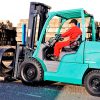
What Is a Container Handler? Understanding the Differences Between Reach Stackers, Empty Container Handlers, and Container Forklifts Vietnam’s logistics and maritime transportation industry is experiencing remarkable growth, resulting in an enormous volume of cargo that must be handled daily at seaports, inland container depots (ICDs), and warehousing facilities. To maintain efficient, safe, and uninterrupted cargo […]
Container Handler Vibrating During Lifting: Technical Causes and Corrective Solutions In port operations and logistics yards, vibration or shaking of container handling equipment—especially Reachstackers and heavy-duty forklifts—is not only uncomfortable for operators but also a serious warning sign of potential mechanical failure. If left unresolved, excessive vibration can lead to container drops, mast or boom […]
Types of Container Handler Tires: An Expert Guide to Pros, Cons, and Selection In the bustling environments of seaports, depots, and logistics centers, container handlers (Reachstackers) are the backbone of the entire operation. Operating continuously under loads of tens of tons, every component of these machines plays a critical role. Among them, the tires—the […]
The Most Common Types of Forklifts in Modern Logistics In the relentless pace of the global supply chain, logistics and warehouse management serve as the lifeblood, determining the success or failure of a business. One of the greatest challenges every warehouse faces is how to optimize space, accelerate material handling, and ensure absolute safety. The […]
For small-scale warehouses, supermarkets, or production workshops, optimizing space and operational efficiency presents a significant challenge. The reliance on traditional manual hand pallet jacks not only curtails labor productivity but also introduces potential safety risks. Conversely, investing in a full-sized counterbalance forklift is often not feasible due to spatial and financial constraints. In this context, […]
What is a Container Forklift? Detailed Comparison of Reach Stacker vs. Forklift Handler Are you managing a warehouse, a dry port, or a factory and facing the decision to invest in a container forklift? Choosing the wrong equipment between a Reach Stacker and a Forklift Handler could cost you billions in operational expenses and significantly […]
Comparison of Reach Stacker, Reach Truck, and Pallet Truck: Which is Best for Your Warehouse? When deciding which type of forklift to use for your specific needs, choosing the wrong equipment can lead to significant investment losses and disrupt your entire operation. Among the numerous types of forklifts, three commonly compared options are […]
Cost Comparison: Purchasing New, Used, and Long-Term Leasing of Container Forklifts 1. Introduction In the logistics industry, container forklifts are critical equipment for handling and transporting containers at ports, warehouses, or distribution centers. However, deciding between purchasing a new container forklift, acquiring a used one, or opting for long-term leasing poses a significant challenge for […]
Which Type of Vehicle Should Be Chosen to Lift a 40-foot, 30-ton Container? As the demand for goods transportation continues to rise, lifting large and heavy objects becomes a significant challenge. Specifically, lifting a 40-foot container weighing 30 tons is not just a simple task but also demands precision, safety, and most importantly, the selection […]
Guide to Buying Forklifts for Warehouses Forklifts are indispensable equipment in warehouses, optimizing the process of transporting and handling goods. However, choosing the right forklift that suits your needs and budget is not a simple task. Why Are Forklifts Important for Warehouses? Motorized forklifts play a central role in warehouse and production operations: […]
Guide to Buying a Forklift: Understanding the Most Important Technical Specifications Are you facing the decision of investing in a forklift for your business? Amidst countless options, how do you ensure you choose the right forklift that suits your needs, optimizes work efficiency, and delivers the best return on investment (ROI)? The answer lies in […]
Trends in New Technology Applications in the Forklift Industry As logistics and warehouse management continue to evolve, the forklift industry is experiencing a breakthrough thanks to technological advancements. From Automated Guided Vehicles (AGVs) to Artificial Intelligence (AI) and lithium-ion battery-powered electric forklifts, these trends not only improve operational efficiency but also shape the future of […]
The Most Reputable Forklift Brands Today Forklifts are essential equipment in industries, logistics, and warehousing. Choosing a reputable forklift brand not only ensures operational efficiency but also optimizes costs and enhances safety. In this article, we introduce the top 5 most trusted forklift brands today—Toyota, Linde, Kalmar, Komatsu, and Cat—along with their strengths and standout […]
Occupational Safety When Using Forklifts: Essential Regulations to Know In industrial environments such as warehouses, factories, or construction sites, forklifts have become indispensable tools due to their ability to quickly and efficiently transport and lift goods. However, if not operated correctly, forklifts can pose significant risks, leading to serious workplace accidents that affect both people […]
Solutions for Selecting Forklifts for Cold Storage Cold storage plays a crucial role in the supply chain of numerous industries, ranging from food and pharmaceuticals to chemicals. Managing and operating cold storage facilities requires specialized equipment, particularly forklifts, to ensure efficiency and safety. In this article, we will introduce forklift solutions for cold storage, helping […]
Sale and Rental of Container Reach Forklifts – Samcovina’s Optimal Solution In the context of the rapidly growing logistics and import-export industries, the demand for container forklifts, especially container reach forklifts, has become a key factor in ensuring efficiency in loading, unloading, and retrieving goods. With years of experience in providing lifting equipment solutions, Samcovina […]
Forklift Solutions for the Food and Beverage Industry The food and beverage (F&B) industry is one of the sectors that demands precision, efficiency, and strict adherence to hygiene standards in every operation. From production to storage and distribution, cargo management not only needs to be fast but also to ensure absolute food safety. This is […]
Detailed Analysis of Leading reachstacker Brands in the Market Container-handling forklifts play an indispensable role in logistics, seaports, and warehousing, where performance and durability are key to success. With a wide array of renowned forklift brands available, choosing the right product can be a significant challenge. In this article, we provide a detailed analysis of […]
Revealing 10 Ways to Optimize Forklift Performance in Logistics Environments Did you know that forklifts play a critical role in the logistics industry, but operating them efficiently is always a challenging task? From selecting the right type of forklift, training professional staff, to regular maintenance and applying advanced technology, there are many factors that affect […]
Forklift Operational Costs and Optimization Strategies Mechanical forklifts are indispensable equipment in industries, warehousing, logistics, and manufacturing sectors, significantly enhancing labor productivity. However, alongside their substantial benefits, forklift ownership and operation also entail considerable expenses. Understanding and effectively controlling these costs is the key to optimizing business operations. This analysis will provide a detailed examination […]
Top 10 Common Forklift Operation Errors and How to Fix Them Safe and efficient forklift operation is crucial to ensure productivity, work efficiency, and prevent unfortunate workplace accidents. Although forklifts are a powerful tool in loading, unloading, and transporting goods, if operated incorrectly, they can cause serious consequences. Below are 10 common mistakes when operating […]
Calculating ROI When Investing in Forklifts for Businesses Optimizing logistics operations and warehouse management is key for businesses to improve production and business efficiency. Investing in forklifts is one of the effective solutions to help businesses achieve this goal. However, before making an investment decision, businesses need to carefully consider the cost and benefit factors. […]
Guide to Choosing Container Handling Forklifts In the modern logistics and warehousing industry, container handling forklifts play an indispensable role. These machines optimize the loading and unloading processes, significantly saving time and labor. This article will guide you on how to the most suitable container handling forklift for your business needs, ensuring operational efficiency and safety. Overview of Container Handling Forklifts Container handling forklifts are specialized equipment designed to lift, lower, and transport containers in ports, warehouses, and logistics centers. They are capable of handling heavy containers, facilitating quick and efficient cargo operations. Common types of container handling forklifts include: – Reach Stackers – Heavy Forklifts – Straddle Carriers The primary advantages of using container handling forklifts include increased productivity, reduced risk of cargo damage, and optimized storage space for containers. Factors to Consider When Choosing a Container Handling Forklift 1. Lifting Capacity: This is the most critical factor. You need to choose a forklift with a lifting capacity that exceeds the weight of the heaviest container you typically handle. 2. Maximum Lift Height: Determine the maximum stacking height for containers in your warehouse to select a forklift with appropriate lifting capabilities. 3. Engine Type: There are three main options—electric, diesel, and gas. Each type has its own pros and cons regarding operating costs, work capabilities, and environmental impact. 4. Size and Weight of the Forklift: Ensure that it fits within your workspace constraints and complies with your warehouse floor’s load-bearing capacity. 5. Safety Features: Prioritize models equipped with advanced safety systems such as collision sensors, cameras for visibility, and overload warning systems. 6. Maneuverability: Choose a forklift with a small turning radius and flexible movement capabilities to maximize efficiency in tight spaces. 7. Environmental Standards: Opt for models that meet the latest emission standards to minimize environmental impact and comply with regulations. Assessing Usage Needs Before making a decision, conduct a thorough assessment of your usage needs: – Volume and Frequency of Work: Determine how many containers you need to handle daily along with their average weight. – Working Environment: Consider whether your operations are indoors or outdoors as well as the surface type (concrete, asphalt, or dirt) to choose suitable tires and engine types. – Operating Costs & Maintenance: Calculate fuel costs, routine maintenance expenses, and repair costs for an overview of long-term financial implications. Comparing Brands and Models Reputable brands in the container handling forklift market include Kalmar, Hyster, Konecranes, and Liebherr. Each brand offers unique advantages in technology, durability, and after-sales service. When comparing different models of container handling forklifts pay attention to: – Work performance – Reliability & lifespan – Fuel consumption – Maintenance costs – Safety features & operator comfort Prices for container handling forklifts can range from several thousand dollars to over a million dollars depending on their capacity and features. Steps for Selecting a Container Handling Forklift 1. Create a List of Specific Requirements: Clearly define your needs regarding capacity, lift height, working environment, and budget. 2. Research & Compare Models: Gather information from manufacturers’ websites; read reviews from users as well as industry experts. 3. Consult Experts: Reach out to dealers or consultants for detailed guidance on suitable models. 4. Inspect & Test Drive Forklifts: If possible, operate different models firsthand to evaluate performance and driving comfort. Usage & Maintenance Tips for Container Handling Forklifts 1. Train Operators: Ensure that operators receive comprehensive training on driving techniques and safety protocols. 2. Adhere to Safety Regulations: Establish strict safety procedures within your operational area. 3. Schedule Regular Maintenance: Develop a detailed maintenance plan adhering strictly to schedules for optimal performance. 4. Monitor for Abnormal Signs: Train staff to recognize signs indicating maintenance or repairs are needed such as unusual noises or oil leaks. Trends in Container Handling Forklifts The forklift industry is witnessing numerous innovations: – New Technologies: Integration of AI (Artificial Intelligence) and IoT (Internet of Things) enhances operational efficiency. – Clean Energy: A growing trend towards electric or hybrid forklifts reduces emissions while lowering operating costs. – Smart Management Systems: Incorporation of fleet management software helps track performance metrics effectively while planning maintenance schedules. Conclusion Choosing the right container handling forklift is crucial for ensuring long-term operational efficiency within your business. By carefully considering factors such as lifting capacity, working environment conditions, operating costs along with technological trends; you can make an informed decision that best suits your needs. Remember that investing in high-quality container handling equipment will yield long-term benefits in productivity,safety,and cost savings!
Important Considerations When Choosing Forklifts for Your Warehouse In today’s manufacturing and logistics environment, selecting the right forklift is crucial for optimizing both performance and safety in your facility. This article aims to guide warehouse owners and technical managers through the key factors to consider when making a forklift purchase decision. Assessing Your […]
Navigating the Diverse Forklift Market: How to Make the Right Choice The forklift market has seen significant growth, offering a wide variety of types, brands, and technologies. From eco-friendly electric forklifts to powerful diesel models, and from versatile reach trucks to compact stand-up forklifts, each type has its own advantages and disadvantages tailored to […]
Analysis of investment efficiency between electric forklifts and diesel forkls In today’s modern industrial and logistics world, choosing the right lifting equipment plays a crucial role in optimizing performance and operating costs. The two most popular types of forkls on the market today are electric forklifts and diesel forklifts. Each type has its own advantages and limitations, requiring businesses to carefully consider before making investment decisions. This article will analyze in detail the investment efficiency between electric forklifts and diesel forklifts, helping you have a comprehensive view to make informed choices. Overview of electric forklifts and diesel forklifts Electric forklifts use energy from batteries to operate, while diesel forklifts run on internal combustion engines using diesel fuel. Electric forklifts are often preferred in indoor working environments due to their lack of harmful emissions. On the other hand, diesel forklifts are suitable for outdoor tasks, especially in challenging terrain conditions. Key strengths of electric forklifts include: – Smooth operation, low noise levels – No direct emissions, environmentally friendly – Lower operating costs in the long run – Simpler maintenance Key weaknesses of electric forklifts include: – Higher initial investment costs – Long battery charging times – Limited continuous operation due to battery capacity Key advantages of diesel-powered forklifts include: – High power output, suitable for heavy loads – Diesel forklifts can work continuously over long periods – Good adaptation to outdoor conditions and challenging terrains Disadvantages of diesel-powered forklifts include: – Emission of harmful gases – High noise levels – Higher fuel consumption and maintenance costs – Initial investment costs When comparing initial investment costs, diesel-powered forklifts usually have lower prices than electric ones with the same capacity. However, this price difference is gradually narrowing as battery technology and electric motors are being improved. Factors affecting the price of a forklift: – Lifting capacity and load weight – Brand and origin – Features and accompanying technologies For example, a 3-ton diesel-powered forklift may cost between 300-400 million VND, while an electric one with the same load capacity may range from 400-550 million VND. However, it is important to note that the initial price is only part of the total ownership and operating costs of a forklift. Operating costs Operating costs are an important factor in determining long-term investment efficiency. This is an area where electric forklifts often have an advantage. Fuel consumption costs: Electric forklifts have significantly lower energy costs. With an average electricity price of around 2,000 VND/kWh, energy costs can be only 1/3 to 1/4 compared to diesel-powered ones using fuel priced at around 20,000 VND/liter. Maintenance and repair costs: Electric forklifts have simpler construction with fewer moving parts, so maintenance costs are usually lower. However, when replacing batteries (usually after 5-7 years), the cost can be quite high, accounting for about 30-40% of the vehicle’s value. Diesel-powered forklif…
Common failures of Hyundai forklifts and solutions 1. How to handle when the Hyundai forklift engine does not start? When the Hyundai forklift engine does not start, check the following causes: – Battery: Check the voltage and connection. If weak, charge or replace. – Fuel: Make sure the tank has enough fuel and is not […]
Frequently Asked Questions about Kalmar Container Reach Stackers 1. What is the maximum lifting capacity of a Kalmar Reach stacker? A Kalmar Reach stacker has a maximum lifting capacity ranging from 45 to 50 tons, depending on the specific model. For example, the DRG450-65S5X model can lift up to 45 tons in the first row, while some higher-end models like the DRG500-75S5X can lift up to 50 tons. 2. is the average lifespan of a Kalmar Container Reach stacker? With proper maintenance, a Kalmar Container Reach stacker can operate efficiently for around 15-20 years. However, the exact lifespan depends on various factors such as usage frequency, working conditions, and maintenance quality. Some of our customers have reported that their machines are still running well after more than 25 years of use. 3. How much is the annual maintenance cost for a Kalmar Reach stacker? The annual maintenance cost for a Kalmar Reach stacker typically ranges from 3% to 5% of the initial value of the machine. This means that for a machine priced at around $500,000, the annual maintenance cost could be between $15,000 and $25,000. However, this figure may vary depending on usage intensity and operating conditions. 4. What are some special safety features of Kalmar Reach stackers? Kalmar Reach stackers are equipped with advanced safety features including: – Anti-Tipping System – Load weight sensors and overload warning – 360-degree cameras for comprehensive visibility – Regenerative braking system – ROPS (Roll-Over Protective Structure) compliant cabin design – Obstacle detection and warning system – Safety lockout system when operator is absent 5. What is the average fuel consumption of a Kalmar Reach stacker? The average fuel consumption of a Kalmar Reach stacker typically ranges from 12 to 18 liters of diesel per hour of operation, depending on the model and working conditions. Our latest models come with fuel-saving Eco Drive Mode technology that can reduce consumption to as low as 10-15 liters per hour under normal operating conditions. 6. Which Kalmar Reach stacker models are suitable for small and medium-sized ports? Kalmar offers several Reach stacker models suitable for small and medium-sized ports: – DRG420-60S5: This model can lift 42 tons, suitable for ports with moderate container traffic. – DRG450-65S5: With a lifting capacity of 45 tons, this is a flexible choice for various types of ports. – Gloria DRG100-54S6: This compact model is ideal for ports with limited space. These models have smaller dimensions, lower fuel consumption, but still ensure high performance. 7. How to optimize the performance of a Kalmar Reach stacker in a port environment? To optimize performance, it is important to: – Provide thorough training for operators on efficient driving techniques and stacking operations. – Use Kalmar’s fleet management software to monitor and analyze performance. – Implement preventive maintenance to minimize downtime. – Optimize traffic flow and workspace layout within the port. – Use Eco Drive mode whenever possible to save fuel. – Update software regularly to take advantage of the latest improvements. 8. What are the key advantages of Kalmar Reach stackers compared to other brands? Kalmar Reach stackers stand out with: – Stable operation, high reliability and long lifespan. – Advanced technology such as SmartWheel intelligent control system. – Low fuel consumption thanks to Eco Drive technology. – Ergonomic cabin design with good visibility for operator comfort. – Global support network and service offerings from the brand. – Many integration options with automation systems in warehouses and ports. 9. How long does training for operating a Kalmar Reach stacker typically last? Training usually lasts from 2 to 4 weeks including: – One week theoretical training on safety, operational mechanisms and basic maintenance. – One-two weeks practical training on simulator machines. – One week practical training on real machines under supervision. After training completion, operators need an additional 100–200 hours of practice to become proficient. Kalmar also provides advanced training courses and regular updates. 10. How to troubleshoot common issues on a Kalmar Reach stacker? Common troubleshooting steps for issues on a Kalmar Container reach Stacker include: – Use onboard diagnostic systems to identify faults. – Refer to user manuals for basic troubleshooting procedures. – For engine issues check fuel levels, air filters and electrical connections. – For hydraulic issues check oil levels and leaks. – For electrical issues check fuses and connections. 11. What automation features are available on the latest models of Kalmar Reach Stackers? The latest models of Kalmar reach Stackers come equipped with advanced automation features such as: […]
Reach stacker Maintenance Service In today’s modern logistics world, container forklifts play an essential role. They are the backbone of transporting and stacking goods at seaports, depots, and distribution centers. However, to maintain high performance and extend the lifespan of these “machines,” regular maintenance is crucial. Samcovina Corporation is proud to be a leading provider of professional container forklift maintenance services, ensuring continuous and efficient operations for your business. Overview of Container Forklifts Container forklifts are specialized equipment designed to lift, lower, and move containers in seaports, depots, and industrial areas. There are various types of container forklifts such as reach stackers, straddle carriers, and forklift trucks. Each type has its own advantages and is suitable for different working environments. Regular maintenance plays a crucial role in maintaining the performance and safety of container forklifts. A good maintenance program not only helps detect potential issues early but also ensures that the forklift is always in optimal operating condition, thereby increasing productivity and minimizing the risk of workplace accidents. Samcovina’s Container Forklift Maintenance Service Samcovina offers comprehensive maintenance packages including: – Regular maintenance according to manufacturers’ recommendations – Inspection and replacement of excessively worn parts – Maintenance of hydraulic and electrical systems – Calibration and adjustment of control systems Our professional maintenance process includes: – Comprehensive inspection – Data analysis of operations – Maintenance execution based on standard checklists – Post-maintenance checks and detailed reports Our team of technicians at Samcovina is well-trained with certifications from leading forklift manufacturers worldwide. They not only have technical expertise but also practical experience to ensure that all maintenance tasks are carried out accurately and efficiently. Benefits of Using Samcovina’s Maintenance Service Increase lifespan and performance of forklifts: Regular maintenance helps detect and address issues early on, preventing major breakdowns and extending the lifespan while maintaining high performance. Minimize downtime: With carefully planned maintenance schedules, we help you avoid unexpected breakdowns, reducing unnecessary downtime. Long-term cost savings: Investing in regular maintenance helps avoid large repair costs in the future while optimizing fuel efficiency, providing long-term economic benefits. Modern Technology & Equipment Samcovina prides itself on having advanced diagnostic systems that can detect potential issues before they become serious. We use advanced maintenance management software to track maintenance history, predict future maintenance needs, and optimize work processes. Moreover, Samcovina only uses genuine spare parts to ensure quality and perfect compatibility, contributing to maintaining the highest performance and safety standards for your container forklift. Quality Commitment & Customer Service We are committed to providing the highest quality service with clear warranty policies for all maintenance tasks. Our technical support team is available 24/7 to answer any questions or handle emergency situations. Additionally, Samcovina offers training programs for customers’ operators to help them master safe and efficient operation skills while recognizing early signs that require maintenance. Samcovina Corporation – Reliable Partner Providing Genuine Spare Parts In addition to professional maintenance services, Samcovina is a reputable distributor providing genuine spare parts for leading global brands of container forklifts. We are proud to be official partners with many renowned manufacturers guaranteeing high-quality spare parts that meet all customer repair needs. Diverse range of spare parts available for top brands: – Kalmar: We supply a full range of spare parts for Kalmar’s line of forklifts from engine components to complex hydraulic systems. We ensure perfect compatibility and high performance across all Kalmar models. – Konecranes: As a Konecranes partner, we provide genuine spare parts across their product range including reach stackers, straddle carriers, and forklift trucks. Customers can trust the quality and durability of each component. – Fantuzzi: Despite Fantuzzi merging into Terex Port Solutions, we continue to supply reliable spare parts for older Fantuzzi models ensuring effective operation. – Linde: We offer genuine spare parts across Linde’s line known for advanced technology & high performance ensuring every detail meets manufacturer standards. – Hyster: With a diverse range ]
Container Forklift Sales and Rentals for Loading and Unloading In the rapidly evolving landscape of logistics and import-export, the demand for container forklifts to load and unload goods has surged. These compact, maneuverable machines play a crucial role in safely and efficiently handling cargo within tight spaces. 1. What is a Container ForkliftA container forklift is a specially designed forklift with narrow dimensions and low height, making it ideal for entering containers to perform loading and unloading tasks. With widths ranging from approximately 800mm to 2000mm, these forklifts can easily navigate standard 20-foot or 40-foot containers. Thanks to their compact size and flexible maneuverability, container forklifts offer several advantages over conventional forklifts when it comes to handling cargo inside containers: – Space Efficiency: Optimized for working in confined environments. – Maximized Container Utilization: Makes the most of available space. – Reduced Risk of Damage: Minimizes the risk of damaging goods during handling. – Increased Productivity: Replaces manual labor, enhancing speed and efficiency. – Enhanced Safety: Provides safer operations for both personnel and cargo. 2. Types of Container Forklifts The market offers various types of container forklifts tailored for different loading and unloading needs. These forklifts are categorized based on fuel type, load capacity, and functionality. By Fuel Type: – Electric Container Forklifts: Powered by batteries, eco-friendly, suitable for indoor use. – Gasoline/Diesel Container Forklifts: Operate on internal combustion engines, ideal for outdoor use with extended range. – Hybrid Container Forklifts: Utilize both electric power and fossil fuels, versatile across multiple environments. By Load Capacity: – Light-Duty Forklifts: Under 1.5 tons, suitable for lighter loads. – Medium-Duty Forklifts: Between 1.5 to 3 tons, versatile for various needs. – Heavy-Duty Forklifts: Over 3 tons, specialized for heavy or large-sized cargo. Each type has its own set of pros and cons regarding fuel costs, operational capabilities, machine lifespan, etc. Therefore, businesses should select the appropriate forklift type based on specific usage requirements to achieve optimal efficiency. 3. Popular Brands of Container Forklifts Several renowned brands dominate the market when it comes to container forklifts: Toyota Container Forklifts: As a leading global brand in material handling equipment, Toyota is well-known for its high-performance engines that offer smooth operation and fuel efficiency. The robust design ensures safety even in challenging environments. However, Toyota forklifts tend to be more expensive than other brands. TCM Container Forklifts: A subsidiary of Japan’s Nissan Group, TCM specializes in compact forklifts perfect for container operations. TCM offers affordable pricing with excellent after-sales service and abundant spare parts availability. However, some models may not match Toyota’s performance levels. Komatsu Container Forklifts: Komatsu is an established Japanese brand known for its powerful performance and durability in tough working conditions. Their machines are also equipped with numerous safety features but come at a higher price point with slightly lower productivity compared to Toyota. Linde Container Forklifts: Originating from Germany, Linde produces high-efficiency electric forklifts designed with environmental friendliness in mind. Linde has made significant advancements in optimizing vehicle weight and battery performance but tends to be more expensive due to import costs while offering modern features that facilitate operation. Hyundai Container Forklifts: This South Korean brand provides competitively priced options that perform well in warehouse settings or industrial facilities. While Hyundai’s quality is generally reliable, some models may lack advanced features or have limited battery life compared to other brands. Other notable brands like Nichiyu (TCM), Yale, Crown also offer high-quality container forklifts worth considering based on specific needs such as usage environment or budget constraints. Trusted Providers of Container Forklift Sales & Rentals In Vietnam, reputable providers like Samcovina JSC stand out as reliable sources for purchasing or renting container forklifts. With years of experience in material handling equipment sales and logistics solutions coupled with a knowledgeable team ready to assist customers’ unique requirements—Samcovina offers a wide range of products from various leading brands ensuring quality service every time you choose them as your partner! For businesses looking into acquiring or leasing efficient container-handling solutions—considering factors such as operational needs environmental conditions investment budget will help make informed decisions among numerous available options ensuring optimal results tailored specifically towards achieving business goals effectively!
Professional Diesel Engine Installation and Replacement Service for Forklifts Samcovina Corporation provides professional diesel engine installation and replacement services for various types of forklifts. Our experienced team of technicians uses genuine parts to ensure optimal performance for your forklift. 1. Professional Diesel Engine Installation and Replacement Service – Samcovina offers professional diesel engine installation and replacement services for forklifts. – Our team of experienced technicians is highly trained in diesel engine installation and replacement. – We use genuine parts to ensure optimal performance for your forklift. – With years of experience in the forklift assembly and maintenance industry, Samcovina is proud to be a leading provider of diesel engine installation and replacement services. Our technicians not only have deep technical knowledge of various diesel engines but also practical experience in assembling and maintaining forklifts. – When you use our services, you can rest assured that your forklift will be equipped with a high-quality diesel engine that operates smoothly. We commit to using genuine parts from reputable manufacturers to ensure optimal performance for your forklift. – Our technicians are trained to work efficiently and quickly. We will install or replace the diesel engine in your forklift accurately and safely. We always adhere to safety procedures and ensure that the job is done according to standards. In addition, we also provide maintenance and repair services for diesel engines in forklifts. Our technicians can inspect and identify technical issues, both small and large, and repair them quickly and effectively. 2. Why Replace Diesel Engines in Forklifts? – Engine lifespan: Diesel engines in forklifts have a limited lifespan and need to be replaced after a certain period of use. Over time, internal components wear out, affecting the performance of the forklift. – Decreased engine performance: Old diesel engines may not operate efficiently as before, reducing the overall performance of the forklift. Using an engine that doesn’t function properly not only increases fuel consumption but also causes other issues such as difficult starting, shaking, and loud noise. – Cost savings on maintenance and repairs: Replacing the old diesel engine will help save costs on future maintenance and repairs. A new engine will operate more stably, minimizing breakdowns and maintenance needs, thus saving costs for your business. – Ensuring safety for operators and the surrounding environment: New diesel engines meet safety standards and environmental protection requirements. New engines are designed to reduce pollutant emissions, protecting the health of operators and minimizing negative impacts on the environment. 3. Professional Diesel Engine Installation and Replacement Process – Inspection and evaluation of the forklift’s condition: Technicians inspect the overall condition of the forklift to determine whether installation or replacement of the diesel engine is necessary. Through this inspection, technicians can determine if replacement is needed. – Removal of the old engine: Technicians remove the old diesel engine from the forklift. This process requires precision and technical expertise to avoid damaging other parts of the vehicle. – Preparation and installation of the new engine: Using genuine parts, technicians install the new diesel engine into the forklift. Using genuine parts ensures compatibility and performance of the engine. – Post-installation inspection and adjustment: After installation, technicians inspect and adjust the engine to ensure stable operation and optimal performance. Post-installation inspections help identify potential issues early on for timely repairs. 4. Benefits of Using Our Services – When you choose our diesel engine installation and replacement services for your forklifts, you will enjoy significant benefits. – We have a team of professional technicians with expertise in this field. With their knowledge and skills, they ensure accurate and efficient installation or replacement work. You can trust that the job will be completed professionally. – We commit to using genuine parts and engines to ensure optimal performance for your forklifts. Only using high-quality components helps increase the lifespan of the forklift and minimize unexpected breakdowns. – Our diesel engine installation and replacement process adhere to manufacturer standards. This ensures that the work is done safely and effectively. You can trust that your forklift will operate smoothly.
Frequently Asked Questions about Common Issues with Toyota Forklifts 1. What are the causes and solutions for hydraulic oil leaks in Toyota forklifts? – The causes can be worn or damaged hydraulic oil lines, loose or damaged seals and gaskets, stuck or faulty hydraulic control valves, or leaking lift cylinders. – The solutions include checking and replacing damaged parts, regularly cleaning and maintaining the hydraulic system, and ensuring that the hydraulic oil is clean and at the required level. 2. What are the causes and solutions for difficult or failed engine starting in Toyota forklifts? – Common causes include weak or faulty batteries, malfunctioning starter systems, fuel injection/fuel system issues, or fouled spark plugs. – Solutions involve checking, charging, or replacing the battery; inspecting the starter system; cleaning or replacing fuel injection/fuel system components; and cleaning or replacing spark plugs if necessary. 3. How should you handle an overheating engine in a Toyota forklift? – Causes may include low engine coolant levels, a faulty cooling fan, clogged coolant lines, or a leaking water pump. – Solutions involve immediately stopping the operation of the forklift, checking the cooling system, adding coolant if needed, replacing the cooling fan or water pump if necessary, and cleaning and repairing any clogged coolant lines. 4. What are the causes and solutions for weak or loss of lifting power in Toyota forklifts? – Causes can include decreased hydraulic pressure in the system, inefficient hydraulic pumps, or leaking or damaged lift cylinders. – Solutions involve checking and addressing any factors that reduce hydraulic pressure, replacing the hydraulic pump if needed, and repairing or replacing faulty lift cylinders. 5. What should you do when the steering system of a Toyota forklift becomes stiff or too heavy? Firstly, check the hydraulic fluid level for the steering system and top it up if it’s low. Then inspect the hydraulic lines and control valves for the steering system, replacing them if damaged. If the issue persists, it may be due to worn steering worm gears or a faulty steering shaft that needs replacement. 6. How should you handle ineffective braking in a Toyota forklift? Firstly, check the brake fluid, replacing it if contaminated or low. Then inspect the friction surface of the brake discs, replacing them if worn. If the issue continues, check the brake cylinders, brake lines, and brake pump for any faults, repairing or replacing any damaged components. 7. What are the causes and solutions for non-functioning turn signals and lights in Toyota forklifts? – Causes can include blown fuses, broken wires, burnt-out bulbs, or faulty light switches. – Solutions involve checking and replacing blown fuses, repairing or replacing broken wires, installing new bulbs, and replacing faulty light switches if necessary. 8. How should you handle a malfunctioning battery charger in a Toyota forklift? Firstly, check the battery itself; replace it if corroded or too old. Then inspect the wiring from the charger to the battery; replace any broken wires or shorts. Next, check the charger; replace it if not functioning properly. Finally, adjust the charger settings to match the type of battery being used. 9. What should you do when there is hydraulic system leakage or loss of pressure in a Toyota forklift? Firstly, check the hydraulic fluid level; top it up to the required level if low. Then inspect the entire hydraulic system to identify any leaks or loss of pressure. Causes can include faulty hydraulic cylinders, hoses, valves, or seals/gaskets. Replace any damaged parts to restore pressure and ensure a tight seal in the system. 10. What are the causes and solutions for worn or damaged wheels on Toyota forklifts? – The main causes are overloading, driving on rough terrain, sudden changes in direction leading to increased tire wear. Additionally, wheels can be damaged due to rough handling. – Solutions involve ensuring proper loading during operation, driving cautiously on flat surfaces, and being careful when changing directions. Replace worn or damaged wheels with new ones. 11. How should you address transmission issues in a Toyota forklift? Firstly, check the transmission fluid level; top it up if low. Then inspect the components of the transmission system such as the clutch, drive shaft, couplings, and belts; replace any damaged parts if necessary. Finally, check the gearbox and gearbox oil pump; replace them if faulty. Regularly maintain and clean the entire transmission system. 12. What are the causes and solutions for a stuck parking brake in a Toyota forklift? – Common causes include a jammed or broken parking brake cable, deteriorated rubber grommets causing cable sticking, or a stuck or rusted brake drum. – Solutions involve removing and cleaning the parking brake cable, replacing it if broken, replacing deteriorated rubber grommets, lubricating the brake drum with grease if necessary, and replacing heavily rusted brake drums. 13. How should you handle a malfunctioning stability control system in a Toyota forklift? Firstly, check the hydraulic fluid level for the stability control system; top it up to the required level if low. Then inspect the hydraulic control valve and hydraulic cylinders to ensure there are no leaks. Replace valves or cylinders as needed.
Frequently Asked Questions about Forklifts 1. What is a forklift? Answer: A forklift is a specialized vehicle designed to lift, lower, and move goods and materials in warehouses and factories easily and safely. It is equipped with front lifting forks and an engine for movement. 2. What are the most common types of forklifts? Answer: Some common types of forklifts include counterbalance forklifts, electric forklifts, pneumatic forklifts, and manual pallet jacks. Among them, electric forklifts are the most popular due to their flexibility, ease of use, and environmental friendliness. 3. What is the typical lifting range of a forklift? Answer: The standard lifting range of a forklift is usually between 2m – 5.5m depending on the type and capacity. For high-rise warehouses, taller lifting ranges up to 7-12 meters can be used. 4. What is the maximum safe load capacity of regular forklifts? Answer: The safe load capacity of regular forklifts ranges from 1 – 5 tons depending on the capacity and size of the vehicle. For heavy-duty forklifts, the load capacity can go up to 10-15 tons. Always follow the manufacturer’s recommended load limits to ensure safety. 5. What are the common fuel options for forklifts? Answer: Forklifts commonly run on electricity (battery) or diesel/gasoline fuel. Electric forklifts are preferred in indoor warehouses due to their clean operation, quietness, and ease of use. 6. How should a forklift be regularly maintained? Answer: To ensure proper operation and safety, a forklift should undergo regular maintenance every month or after a certain number of operating hours. Maintenance tasks typically include checking oil levels, replacing oil/fuel filters, inspecting brakes/tires, charging/replacing batteries (for electric forklifts), etc. 7. How much does it cost to operate and maintain a forklift annually? Answer: The annual operating and maintenance cost for a regular forklift is around 15 – 30 million VND, including fuel costs (diesel, gasoline, electricity), regular maintenance, and small component replacements. For higher-end forklifts, the cost can go up to 50-70 million VND per year. 8. How to safely lift and lower palletized loads with a forklift? Answer: When lifting loads, tilt the forks forward by 15 degrees to ensure stability, move slowly, and maintain a safe distance from the surroundings. Lift the load slowly according to the driver’s visibility. Lower the load slowly in a tilted direction. Avoid sudden lifting or lowering that may cause load spills. 9. What qualifications or certifications are required to operate a forklift? Answer: Forklift operators need to have certification in safe operation and handling of forklifts. They also need to possess a Forklift Driver’s License issued by the authorized agency to legally operate the vehicle. 10. What are the standard dimensions of different types of forklifts? Answer: The dimensions of forklifts vary depending on their load capacity and type. Typically, length ranges from 1.5 – 3m; width ranges from 0.5 – 1m; height ranges from 1.5 – 4m. Some models have smaller dimensions to fit narrow aisles. 11. On what types of terrains can forklifts operate? Answer: Forklifts can operate well on most flat surfaces such as concrete, asphalt, tiled floors, etc. However, they should not be used on rough or uneven terrains or muddy areas. 12. What is the safe traveling speed of a forklift when carrying loads? Answer: The recommended safe traveling speed for a forklift carrying loads is 8-12 km/h. Speed should be reduced when going around corners or narrow paths. 13. How to stack loads on a forklift to ensure safety? Answer: Loads should be stacked evenly and within the allowed load capacity. Do not stack higher than the fork height. Maintain stability while moving. Stack in a way that does not obstruct the driver’s visibility. 14. What safety features do forklifts have? Answer: Forklifts are equipped with reverse alarms, turn signals, warning horns, anti-tip frames, and guardrails to protect the driver and cargo. 15. How long does it take to fully charge an electric forklift battery? Answer: The average charging time for an electric forklift battery is 6-8 hours. It should be fully charged before each shift. Some models can have fast charging options within 2-3 hours. 16. Which countries are the most common sources of imported forklifts? Answer: Forklifts are mostly imported from Japan, South Korea, China, and Taiwan. These countries are known for their quality and popular brands in Vietnam. 17. What are some popular forklift brands? Answer: Some popular forklift brands include Toyota, Mitsubishi, Komatsu, Nissan, TCM, Hangcha, Lonking… 18. Is it better to buy a new or used forklift? Why? Answer: It is recommended to buy a new forklift to ensure quality and longevity of the vehicle. New forklifts have high durability, fewer breakdowns, and lower maintenance costs. Used forklifts may be cheaper but come with higher risks of issues. 19. How much does it cost to insure a forklift annually? Answer: The insurance cost for a forklift is around 4-8% of the vehicle’s value. For example, for a 500 million VND forklift, the insurance fee would be approximately 20-40 million VND per year depending on the coverage. 20. What is the process for inspection and registration of a forklift? Answer: Forklifts need to undergo inspection and registration procedures according to local regulations. This typically involves submitting necessary documents, paying fees, and obtaining registration plates or stickers.
FAQs about Forklift Battery and Electrical System 1. What is the average lifespan of a forklift battery? The average lifespan of a forklift battery is typically between 4-6 years for lead-acid batteries, depending on usage, working conditions, and maintenance. Gel batteries have a shorter lifespan, around 3-5 years. 2. How should I maintain my forklift battery? To maintain your forklift battery, you should regularly check and top up the water level, clean the charging terminals and battery poles, ensure full charging without overcharging, regularly check electrolyte density and cell voltage. 3. How can I maximize the lifespan of my forklift battery? To maximize the lifespan of your forklift battery, you should use the correct capacity battery, follow proper installation procedures, maintain full charging, avoid deep discharging, perform regular maintenance, adjust electrolyte density as needed, and keep it clean. 4. What factors affect the lifespan of a forklift battery? The main factors that affect the lifespan of a forklift battery include initial battery quality, using the correct capacity battery, charging and discharging methods, operating temperature conditions, maintenance and storage practices, and working conditions (vibration, humidity, dust). 5. When should I replace my forklift battery? Typically, you should replace your forklift battery after 4-6 years of use depending on the quality of the battery, usage level, and maintenance conditions. If the battery experiences severe performance degradation before that time frame, it should be replaced earlier. Monitoring electrolyte density can help evaluate remaining battery life. 6. When and how should I charge my forklift battery? You should charge your forklift battery after each work shift. The best method is to use an automatic three-stage controlled charger (bulk-float-equal) with periodic water replenishment for lead-acid batteries. The charger should provide the appropriate current and voltage according to the battery’s requirements. 7. What causes and how to fix a swollen forklift battery? Causes: Excessive heat generated during charging, resulting in hydrogen and oxygen gas buildup. Heat causes expansion of the welding circuit, leading to battery case rupture. Solutions: Check and clean the charger, ventilation system. Replace the damaged battery case. Follow proper charging procedures. Purchase batteries with good quality. 8. How to prevent battery gassing in forklifts? To prevent battery gassing, avoid discharging below 80% of rated capacity, avoid hot charging at high temperatures, maintain proper electrolyte density, perform regular equalizing charges, and use an automatic three-stage controlled charger. 9. Which type of battery is suitable for different types of forklifts? The choice of battery depends on the motor power requirement, lifting capacity, continuous usage time, and working environment conditions. Lead-acid batteries are suitable for high-power forklifts with long working hours. Gel batteries are suitable for small-capacity forklifts used internally. 10. Evaluate the advantages and disadvantages of gel batteries compared to lead-acid batteries. Advantages of gel batteries: No acid spillage, low maintenance, no fumes emission, safer and environmentally friendly. Disadvantages: Shorter lifespan, higher cost, cannot replenish water levels, prone to overheating. Advantages of lead-acid batteries: Lower cost, longer lifespan; however, they require more maintenance and have a risk of acid leakage. 11. How often should I replace distilled water in lead-acid batteries? Distilled water in lead-acid batteries should be replaced every 6-12 months depending on evaporation levels. The replacement frequency may be shorter if the forklift operates in hot and dusty environments. Regularly check water levels to determine when it needs replacement. 12. What are the standards for distilled water used in forklift batteries? Distilled water used in forklift batteries must meet high purity standards (≥99.5%), be free from large impurities, and have a resistivity of ≥5 MΩ.cm. Water that does not meet these standards can corrode battery components, create deposits, and reduce performance. 13. What causes and how to fix a short-circuited forklift battery? Causes: Damaged or corroded wires causing ground contact and short circuits. Dirt and high humidity inside the battery can also cause shorts. Solutions: Check and repair damaged wires. Clean the battery to remove dirt. Maintain proper humidity levels. Replace the battery if it is too old. 14. How should I maintain electrical components on a forklift? Electrical components should be regularly maintained, including checking and cleaning the charger, control circuitry, motor, conductors, and tightening all electrical connections. Ensure effective cooling ventilation systems. Check and replace any faulty components to ensure electrical safety. 15. What are the signs of electrical system issues in a forklift? Signs of electrical system issues in a forklift include slow movement or failure to reach desired speed, underperforming motor power, abnormal battery heat or swelling, smoke smell from electrical devices, unusual noise from motor or drivetrain, malfunctioning warning lights or display screens. 16. What does regular maintenance of the forklift’s electrical system involve? Regular maintenance of the forklift’s electrical system includes checking and cleaning the battery, replenishing distilled water, measuring electrolyte density; checking and cleaning the charger; inspecting control circuits; motors; conductors; tightening all electrical connections; ensuring effective cooling ventilation systems; checking and replacing faulty components to ensure electrical safety.
Comparison between Buying and Renting Container Forklifts 1. Benefits of Buying a Container Forklift compared to Renting – Lower initial cost: When buying a container forklift, the initial cost will be lower compared to renting. Users only need to make a one-time payment and own the container forklift. – No time limitation on usage: When buying a forklift, users are not limited by time. They can use the container forklift for as long as necessary without worrying about returning it after a certain period. – Decision-making power for upgrades and repairs: When buying a forklift, users have the freedom to decide on upgrades or repairs according to their needs and preferences. – Depreciation of assets for tax reduction: Buying a container forklift allows users to depreciate the asset for tax reduction, helping save costs in business operations. 2. Benefits of Renting a Container Forklift compared to Buying – No large upfront investment: When renting a container forklift, users do not need to make a large upfront investment like when buying. Instead, they only need to pay monthly or yearly rental fees. – Reduced risk when business models change: Renting a container forklift helps reduce risks when business models change. If there is a need to change scale or type of business, users can easily switch to using the appropriate type of forklift without financial difficulties. – Reduced regular maintenance costs: When renting, users do not have to worry about regular maintenance and servicing of the forklift. These costs will be covered by the rental company. – Always using the latest forklift technology: When renting, users always have access to the latest and most advanced container forklifts in the market. This helps increase work efficiency and reduces the risk of breakdowns. 3. Comparison of cost factors between both options – Initial purchase/rental cost: When buying, users have to pay a large upfront amount to own the container forklift, while renting only requires a small rental fee or deposit. – Fuel costs: Both options have fuel costs for operating the container forklift. However, these costs may vary depending on the type of forklift and level of usage. – Regular maintenance costs: When owning a forklift, users have to bear the regular maintenance and servicing costs. On the other hand, when renting, these costs are covered by the rental company. – Insurance costs: When owning a forklift, users need to purchase insurance for the vehicle and driver. When renting, the rental company already has insurance coverage for their fleet. – Replacement parts costs: When owning a forklift, users have to provide and pay for replacement parts when necessary. When renting, the rental company takes responsibility for this. 4. Analysis of factors when making a decision to buy or rent a container forklift – Usage needs: Users need to consider their long-term or short-term usage needs of the container forklift to decide whether to buy or rent. – Available budget: Users need to consider their current budget to decide whether they have enough funds to buy or only rent a forklift. – Long/short-term business strategy: Users need to consider their long-term or short-term business strategy to decide whether buying or renting is more suitable for their container forklift needs. Trusted Sales and Rental Address of Container Forklifts in Binh Duong Are you in need of renting or buying a container forklift in Binh Duong but unsure of any reputable and quality addresses? Let Samcovina Joint Stock Company help you! Samcovina currently has a diverse range of container forklifts in various types and models. Customers can choose from electric-powered, diesel-powered, or pneumatic-powered forklifts that suit their job requirements. Our experienced team of technicians is always ready to advise and support customers in the selection process. In addition, Samcovina provides competitive rental services for container forklifts. Customers can rent on a daily, weekly, or monthly basis, offering flexibility and cost savings. We guarantee the quality and safety of the container forklifts for each customer. Moreover, Samcovina offers maintenance and repair services for container forklifts. Our professional team of technicians is ready to assist with any related issues. We use genuine replacement parts and adhere to strict inspection procedures to ensure the quality of our work. With the goal of customer satisfaction, Samcovina not only provides sales and rental services for container forklifts but also supports customers in choosing the most suitable type of forklift. Contact Samcovina today for consultation and detailed pricing. SAMCOVINA JOINT STOCK COMPANY Tax Code: 0313121108 Address: No. 3 Street 1, Song Than Industrial Zone, Di An Ward, Di An City, Binh Duong Province, Vietnam Email: info@samcovina.com
Here are some common failures in the hydraulic system of forklifts and the corresponding repair solutions: 1. Oil leakage: Oil leakage is a common issue in hydraulic systems. The causes can be a broken hose, poor sealing, or damaged components. To repair, identify the cause of the leakage and replace the damaged parts or repair the hose. 2. Loss of pressure: If the forklift does not have enough pressure to lift or hold loads, it may be due to a malfunctioning control valve or other issues in the system. Check and repair the control valve, inspect other components such as pumps, relief valves, and hoses to find the cause of pressure loss. 3. Inoperability: Forklifts may not operate due to various reasons, including a non-starting motor, malfunctioning control valve, or damaged components. Inspect and repair any faulty components, check power supply, and ensure all electrical connections are correct. 4. Unusual noise: If you hear strange noises from the hydraulic system, there may be issues with the pump, valve, or hoses. Inspect and repair any damaged or worn-out components and ensure all hoses are securely connected. 5. System instability: If the forklift cannot maintain its position or oscillates while lifting loads, it may be due to a malfunctioning relief valve or improperly adjusted pressure. Check and repair the relief valve, inspect pressure levels, and adjust if necessary. 6. Loss of lifting function: If the forklift cannot lift or lower loads properly, it may be due to a malfunctioning control valve or pump. Check and repair the control valve, inspect the pump and other components to determine the cause of loss of lifting function. 7. Slow response or unresponsiveness: If the forklift moves slowly or does not respond when controlled, it may be due to a stuck control valve or pump issues. Check and clean the control valve, inspect the pump and other components to resolve this issue. 8. Excessive pressure: If the pressure in the hydraulic system is too high, it can cause oil leakage or damage other components. Check and adjust the pressure in the system according to manufacturer’s instructions. 9. System vibration: If the forklift vibrates while moving or lifting loads, it may be due to worn-out or loose components. Inspect and repair any damaged components, ensuring all connections are tightened. 10. Instability during lifting: If the forklift cannot maintain its position or is unstable while lifting loads, it may be due to a malfunctioning relief valve or control valve. Check and repair the relief valve, inspect the control valve, and adjust if necessary. 11. Instability during movement: If the forklift is unstable or skids during movement, it may be due to steering system or wheel issues. Inspect and repair the steering system, check and adjust wheels to ensure safe and stable forklift movement. 12. Loss of control: If you cannot control or maneuver the forklift accurately, it may be due to a malfunctioning control system or steering component. Inspect and repair any faulty components, check and adjust the control system for optimal control ability. 13. Overheating: If the hydraulic system becomes excessively hot after a period of use, it may be due to insufficient oil flow or ineffective cooling. Check and clean oil filters, inspect and adjust oil flow to keep the hydraulic system working well without overheating. 14. Inconsistent operation: If one part of the hydraulic system operates inconsistently compared to others, it may be due to a malfunctioning control valve or damaged component. Check and repair the control valve, inspect and replace any faulty components to ensure consistency in system operation. 15. Inoperability after a period of use: If the forklift does not operate after a period of use, it may be due to worn-out components or the need for lubrication. Inspect and repair any damaged components, lubricate necessary parts to ensure the system always operates well after each use. 16. Inoperability after startup: If the forklift does not operate after startup, it may be due to weak batteries or electrical system issues. Check and recharge batteries, inspect and repair electrical components to ensure the system operates well after startup. 17. Unresponsiveness when lifting loads: If the forklift does not respond when attempting to lift a load, it may be due to a malfunctioning control valve or pump. Check and repair the control valve, inspect and replace the pump if necessary to ensure proper operation when lifting loads. 18. Inoperability after a collision: If the forklift experiences a strong collision and then does not operate, it may be due to damaged components or lost connections. Inspect and repair any damaged components, reestablish connections if necessary. By addressing these common hydraulic system failures in forklifts promptly and effectively, you can ensure smooth operations and maintain safety in your workplace.
Common Forklift Damage and Troubleshooting 1. Fork damage: – Question: How to detect and handle fork damage? – Answer: To detect fork damage, you need to regularly check for bending, cracking, or deformation. If any abnormal signs are found, regular maintenance and replacement of the forks are necessary to ensure safety and work efficiency. 2. Uneven forks: – Question: What should we do when we notice uneven forks? – Answer: When the forks are not even, you need to check and adjust them to ensure proper alignment. This may require the intervention of an experienced technician or the use of specialized equipment for adjustment. 3. Hydraulic oil leakage: – Question: How does hydraulic oil leakage affect the forklift and what is the solution? – Answer: Hydraulic oil leakage can affect the operation of the forklift and workplace safety. The solution is to check hydraulic system connections, hoses, cylinders, and other components to find the cause of the leakage. Then proceed with repairing or replacing damaged components. 4. Loss of pressure: – Question: What causes loss of pressure in a forklift and how to troubleshoot it? – Answer: Loss of pressure can be caused by oil leakage, air in the system, or worn components. To fix this issue, you need to check the entire system from pump, valves to cylinders to determine the problem and repair or replace components as needed. 5. Stuck or damaged mechanical parts: – Question: How should we handle stuck or damaged mechanical parts in a forklift? – Answer: For issues related to mechanical parts such as wheels or rotating shafts, maintaining regular maintenance is crucial to prevent machine deterioration. If a jammed or damaged occurs, detailed inspection is needed to determine the cause followed by repair or replacement of components as required. 6. Broken cables or shaking: – Question: What should be done when forklift cables are broken or shaking? – Answer: If cables are broken or shaking, stop using the forklift immediately and conduct an inspection. Replace damaged cables with new ones according to manufacturer specifications by an experienced technician. 7. Loss of control or electrical system failure: – Question: When encountering problems with electrical systems, how do we restore control of a forklift? – Answer: Check electrical components such as fuses, relays, switches, and control circuits. Repair or replace faulty components while always following safety procedures when working with electrical systems. 8. Uneven shaking: – Question: How does uneven shaking during lifting affect operations and how can it be fixed? – Answer: Uneven shaking not only makes it difficult to control the forklift but can also damage goods and operators. Check forks, wheels, suspension components to determine causes of shaking then proceed with necessary repairs or adjustments. 9. Malfunctioning safety sensors: – Question: Why is maintaining safety sensors important and what should be done when they malfunction? – Answer: Safety sensors help prevent accidents and unwanted incidents. When a sensor malfunctions, use diagnostic equipment to identify issues then proceed with repairs or replacements. 10. Cooling system failure: – Question: What are consequences of cooling system failure and how can it be fixed? – Answer: Ineffective cooling can lead to overheating which affects performance and damages components. Check fans, radiators, hoses, coolant fluid flow blockages or leaks. 11.Brake system failure Question : When brake system fails what needs 2 b done Answer : First stop using d lift n inspect d brake sys . Check d master cylinder , brake fluid n connections 2 find d cause . If any signs f wear r damage r found , immediately replace those parts . Regular maintenance s important 2 prevent brake sys issues . 12.Poor mechanical response Question : How 2 fix poor mechanical response f d lift not moving smoothly r getting stuck ? Answer : This could b due 2 lack f lubrication r worn out parts . Clean n lubricate d mechanical parts , then apply lubricant as per manufacturer’s recommendations . If severe wear s found , replace those parts 2 ensure stable n safe operation . Remember that regular maintenance n inspections f d lift will not only extend its lifespan but also ensure safe operations .
Trends and New Technologies in the Forklift Industry Introduction The forklift industry has witnessed significant developments recently, driven by emerging trends and new technologies. This has spurred improvements in efficiency and safety in material handling operations. In this article, we will briefly overview some important trends and technologies in this field. Trends in the Forklift […]
Regulations on safe use of forklifts When using a forklift, safety is always a top priority. Here are some basic safety rules when using a forklift: – Training and certifications: Ensure forklift drivers have been properly trained and have the appropriate certifications in the use of forklifts. – Test before use: Before operating, check the […]
Repair and Upgrade of Container Forklift’s Hydraulic Cylinder, and Hydraulic System Common Malfunctions of Hydraulic Cylinder and System in Container Forklifts Hydraulic cylinders and systems in container forklifts can encounter various issues leading to malfunctions. Below are some examples of common problems and their potential causes: Hydraulic oil leakage: This can occur due to cracks, […]
Types of Forklifts commonly used in ports In ports, there is a range of forklifts used for loading and unloading cargo and performing other transportation activities. Below are some common types of forklifts often used in ports: Reach Stacker: A reach stacker is a type of forklift capable of stacking containers on top of each […]
Hydraulic Oil for Forklifts Hydraulic oil used for forklifts is a special type of oil designed to work in the hydraulic system of a forklift. This type of oil provides lubrication and power transmission to hydraulic components, ensuring smooth and efficient operation. When choosing hydraulic oil for a forklift, there are several important factors to […]
Safety regulations when operating container forklifts in ports Operating a container forklift in a port requires strict adherence to safety regulations to ensure the safety of yourself and those around you. Here are some important regulations when operating a container forklift in a port: Training requirement: Before operating a container forklift, you must complete a […]
Forklift rental service in Binh Duong Samcovina Joint Stock Company is one of the leading companies in Vietnam specializing in providing forklift rental services. Branches, showrooms at address: Address: 26/11 Đại Lộ Bình Dương, Khu phố Trung, Phường Vĩnh Phú, Thị xã Thuận An, Tỉnh Bình Dương. Samcovina company has a team of professional technicians […]
Forklift rental service in Binh Duong Forklift rental service in Binh Duong of Samcovina Joint Stock Company is a reasonable choice for businesses and individuals who need to use forklifts to move goods in this area. Forklift trucks help to minimize time and increase labor productivity when carrying out freight jobs, especially in factories, warehouses […]
How often should forklift tires be changed? Usually, whether it is a forklift or an automobile, the most accurate basis for changing a tire is the pattern of the tire, when the depth of the remaining grooves on the pattern of the forklift tire is less than 0.16 cm, it must be replaced. . At […]
How to effectively solve the problem of overheating of the internal combustion forklift truck 1. Possible causes of overheating of the internal combustion engine forklift cooling system. – Internal combustion engine system problem The internal combustion engine system includes water pump, fan pulley (both active and passive), internal combustion engine (cylinder liner), fan belt, thermostat, […]
How often should forklifts be serviced and changed oil? Diesel forklift maintenance cycle. The total running time of the motor is 150 hours. Forklifts operate less than 150 hours a year and are serviced once a year. Minor repair time is 450 hours. The uptime of three forklifts is less than 450 hours, Maintenance of […]
Forklift maintenance, six notes to know First: How often should a forklift be serviced? This is very important. In general, such as manual forklifts, due to fewer parts and compared to electric forklifts, internal combustion forklifts, liquefied petroleum gas forklifts, etc. Maintenance cycles can be made longer, such as every six months. For electric forklift, […]
Maintenance manual for diesel forklifts The maintenance cycle of diesel forklifts is daily maintenance, i.e. daily maintenance and pre-startup inspection of the forklift. The first level maintenance period is the cumulative operation of the diesel engine for 150 hours. If an internal combustion forklift’s annual service life is less than 150 hours, level one maintenance […]
Important Notes When Using Forklifts One, check the overall forklift when operating – Before the forklift is operated, check its appearance and add fuel, lubricating oil and coolant. – Check the total of starter, main engine and brake. – Check that all lights, signal lights, horn system are full and working properly or not. – […]
What information do you need to know when renting a forklift? When buying or renting a forklift, knowing how to choose the right forklift for the job requires you to have in-depth knowledge if you want to find the most efficient forklift for the job you need while also saving money. most cost effective. In […]
Learn about forklifts There are many different types of forklifts and each type of forklift has different functions, capacities, advantages and disadvantages. Let’s take a look at some of the problems that are particularly common with each type of forklift: Hand pallet truck Hand pallet truck is a forklift with compact size, simple design and […]
Pay attention to safety and prevent accidents when operating forklifts Forklift is a device that handles internal handling tasks. Its working environment and working conditions are always in the process of changing at any time, the safety of forklift driving depends on the instantaneous action of the driver. The working environment of forklifts is often […]
Common failures in Diesel forklifts and remedies Diesel forklifts have mechanical failures during operation, which can damage fundamental components and cause more serious problems for the vehicle, goods, and people. Usually before diesel forklifts have problems. Factors such as: speed, sound, exhaust gas, water temperature, oil pressure and other related problems of it will all […]
Forklift sale and rental in HCMC Samcovina operates in the business of selling and leasing container forklifts, container trucks, electric forklifts, and diesel forklifts. With a number of cars imported from Europe, we have a warehouse and repair shop in Thuan An Binh Duong, Phu Huu District 9 (near Cat Lai port) that can meet […]
Kalmar reachstacker driver’s manual Container drivers now have a pretty good income, some people easily imagine driving trucks, coaches, buses, but for Container trucks it is specialized and has a bit different characteristics. We can visualize their work through the above clip
Các bộ điều khiển của xe Reachstacker Kalmar DRF 450 Bộ điều khiển cabin KCU (D790-1) Bộ điều khiển màn hình hiển thị KID (D795) Bộ điều khiển tay-nút bấm điều khiển KIT (D790-2) Bộ điều khiển thân xe trước KDU-F (D797-F) Cũng là vị trí bộ điều khiển thân xe, lựa chọn […]
The reasons why forklift wheels are easily damaged If you’ve never been able to monitor or care about the condition of your forklift wheels, now would be a good time to start monitoring and reviewing your forklift wheel condition more often. These are the top reasons why your forklift wheels don’t want to roll, or […]
Should Business Owners Rent a Forklift? Many businesses are wondering whether to rent a forklift or buy it outright to own a forklift to serve the transportation, loading and unloading of goods in their warehouse. Each company has its own options, depending on the specific case. If your business uses forklifts a lot and the […]
Benefits of a labor management system for forklifts What is a labor management system? In the current delivery environment, there are two main factors preventing you from achieving optimal levels of productivity and minimal costs: – Lack of visibility into the operation – Lack of important indicators to evaluate the overall effectiveness of the operation. […]
How much does it cost to buy a new forklift? Choosing the right forklift for the transportation, loading and unloading of goods in your warehouse is not an easy job. There are many different types of forklifts to choose from, and above all, each type of forklift has its advantages and disadvantages or is suitable […]
Gas or LPG forklifts Gas forklifts are the best performers and have indoor/outdoor versatility. LPG (liquefied petroleum gas) forklifts have long been popular due to their competitive prices and suitability for indoor and outdoor use. In addition, it is a popular choice because it is quite convenient for a work environment that revolves around like […]
Xe nâng động cơ diesel Xe nâng động cơ diesel là loại xe nâng có chi phí hoạt động rẻ hơn nhiều so với những loại xe nâng khác. Xe nâng sử dụng động cơ diesel là lựa chọn lý tưởng cho các ứng dụng ở những nơi chủ yếu được sử dụng bên ngoài […]
Similarities and differences between forklifts Many people in the transportation service industry, loading and unloading warehouses – ports ask Samcovina the question: What are the similarities and differences between forklifts? What is the main application of each type of forklift? Below we will detail a few types of forklift trucks along with their main applications […]
Should you buy a forklift online? With the explosion of information technology, more and more people tend to buy goods over the internet (online online). Forklifts are also an exception, the situation of buying and selling forklifts online is very popular. This is hardly surprising since there is an increasing tendency to buy everything online. […]
Forklift specific applications Are you considering buying or renting a forklift? To help you navigate and make your decision whether to rent or buy a forklift, we provide some basic information that will help you understand the specific application of the forklift. Forklifts are designed to work in warehouse spaces with narrow aisles. The task […]
How important are forklifts in warehouses? If you asked anyone outside the material handling industry (the warehousing service industry) to describe a forklift, they would describe a classic forklift consisting of: four wheels, a large body behind a mast, a chair and seat that resembled a regular lawn mower. But these specialized forklifts can perform […]
Optimize forklift operation Forklifts are an important component of efficient loading and unloading operations, moving goods in warehouses and yards. Your business may have to spend a lot of time and money on transporting and unloading goods without a forklift or a fleet of specialized forklifts to lift and move goods from the warehouse. to […]
How to choose spare parts for forklifts? The life of the forklift is determined by how often you maintain and maintain the vehicle? Every forklift should be carefully maintained on a regular basis, which includes the replacement of any equipment or parts in the vehicle. Purchasing forklift parts and keeping up with the times or […]
Choose container handler or reach stacker? Choosing between a container handler or a reach stacker to handle loading, unloading and moving containers requires a certain understanding of the characteristics of each of these vehicles. Although both machines are used for similar purposes, the designs of these two forklifts are determined to be robust, flexible, and suitable […]
The power of Reach Stacker Indeed, Forklifts are considered the kings of the warehouse when it comes to handling and arranging materials, goods or any large or small object in the warehouse. But literally, even kings cannot always have everything within their reach and can be limited in some way. Special cargo yards and ports […]
You probably didn’t know these things about forklifts Forklift trucks are the backbone of the equipment industry. It is one of the most common vehicles (machines) used to handle lifting, moving materials (objects, goods => working objects of forklifts) and forklifts play an important role. important in construction, warehouse, production facilities. But are you sure […]
The most popular types of forklifts today Choosing to buy a forklift for your business is not as simple as buying a gram of A4 paper but a challenging one. If you are a person in charge of choosing to buy a forklift, there are basic engine issues you should find out for yourself before […]
How to choose the best forklift To those who haven’t had any forklift training or haven’t worked much with it, all forklifts look the same. But there is a lot of difference when it comes to the intended use and the accessories. Moreover, not all forklifts meet the same needs, purposes, locations, etc. So, how […]
Forklift trucks and forklift tires Types of forklifts: Forklift, forklift is known as a type of heavy-duty vehicle with a crane because it is a vehicle that can lift and lower loads using a set of forks (forks, pallets). Forklifts are used in many places such as warehouses, workshops, farms, freight warehouses, docks and more. […]
Forklift stability and maneuverability In this article, Samcovina.com will go into depth, specifically about the stability and maneuverability of forklifts. What is stability? When working with loads, forklift stability is one of the most important aspects that forklift users need to be aware of. Here are a few features you should keep in mind. Load […]
Store and maintain forklifts properly No matter how often your forklift is used daily or periodically during the week or month, it is always important to store and maintain the forklift properly. Proper storage and maintenance of the forklift will ensure it is safe and always ready to be put into use when needed. On […]
We share a video of some unexpected accidents when using a forklift. As with any profession, in the process of labor production, life and health are always a top concern. If in the process of working (here we want to refer to forklift drivers, workers working in forklift operating areas) we are careless, negligent, joking… […]
Empty container reachtruck is a line of container forklifts designed with a normal capacity of 10 tons to match the normal load of empty containers (about 2 tons). Therefore, the structure is more compact, the ability to move, lifting and lowering is more flexible, using the main engine with a smaller capacity => more fuel […]
Kalmar Container Forklift has now become a famous brand in the world, in Vietnam market the most commonly used models at ports are: DRF450 container forklift, DRF100 empty forklift… Currently, Samcovina has imported some of the above vehicles and is in storage at the bus station in District 9, we sell or rent it at […]
Samcovina has now imported cargo forklifts, empty containers of famous brands such as: Kalmar, Konecranes, Boss. Besides, we sell and receive orders for spare parts and repairs for the above models and models. We have a team of technicians who are highly trained, knowledgeable about container forklifts, so we can advise and repair problems related […]
One of the devices used to transport and unload goods are forklifts. Forklifts have become an essential part of every port, yard, warehouse or manufacturing facility. It is seen as versatile machines that can perform various tasks, both indoors and outdoors. The biggest benefit is that the forklifts have the power to complete a job […]
Safety for forklift users Electric forklifts, forklifts with internal combustion engines (forklifts), container reachstackers are collectively known as motorized forklifts. While motorized forklifts are often used to move in the internal area, forklift operators without training and basic training will be very dangerous to people, vehicles and goods. We would like to point out general […]


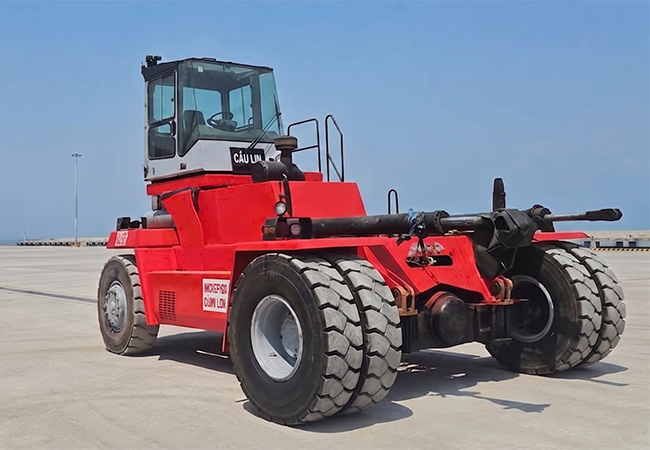 What Is a Container Handler? Understanding the Differences Between Reach Stackers, Empty Container Handlers, and Container Forklifts