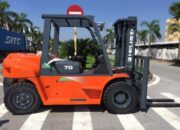
The importance of forklifts in warehouses

How important are forklifts in warehouses?

If you asked anyone outside the material handling industry (the warehousing service industry) to describe a forklift, they would describe a classic forklift consisting of: four wheels, a large body behind a mast, a chair and seat that resembled a regular lawn mower. But these specialized forklifts can perform a wide range of jobs – tasks, which prevails with lifting operations managers. Oftentimes, operations managers focus on the item’s moving needs but don’t care about the details.

As manufacturing facilities are increasingly pressed to achieve maximum productivity and minimize operating costs especially labor – this has huge implications for manufacturing facilities, the use of Specialized equipment from warehouse service centers and from other distributors have been used by manufacturing facilities/businesses for decades. Because of the convenience and efficiency of using a forklift, think about the cost of operating (owning) a forklift. All costs from loading and unloading labor go to specialized equipment to increase operational efficiency in specific tasks.
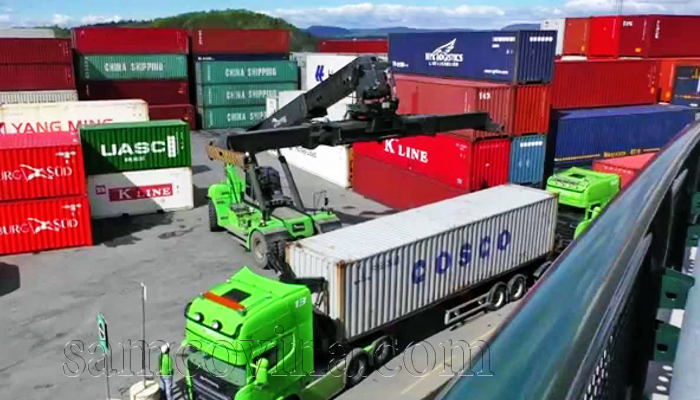
xe nang hang kho bai

When using forklifts, remember a few brief rules:

– Check your forklift usage. Calculate cumulative usage hours (hours ending at start) for the forklift and divide by the number of changes in time. If your total is 4 hours or less of forklift usage over a period of time, the operator can have the right balance and maneuver the forklift to avoid hurting his or her overall productivity.

– Choose a forklift that helps the operator to be most productive in the current job. If you’re an executive at a manufacturing facility or manufacturing business, consider applications where specialized equipment can increase productivity and save on labor costs.

On docks, ports or in work areas: If you only need to move pallets short distances and don’t require stacking or shelving, consider a pallet truck. The operator has a need to interact with the load by determining the shape of the payload and its next destination. Adding accompanying pallet trucks in work areas can mean more than bulky equipment, on the other hand it eliminates labor time driving back and forth between areas. It can also reduce the working time in waiting to move to the next area. If you need to stack pallets on a shelf, but only need a small port area or a manufacturing unit, then a manual.electric stacker can meet the need at a low cost compared to a forklift. dedicated.

– For long-distance operations: If you need to get materials from one end of the plant to the other, consider a trailer truck. You may need to use an additional narrow aisle forklift to take pallets out of the warehouse and onto the trailer. Allowing each truck to focus on what it does best not only enhances performance, but also allows operators to maximize the work of each dedicated vehicle. Road carts also work well for loading and unloading, if no stacking is required.

– For laboratories that hold inventory: On-site inventory cannot be used for production tasks. To minimize the floor space stowed by inventory, use a narrow-load forklift, such as an electric forklift or hand truck. Because these forklifts require less aisle space than traditional forklifts, there is more space for value-added manufacturing.

Keep your production facility focused on the job by providing a forklift built for the specific job at hand. Equipment costs are often reduced by labor costs, so investing in specialized tools and equipment saves businesses.

 ,

2 responses to “The importance of forklifts in warehouses”

Leave a Reply

Your email address will not be published. Required fields are marked *

Related posts

  • lai xe nang reachstacker What Certifications Are Needed to Operate a Container Forklift

    What Certifications Are Needed to Operate a Container Forklift? Where to Learn? In Vietnam’s logistics and port industry, container forklifts (such as container reach stackers, container handlers, or container stackers) play a crucial role in handling and moving cargo containers. With the growing demand for skilled operators of container forklifts, possessing the appropriate operating certification […]

  • reach-truck-ban Notes when operating a reach truck

    Notes when operating a reach truck Operating a reach truck requires skill and experience to ensure safety and efficiency in the process. Here are important notes when operating a reach truck: Get Trained and Certified: Before operating a reach truck, attend training and obtain an operating certificate from a reputable training organization. Master the regulations […]

  • hu-xe-nang-diesel Errors that cause damage in Diesel forklifts and remedies

    Common failures in Diesel forklifts and remedies Diesel forklifts have mechanical failures during operation, which can damage fundamental components and cause more serious problems for the vehicle, goods, and people. Usually before diesel forklifts have problems. Factors such as: speed, sound, exhaust gas, water temperature, oil pressure and other related problems of it will all […]

  • xe-chup-kalma Frequently Asked Questions about Kalmar Container Reach Stackers

    Frequently Asked Questions about Kalmar Container Reach Stackers 1. What is the maximum lifting capacity of a Kalmar Reach stacker? A Kalmar Reach stacker has a maximum lifting capacity ranging from 45 to 50 tons, depending on the specific model. For example, the DRG450-65S5X model can lift up to 45 tons in the first row, while some higher-end models like the DRG500-75S5X can lift up to 50 tons. 2. is the average lifespan of a Kalmar Container Reach stacker? With proper maintenance, a Kalmar Container Reach stacker can operate efficiently for around 15-20 years. However, the exact lifespan depends on various factors such as usage frequency, working conditions, and maintenance quality. Some of our customers have reported that their machines are still running well after more than 25 years of use. 3. How much is the annual maintenance cost for a Kalmar Reach stacker? The annual maintenance cost for a Kalmar Reach stacker typically ranges from 3% to 5% of the initial value of the machine. This means that for a machine priced at around $500,000, the annual maintenance cost could be between $15,000 and $25,000. However, this figure may vary depending on usage intensity and operating conditions. 4. What are some special safety features of Kalmar Reach stackers? Kalmar Reach stackers are equipped with advanced safety features including: – Anti-Tipping System – Load weight sensors and overload warning – 360-degree cameras for comprehensive visibility – Regenerative braking system – ROPS (Roll-Over Protective Structure) compliant cabin design – Obstacle detection and warning system – Safety lockout system when operator is absent 5. What is the average fuel consumption of a Kalmar Reach stacker? The average fuel consumption of a Kalmar Reach stacker typically ranges from 12 to 18 liters of diesel per hour of operation, depending on the model and working conditions. Our latest models come with fuel-saving Eco Drive Mode technology that can reduce consumption to as low as 10-15 liters per hour under normal operating conditions. 6. Which Kalmar Reach stacker models are suitable for small and medium-sized ports? Kalmar offers several Reach stacker models suitable for small and medium-sized ports: – DRG420-60S5: This model can lift 42 tons, suitable for ports with moderate container traffic. – DRG450-65S5: With a lifting capacity of 45 tons, this is a flexible choice for various types of ports. – Gloria DRG100-54S6: This compact model is ideal for ports with limited space. These models have smaller dimensions, lower fuel consumption, but still ensure high performance. 7. How to optimize the performance of a Kalmar Reach stacker in a port environment? To optimize performance, it is important to: – Provide thorough training for operators on efficient driving techniques and stacking operations. – Use Kalmar’s fleet management software to monitor and analyze performance. – Implement preventive maintenance to minimize downtime. – Optimize traffic flow and workspace layout within the port. – Use Eco Drive mode whenever possible to save fuel. – Update software regularly to take advantage of the latest improvements. 8. What are the key advantages of Kalmar Reach stackers compared to other brands? Kalmar Reach stackers stand out with: – Stable operation, high reliability and long lifespan. – Advanced technology such as SmartWheel intelligent control system. – Low fuel consumption thanks to Eco Drive technology. – Ergonomic cabin design with good visibility for operator comfort. – Global support network and service offerings from the brand. – Many integration options with automation systems in warehouses and ports. 9. How long does training for operating a Kalmar Reach stacker typically last? Training usually lasts from 2 to 4 weeks including: – One week theoretical training on safety, operational mechanisms and basic maintenance. – One-two weeks practical training on simulator machines. – One week practical training on real machines under supervision. After training completion, operators need an additional 100–200 hours of practice to become proficient. Kalmar also provides advanced training courses and regular updates. 10. How to troubleshoot common issues on a Kalmar Reach stacker? Common troubleshooting steps for issues on a Kalmar Container reach Stacker include: – Use onboard diagnostic systems to identify faults. – Refer to user manuals for basic troubleshooting procedures. – For engine issues check fuel levels, air filters and electrical connections. – For hydraulic issues check oil levels and leaks. – For electrical issues check fuses and connections. 11. What automation features are available on the latest models of Kalmar Reach Stackers? The latest models of Kalmar reach Stackers come equipped with advanced automation features such as: […]

  • xe nang hang cat Electric vs Diesel Forklift

    Electric vs. Diesel Forklifts: A Comprehensive Comparison of Costs and Operational Efficiency Forklifts are indispensable in warehousing, manufacturing, and logistics, serving as the backbone for optimizing material handling and boosting overall business efficiency. However, with the variety of options available, many managers face a dilemma: should they choose electric forklifts or diesel forklifts? Which option […]