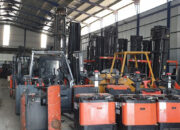
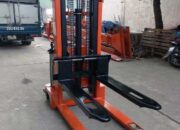
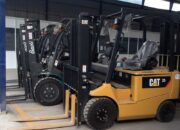
Instructions on how to operate a forklift safely

Pay attention to safety and prevent accidents when operating forklifts

Forklift is a device that handles internal handling tasks. Its working environment and working conditions are always in the process of changing at any time, the safety of forklift driving depends on the instantaneous action of the driver. The working environment of forklifts is often more complex, sometimes in people and vehicles. In tight spaces and a lot of cluttered goods, it is easy to increase the risk of unsafety. Therefore, the safe operation of the forklift truck has special skill requirements for the driver, and the forklift truck must strictly implement the safety management system to avoid accidents.

Forklifts are one of the most commonly used handling vehicles. Forklift trucks play an important role in the daily operations of warehouses and factories. If not driven in accordance with operating regulations, they will seriously threaten safety, pose many potential risks, and even cause the death of drivers or other pedestrians. With the rapid development of the forklift industry, our forklifts are integrated with many safety features to reduce the risk of accidents for people and goods.

safety

According to OSHA statistics from the US Occupational Safety and Health Administration, at least 85 people are killed in forklift accidents every year worldwide, and 34,900 people are seriously injured in vehicle accidents. forklifts and 61,800 people were slightly injured in forklift accidents. There are many main causes of forklift deaths, 42% of accidents are due to forklift tipping and death, and fatal accidents due to collisions between two vehicles account for 11%. Other causes account for 8%. Other causes accounted for 39%. The industry that causes the most forklift deaths is the manufacturing industry, which accounts for 42% of all fatal forklift accidents, which demonstrates the importance of safe forklift operation.

Safety is a basic condition for human existence and development, safety is a top important issue in business activities. The concept of accident prevention should go into every aspect of everyday work. As a special piece of equipment, forklift operators and operators must therefore undergo safety training and can only be driven by professionals who have a license to operate the forklift. Through the organization of safety training, the safety consciousness of vehicle drivers is enhanced. A safety training organization can alert them to pay attention to forklift movements. Due to improper forklift operation and the lack of safety awareness by the driver, safety accidents are not uncommon, causing casualties and heavy property damage to the company, even the manager. , operators must be responsible before the law. For businesses, safety is life, safety is a benefit, only standardized safety activities can put businesses more firmly on the path of green and healthy development.

van-hanh-xe-nang-an-toan

There are many causes of forklift accidents. The general analysis covers the following scenarios: Enterprise not adequately training forklift operators, driving forklifts at excessive speed, overloading loads, lack of proper protective equipment, undocumented use, undocumented personnel. controls without using seat belts, etc.

All of this requires the company to train forklift operators to operate safely and to ensure that the driver fully understands the operating procedures. In addition, forklifts have a limited lifespan and need regular maintenance, keeping the working environment clean is also very important.

The following is a detailed list of the safe operation of forklift trucks

Preparations when starting forklift operation

When the forklift begins to load, the driver should first confirm that the load is stable and reliable.
When starting operation, it should be slow and steady.
Look around before starting to confirm that there are no obstacles to safe driving, then start off after honking the horn.

Things to pay attention to when driving a forklift:

When the forklift is running, the load must be at the lowest position that does not interfere with the driving, the mast must be tilted to the rear.
The height of the loaded cargo must not obscure the view of the vehicle operator.
The height from the lower end of the fork to the ground should be 300-400mm, and the mast should be tilted backwards.
Do not lift the fork too high when driving. Pay attention to the surrounding space when entering and leaving the construction site or when driving
After unloading, lower the fork to the normal driving position before steering.
When turning, if there are pedestrians or vehicles nearby, must signal the driver first. High-speed turns are prohibited. Note that sharp turns at high speed will cause the vehicle to lose its lateral stability and overturn.
It is forbidden to turn on a ramp, nor to drive on a ramp.
The safe driving speed into the forklift workshop area is 5 km / h, entering the workshop area must be low and safe.
When the forklift is lifting, the driver must not stand on the fork to hold the item and play the role of balance.
If detected

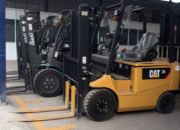
 ,

Leave a Reply

Your email address will not be published. Required fields are marked *

Related posts

  • xe-nang-may-dau-hyudai Common failures of Hyundai forklifts and solutions

    Common failures of Hyundai forklifts and solutions 1. How to handle when the Hyundai forklift engine does not start? When the Hyundai forklift engine does not start, check the following causes: – Battery: Check the voltage and connection. If weak, charge or replace. – Fuel: Make sure the tank has enough fuel and is not […]

  • reacchstacker cu nhap khau Experience in Selecting Container Handlers for Logistics Companies

    Experience in Selecting Container Handlers for Logistics Companies In the logistics supply chain, container handling equipment such as Reachstackers or Empty Container Handlers are often considered the “heart” of port terminals and container yards. Investing in a container handler is not merely purchasing equipment; it is a strategic decision that can impact a company’s operations […]

  • lai xe nang reachstacker What Certifications Are Needed to Operate a Container Forklift

    What Certifications Are Needed to Operate a Container Forklift? Where to Learn? In Vietnam’s logistics and port industry, container forklifts (such as container reach stackers, container handlers, or container stackers) play a crucial role in handling and moving cargo containers. With the growing demand for skilled operators of container forklifts, possessing the appropriate operating certification […]

  • xe-chup-kalma Frequently Asked Questions about Kalmar Container Reach Stackers

    Frequently Asked Questions about Kalmar Container Reach Stackers 1. What is the maximum lifting capacity of a Kalmar Reach stacker? A Kalmar Reach stacker has a maximum lifting capacity ranging from 45 to 50 tons, depending on the specific model. For example, the DRG450-65S5X model can lift up to 45 tons in the first row, while some higher-end models like the DRG500-75S5X can lift up to 50 tons. 2. is the average lifespan of a Kalmar Container Reach stacker? With proper maintenance, a Kalmar Container Reach stacker can operate efficiently for around 15-20 years. However, the exact lifespan depends on various factors such as usage frequency, working conditions, and maintenance quality. Some of our customers have reported that their machines are still running well after more than 25 years of use. 3. How much is the annual maintenance cost for a Kalmar Reach stacker? The annual maintenance cost for a Kalmar Reach stacker typically ranges from 3% to 5% of the initial value of the machine. This means that for a machine priced at around $500,000, the annual maintenance cost could be between $15,000 and $25,000. However, this figure may vary depending on usage intensity and operating conditions. 4. What are some special safety features of Kalmar Reach stackers? Kalmar Reach stackers are equipped with advanced safety features including: – Anti-Tipping System – Load weight sensors and overload warning – 360-degree cameras for comprehensive visibility – Regenerative braking system – ROPS (Roll-Over Protective Structure) compliant cabin design – Obstacle detection and warning system – Safety lockout system when operator is absent 5. What is the average fuel consumption of a Kalmar Reach stacker? The average fuel consumption of a Kalmar Reach stacker typically ranges from 12 to 18 liters of diesel per hour of operation, depending on the model and working conditions. Our latest models come with fuel-saving Eco Drive Mode technology that can reduce consumption to as low as 10-15 liters per hour under normal operating conditions. 6. Which Kalmar Reach stacker models are suitable for small and medium-sized ports? Kalmar offers several Reach stacker models suitable for small and medium-sized ports: – DRG420-60S5: This model can lift 42 tons, suitable for ports with moderate container traffic. – DRG450-65S5: With a lifting capacity of 45 tons, this is a flexible choice for various types of ports. – Gloria DRG100-54S6: This compact model is ideal for ports with limited space. These models have smaller dimensions, lower fuel consumption, but still ensure high performance. 7. How to optimize the performance of a Kalmar Reach stacker in a port environment? To optimize performance, it is important to: – Provide thorough training for operators on efficient driving techniques and stacking operations. – Use Kalmar’s fleet management software to monitor and analyze performance. – Implement preventive maintenance to minimize downtime. – Optimize traffic flow and workspace layout within the port. – Use Eco Drive mode whenever possible to save fuel. – Update software regularly to take advantage of the latest improvements. 8. What are the key advantages of Kalmar Reach stackers compared to other brands? Kalmar Reach stackers stand out with: – Stable operation, high reliability and long lifespan. – Advanced technology such as SmartWheel intelligent control system. – Low fuel consumption thanks to Eco Drive technology. – Ergonomic cabin design with good visibility for operator comfort. – Global support network and service offerings from the brand. – Many integration options with automation systems in warehouses and ports. 9. How long does training for operating a Kalmar Reach stacker typically last? Training usually lasts from 2 to 4 weeks including: – One week theoretical training on safety, operational mechanisms and basic maintenance. – One-two weeks practical training on simulator machines. – One week practical training on real machines under supervision. After training completion, operators need an additional 100–200 hours of practice to become proficient. Kalmar also provides advanced training courses and regular updates. 10. How to troubleshoot common issues on a Kalmar Reach stacker? Common troubleshooting steps for issues on a Kalmar Container reach Stacker include: – Use onboard diagnostic systems to identify faults. – Refer to user manuals for basic troubleshooting procedures. – For engine issues check fuel levels, air filters and electrical connections. – For hydraulic issues check oil levels and leaks. – For electrical issues check fuses and connections. 11. What automation features are available on the latest models of Kalmar Reach Stackers? The latest models of Kalmar reach Stackers come equipped with advanced automation features such as: […]

  • toyota-xe-nang Common Errors in Electric Forklifts

    I. Common errors in electric forklifts Maintaining and repairing electric forklifts is crucial to ensure their performance and lifespan. During usage, electric forklifts may encounter common errors, including electrical system failures, mechanical issues, and battery problems. These errors can be caused by improper usage, lack of regular maintenance, and the impact of weather conditions. To effectively handle and maintain electric forklifts, regular inspections and maintenance should be conducted, users should be trained properly, and genuine spare parts should be used. Additionally, preventive measures such as safety instructions during usage, proposing basic repair training for managers, and enhancing maintenance awareness among users should be implemented. 1. Electrical system failures in forklifts Electrical system failures are one of the common errors in electric forklifts. Power loss is a common issue that can be caused by weak or faulty batteries. To address this problem, batteries should be checked and replaced if necessary. Controller malfunctions can also occur due to damaged or improperly functioning components. To resolve this issue, components should be inspected and repaired or replaced if necessary. 2. Mechanical issues in forklifts Mechanical issues are another problem that electric forklifts may encounter. The steering system can experience malfunctions due to damaged or improperly functioning components. To address this problem, components should be checked and replaced if necessary. The lifting system can also experience malfunctions due to damaged or improperly functioning parts. To resolve this issue, parts should be inspected and repaired or replaced. 3. Battery-related issues in forklifts Battery problems are also crucial factors affecting the performance of electric forklifts. Battery lifespan can be affected by various factors such as battery age, usage conditions, and maintenance procedures. To maintain battery lifespan, proper maintenance and charging procedures should be followed. Decreased battery performance is another issue that can be caused by battery age, overloading, or incomplete charging. To address this problem, batteries should be checked and charged according to proper procedures. II. Causes of errors in electric forklifts – Causes of errors in electric forklifts can be attributed to improper usage, lack of regular maintenance, and the impact of weather conditions. Improper usage can lead to errors such as overloading the forklift or using incorrect procedures. To avoid these errors, adherence to usage procedures and limiting forklift overload is necessary. – Lack of regular maintenance is also a common cause of errors. Failure to conduct regular maintenance can affect the performance and lifespan of the forklift. To keep the forklift operating well, regular maintenance should be performed following manufacturer instructions. – Weather conditions can also impact the operation of electric forklifts. Factors such as high temperatures, cold weather, or dampness can cause issues for the forklift. To minimize the impact of weather conditions, proper protection and storage practices should be implemented. III. Handling and maintaining electric forklifts – To effectively handle and maintain electric forklifts, regular inspections and maintenance are necessary. Regular inspection and maintenance procedures help maintain the performance of the forklift and detect potential issues early on. – Proper training of users is also crucial, providing users with instructions on safe and efficient usage of electric forklifts. The use of genuine spare parts is another essential factor that cannot be overlooked as it ensures quality and longevity. – Additionally, preventive measures should be implemented to avoid errors from occurring. Safety instructions during usage are one important measure, providing safety guidelines to users of electric forklifts. – Proposing basic repair training for managers is another suggestion; training managers on basic knowledge about repairing electric forklifts enables them to handle minor issues without having to call technical staff. – Enhancing maintenance awareness among users is also an important measure, strengthening maintenance and management awareness of electric forklifts from the users. This can be achieved through providing usage instructions, reminders about regular maintenance, and creating a safe and professional working environment. In conclusion, maintaining and repairing electric forklifts is crucial to ensure their performance and lifespan. Addressing common errors such as electrical system failures, mechanical issues, and battery problems should be done meticulously and accurately. Regular inspections and maintenance, proper user training, and the use of genuine spare parts are important measures to handle and maintain electric forklifts effectively. Preventive measures such as safety instructions during usage, proposing basic repair training for managers, and enhancing maintenance awareness among users are also crucial to prevent errors from occurring.