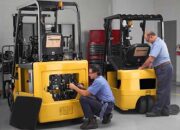
Solutions for Selecting Forklifts for Cold Storage

Solutions for Selecting Forklifts for Cold Storage

Cold storage plays a crucial role in the supply chain of numerous industries, ranging from food and pharmaceuticals to chemicals. Managing and operating cold storage facilities requires specialized equipment, particularly forklifts, to ensure efficiency and safety. In this article, we will introduce forklift solutions for cold storage, helping businesses optimize their workflow and protect goods in low-temperature environments.

Characteristics of Cold Storage Forklifts

Forklifts designed specifically for cold storage have unique technical features to meet the stringent requirements of this environment.

  • Cold Resistance

    • Frost-resistant materials: Cold storage forklifts are made from materials that can withstand low temperatures, preventing freezing or damage due to cold.
    • Electrical systems and batteries: The batteries and electrical systems of these forklifts are designed to operate stably in temperatures as low as -30°C, ensuring that the forklift’s performance is not reduced.
  • Working Performance

    • Powerful engines: Cold storage forklifts are often equipped with high-powered engines to maintain performance in cold environments, where ordinary equipment may be affected.
    • Lifting and lowering speeds: Forklifts in cold storage need fast lifting and lowering speeds to minimize exposure to cold air, protecting both goods and operators.
  • Safety and Security

    • Braking systems: Cold storage forklifts are equipped with special braking systems to ensure safety when moving on slippery, frozen floors.
    • Cabin design: The forklift cabin is typically insulated and has a heating system to protect operators from low temperatures.

Benefits of Using Forklifts in Cold Storage

Using specialized cold storage forklifts provides significant benefits for businesses.

  • Increased Work Efficiency

    • Workflow optimization: Forklifts help move goods quickly and accurately, reducing time and effort compared to manual labor.
    • Reduced risk of damage: Forklifts designed to operate in cold environments help protect goods from damage due to unsuitable temperature exposure.
  • Reduced Labor Costs

    • Labor savings: Using forklifts reduces the need for manual labor, thereby reducing labor costs and increasing cost-effectiveness.
    • Increased productivity: Forklifts allow for the transport of more goods in a single move, improving work productivity.
  • Improved Safety

    • Reduced workplace accidents: Forklifts are equipped with safety features such as braking systems and warning lights, helping to minimize accidents during operation.
    • Operator protection: Insulated cabins and heating systems protect operators from the adverse effects of low temperatures.

How to Choose the Right Forklift for Cold Storage

Choosing the right forklift for cold storage is crucial for ensuring efficiency and safety. Consider the following factors:

  • Storage Size and Type

    • Storage area: For small cold storage areas, pallet trucks or stand-on electric forklifts may be suitable. For large storage areas, diesel or gas forklifts may be necessary.
    • Lifting height: Determine the maximum height the forklift needs to reach to load and unload goods on high shelves.
  • Type of Goods

    • Cargo weight: Choose a forklift with a load capacity suitable for the weight of the goods in the storage. For heavy goods, a forklift with a large load capacity is necessary.
    • Cargo dimensions: The forklift should have fork dimensions suitable for the pallets or containers holding the goods.
  • Budget

    • Investment cost: Electric forklifts typically have a higher initial investment cost but lower operating costs compared to diesel or gas forklifts.
    • Maintenance costs: Cold storage forklifts require regular maintenance to ensure stable operation, so maintenance costs should be considered within the budget.

Notes When Using Forklifts in Cold Storage

To ensure safety and efficiency when using forklifts in cold storage, businesses must adhere to the following notes:

  • Regular Maintenance

    • Check batteries and electrical systems: Batteries and electrical systems should be checked regularly to ensure stable operation in cold environments.
    • Lubricate parts: Moving parts should be lubricated with cold-resistant grease to prevent stiffness or jamming.
  • Employee Training

    • Operating instructions: Employees should be trained on how to operate forklifts in cold storage environments, including driving and safety skills.
    • Safety regulations: Ensure employees comply with safety regulations such as wearing protective clothing and using personal protective equipment.
  • Comply with Safety Regulations

    • Regular inspections: Forklifts should be inspected regularly to ensure compliance with safety standards and legal regulations.
    • Insurance: Businesses should consider purchasing insurance for forklifts and employees to prevent unexpected risks.

Leave a Reply

Your email address will not be published. Required fields are marked *

Related posts

  • giai-nhiet-cho-xe-nang How to effectively solve the problem of overheating of the internal combustion forklift truck

    How to effectively solve the problem of overheating of the internal combustion forklift truck 1. Possible causes of overheating of the internal combustion engine forklift cooling system. – Internal combustion engine system problem The internal combustion engine system includes water pump, fan pulley (both active and passive), internal combustion engine (cylinder liner), fan belt, thermostat, […]

  • toyota-xe-nang Common Errors in Electric Forklifts

    I. Common errors in electric forklifts Maintaining and repairing electric forklifts is crucial to ensure their performance and lifespan. During usage, electric forklifts may encounter common errors, including electrical system failures, mechanical issues, and battery problems. These errors can be caused by improper usage, lack of regular maintenance, and the impact of weather conditions. To effectively handle and maintain electric forklifts, regular inspections and maintenance should be conducted, users should be trained properly, and genuine spare parts should be used. Additionally, preventive measures such as safety instructions during usage, proposing basic repair training for managers, and enhancing maintenance awareness among users should be implemented. 1. Electrical system failures in forklifts Electrical system failures are one of the common errors in electric forklifts. Power loss is a common issue that can be caused by weak or faulty batteries. To address this problem, batteries should be checked and replaced if necessary. Controller malfunctions can also occur due to damaged or improperly functioning components. To resolve this issue, components should be inspected and repaired or replaced if necessary. 2. Mechanical issues in forklifts Mechanical issues are another problem that electric forklifts may encounter. The steering system can experience malfunctions due to damaged or improperly functioning components. To address this problem, components should be checked and replaced if necessary. The lifting system can also experience malfunctions due to damaged or improperly functioning parts. To resolve this issue, parts should be inspected and repaired or replaced. 3. Battery-related issues in forklifts Battery problems are also crucial factors affecting the performance of electric forklifts. Battery lifespan can be affected by various factors such as battery age, usage conditions, and maintenance procedures. To maintain battery lifespan, proper maintenance and charging procedures should be followed. Decreased battery performance is another issue that can be caused by battery age, overloading, or incomplete charging. To address this problem, batteries should be checked and charged according to proper procedures. II. Causes of errors in electric forklifts – Causes of errors in electric forklifts can be attributed to improper usage, lack of regular maintenance, and the impact of weather conditions. Improper usage can lead to errors such as overloading the forklift or using incorrect procedures. To avoid these errors, adherence to usage procedures and limiting forklift overload is necessary. – Lack of regular maintenance is also a common cause of errors. Failure to conduct regular maintenance can affect the performance and lifespan of the forklift. To keep the forklift operating well, regular maintenance should be performed following manufacturer instructions. – Weather conditions can also impact the operation of electric forklifts. Factors such as high temperatures, cold weather, or dampness can cause issues for the forklift. To minimize the impact of weather conditions, proper protection and storage practices should be implemented. III. Handling and maintaining electric forklifts – To effectively handle and maintain electric forklifts, regular inspections and maintenance are necessary. Regular inspection and maintenance procedures help maintain the performance of the forklift and detect potential issues early on. – Proper training of users is also crucial, providing users with instructions on safe and efficient usage of electric forklifts. The use of genuine spare parts is another essential factor that cannot be overlooked as it ensures quality and longevity. – Additionally, preventive measures should be implemented to avoid errors from occurring. Safety instructions during usage are one important measure, providing safety guidelines to users of electric forklifts. – Proposing basic repair training for managers is another suggestion; training managers on basic knowledge about repairing electric forklifts enables them to handle minor issues without having to call technical staff. – Enhancing maintenance awareness among users is also an important measure, strengthening maintenance and management awareness of electric forklifts from the users. This can be achieved through providing usage instructions, reminders about regular maintenance, and creating a safe and professional working environment. In conclusion, maintaining and repairing electric forklifts is crucial to ensure their performance and lifespan. Addressing common errors such as electrical system failures, mechanical issues, and battery problems should be done meticulously and accurately. Regular inspections and maintenance, proper user training, and the use of genuine spare parts are important measures to handle and maintain electric forklifts effectively. Preventive measures such as safety instructions during usage, proposing basic repair training for managers, and enhancing maintenance awareness among users are also crucial to prevent errors from occurring.

  • hu-thuy-luc-xe-nang Common Hydraulic System Failures in Forklifts and How to Handle Them

    Here are some common failures in the hydraulic system of forklifts and the corresponding repair solutions: 1. Oil leakage: Oil leakage is a common issue in hydraulic systems. The causes can be a broken hose, poor sealing, or damaged components. To repair, identify the cause of the leakage and replace the damaged parts or repair the hose. 2. Loss of pressure: If the forklift does not have enough pressure to lift or hold loads, it may be due to a malfunctioning control valve or other issues in the system. Check and repair the control valve, inspect other components such as pumps, relief valves, and hoses to find the cause of pressure loss. 3. Inoperability: Forklifts may not operate due to various reasons, including a non-starting motor, malfunctioning control valve, or damaged components. Inspect and repair any faulty components, check power supply, and ensure all electrical connections are correct. 4. Unusual noise: If you hear strange noises from the hydraulic system, there may be issues with the pump, valve, or hoses. Inspect and repair any damaged or worn-out components and ensure all hoses are securely connected. 5. System instability: If the forklift cannot maintain its position or oscillates while lifting loads, it may be due to a malfunctioning relief valve or improperly adjusted pressure. Check and repair the relief valve, inspect pressure levels, and adjust if necessary. 6. Loss of lifting function: If the forklift cannot lift or lower loads properly, it may be due to a malfunctioning control valve or pump. Check and repair the control valve, inspect the pump and other components to determine the cause of loss of lifting function. 7. Slow response or unresponsiveness: If the forklift moves slowly or does not respond when controlled, it may be due to a stuck control valve or pump issues. Check and clean the control valve, inspect the pump and other components to resolve this issue. 8. Excessive pressure: If the pressure in the hydraulic system is too high, it can cause oil leakage or damage other components. Check and adjust the pressure in the system according to manufacturer’s instructions. 9. System vibration: If the forklift vibrates while moving or lifting loads, it may be due to worn-out or loose components. Inspect and repair any damaged components, ensuring all connections are tightened. 10. Instability during lifting: If the forklift cannot maintain its position or is unstable while lifting loads, it may be due to a malfunctioning relief valve or control valve. Check and repair the relief valve, inspect the control valve, and adjust if necessary. 11. Instability during movement: If the forklift is unstable or skids during movement, it may be due to steering system or wheel issues. Inspect and repair the steering system, check and adjust wheels to ensure safe and stable forklift movement. 12. Loss of control: If you cannot control or maneuver the forklift accurately, it may be due to a malfunctioning control system or steering component. Inspect and repair any faulty components, check and adjust the control system for optimal control ability. 13. Overheating: If the hydraulic system becomes excessively hot after a period of use, it may be due to insufficient oil flow or ineffective cooling. Check and clean oil filters, inspect and adjust oil flow to keep the hydraulic system working well without overheating. 14. Inconsistent operation: If one part of the hydraulic system operates inconsistently compared to others, it may be due to a malfunctioning control valve or damaged component. Check and repair the control valve, inspect and replace any faulty components to ensure consistency in system operation. 15. Inoperability after a period of use: If the forklift does not operate after a period of use, it may be due to worn-out components or the need for lubrication. Inspect and repair any damaged components, lubricate necessary parts to ensure the system always operates well after each use. 16. Inoperability after startup: If the forklift does not operate after startup, it may be due to weak batteries or electrical system issues. Check and recharge batteries, inspect and repair electrical components to ensure the system operates well after startup. 17. Unresponsiveness when lifting loads: If the forklift does not respond when attempting to lift a load, it may be due to a malfunctioning control valve or pump. Check and repair the control valve, inspect and replace the pump if necessary to ensure proper operation when lifting loads. 18. Inoperability after a collision: If the forklift experiences a strong collision and then does not operate, it may be due to damaged components or lost connections. Inspect and repair any damaged components, reestablish connections if necessary. By addressing these common hydraulic system failures in forklifts promptly and effectively, you can ensure smooth operations and maintain safety in your workplace.

  • luu-y-khi-bao-duong-xe-nang Forklift maintenance, six notes to know

    Forklift maintenance, six notes to know First: How often should a forklift be serviced? This is very important. In general, such as manual forklifts, due to fewer parts and compared to electric forklifts, internal combustion forklifts, liquefied petroleum gas forklifts, etc. Maintenance cycles can be made longer, such as every six months. For electric forklift, […]

  • forklift-cat FAQs about Forklift

    Frequently Asked Questions about Forklifts 1. What is a forklift? Answer: A forklift is a specialized vehicle designed to lift, lower, and move goods and materials in warehouses and factories easily and safely. It is equipped with front lifting forks and an engine for movement. 2. What are the most common types of forklifts? Answer: Some common types of forklifts include counterbalance forklifts, electric forklifts, pneumatic forklifts, and manual pallet jacks. Among them, electric forklifts are the most popular due to their flexibility, ease of use, and environmental friendliness. 3. What is the typical lifting range of a forklift? Answer: The standard lifting range of a forklift is usually between 2m – 5.5m depending on the type and capacity. For high-rise warehouses, taller lifting ranges up to 7-12 meters can be used. 4. What is the maximum safe load capacity of regular forklifts? Answer: The safe load capacity of regular forklifts ranges from 1 – 5 tons depending on the capacity and size of the vehicle. For heavy-duty forklifts, the load capacity can go up to 10-15 tons. Always follow the manufacturer’s recommended load limits to ensure safety. 5. What are the common fuel options for forklifts? Answer: Forklifts commonly run on electricity (battery) or diesel/gasoline fuel. Electric forklifts are preferred in indoor warehouses due to their clean operation, quietness, and ease of use. 6. How should a forklift be regularly maintained? Answer: To ensure proper operation and safety, a forklift should undergo regular maintenance every month or after a certain number of operating hours. Maintenance tasks typically include checking oil levels, replacing oil/fuel filters, inspecting brakes/tires, charging/replacing batteries (for electric forklifts), etc. 7. How much does it cost to operate and maintain a forklift annually? Answer: The annual operating and maintenance cost for a regular forklift is around 15 – 30 million VND, including fuel costs (diesel, gasoline, electricity), regular maintenance, and small component replacements. For higher-end forklifts, the cost can go up to 50-70 million VND per year. 8. How to safely lift and lower palletized loads with a forklift? Answer: When lifting loads, tilt the forks forward by 15 degrees to ensure stability, move slowly, and maintain a safe distance from the surroundings. Lift the load slowly according to the driver’s visibility. Lower the load slowly in a tilted direction. Avoid sudden lifting or lowering that may cause load spills. 9. What qualifications or certifications are required to operate a forklift? Answer: Forklift operators need to have certification in safe operation and handling of forklifts. They also need to possess a Forklift Driver’s License issued by the authorized agency to legally operate the vehicle. 10. What are the standard dimensions of different types of forklifts? Answer: The dimensions of forklifts vary depending on their load capacity and type. Typically, length ranges from 1.5 – 3m; width ranges from 0.5 – 1m; height ranges from 1.5 – 4m. Some models have smaller dimensions to fit narrow aisles. 11. On what types of terrains can forklifts operate? Answer: Forklifts can operate well on most flat surfaces such as concrete, asphalt, tiled floors, etc. However, they should not be used on rough or uneven terrains or muddy areas. 12. What is the safe traveling speed of a forklift when carrying loads? Answer: The recommended safe traveling speed for a forklift carrying loads is 8-12 km/h. Speed should be reduced when going around corners or narrow paths. 13. How to stack loads on a forklift to ensure safety? Answer: Loads should be stacked evenly and within the allowed load capacity. Do not stack higher than the fork height. Maintain stability while moving. Stack in a way that does not obstruct the driver’s visibility. 14. What safety features do forklifts have? Answer: Forklifts are equipped with reverse alarms, turn signals, warning horns, anti-tip frames, and guardrails to protect the driver and cargo. 15. How long does it take to fully charge an electric forklift battery? Answer: The average charging time for an electric forklift battery is 6-8 hours. It should be fully charged before each shift. Some models can have fast charging options within 2-3 hours. 16. Which countries are the most common sources of imported forklifts? Answer: Forklifts are mostly imported from Japan, South Korea, China, and Taiwan. These countries are known for their quality and popular brands in Vietnam. 17. What are some popular forklift brands? Answer: Some popular forklift brands include Toyota, Mitsubishi, Komatsu, Nissan, TCM, Hangcha, Lonking… 18. Is it better to buy a new or used forklift? Why? Answer: It is recommended to buy a new forklift to ensure quality and longevity of the vehicle. New forklifts have high durability, fewer breakdowns, and lower maintenance costs. Used forklifts may be cheaper but come with higher risks of issues. 19. How much does it cost to insure a forklift annually? Answer: The insurance cost for a forklift is around 4-8% of the vehicle’s value. For example, for a 500 million VND forklift, the insurance fee would be approximately 20-40 million VND per year depending on the coverage. 20. What is the process for inspection and registration of a forklift? Answer: Forklifts need to undergo inspection and registration procedures according to local regulations. This typically involves submitting necessary documents, paying fees, and obtaining registration plates or stickers.

Gọi ngay
Chat Zalo