Optimize forklift operation
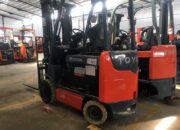
Forklifts are an important component of efficient loading and unloading operations, moving goods in warehouses and yards. Your business may have to spend a lot of time and money on transporting and unloading goods without a forklift or a fleet of specialized forklifts to lift and move goods from the warehouse. to the wharf or vice versa.
But how to evaluate whether the forklift is working effectively or not? Below Samcovina.com outlines five key areas to evaluate and keep the forklift operations in your business running as fast and as efficiently as possible:
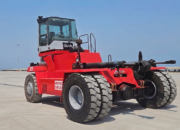
 Use the right size forklift for the workload.
Does battery life correspond to workload shift schedules? Have you lost productivity and disrupted forklift uptime by changing batteries? Are you using the forklift for the same purpose as when your business bought it or now your business needs the forklift to be used for different purposes? Making sure you’re using your forklift for the right job is an important way to improve operational efficiency. If you or your business is planning to buy another forklift or buy a new one to replace the previous forklift, please carefully check how this forklift will be used instead. for simply ordering a car model similar to the old one. This helps you a lot in coordinating loading and unloading operations, moving goods.
Optimize forklift usage.
Track forklift and operator data to help flag potential problems early or take advantage of opportunities to improve performance. That is the practical experience of samcovina.com when there are many forklift fleets operating at many terminals and cargo ports across the country. Based on the data we have seen, the forklift is usually fully utilized at only 50% of its true capacity. That’s why you should consider how you can rearrange your operating plan or process to get the most out of your forklift.
Follow the rules of mass use.
Don’t think of routine sporadic maintenance of each forklift as an option – this really must be done consistently to achieve 100% uptime of an entire fleet of forklifts. Also, deal with any problems – even minor ones that arise as soon as possible. For example, if a driver tripped over a vehicle with a punctured tire but did not take the truck to a repair shop and tried to keep the forklift in service for a few more hours, the result could be a catastrophic failure compared to the previous year. with a simple fix.
There is a fully trained professional technical service for forklift fleet maintenance and repair.
From time to time, we hear companies employing responsible engineers for the maintenance and repair of their forklift fleets. The maintenance of forklift trucks requires a specialized skill set – often not trained for general positions. Keeping up with maintenance with a trained professional engineer is an important way to keep your forklift fleet running smoothly, efficiently, and with minimal disruption.
Regularly repair, replace, improve.
A commitment not only to data collection and analysis but also to taking action on it is crucial to improving productivity. Continually advocating for data improvement and change (even at the expense of it) can help foster conversations that lead to real, valuable, and important improvements.
The bottom line is that you can take steps to improve the operational efficiency of your forklift fleet to help mitigate the costs associated with downtime.