The power of Reach Stacker

The power of Reach Stacker

Indeed, Forklifts are considered the kings of the warehouse when it comes to handling and arranging materials, goods or any large or small object in the warehouse. But literally, even kings cannot always have everything within their reach and can be limited in some way. Special cargo yards and ports can be a big challenge for Forklifts to transport large loads into stacks such as cargo containers. So, what should businesses do in cases like these? Cranes can also be a good option but they take up a lot of space and are very expensive to install and maintain. There is a better, more complete, more flexible and flexible option that is the reach stacker.

xe nang reach stacker

What is a Reach Stacker Forklift?

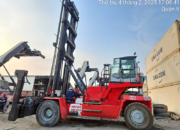
Reach Stacker forklift is a vehicle used to handle cargo containers in small, medium or large ports and warehouses. Reach stacker can transport a container over short distances very quickly and stack (place) them in different rows depending on how they are stacked.

The Reach Stacker has been present in almost every market because of its versatility for handling and storing larger, heavier loads when compared to forklifts. In addition, reach stacker forklifts handle empty goods or containers very quickly and efficiently.

Reach Stacker works tirelessly

The Reach Stacker is the best, most complete combination of the strongest points of a forklift and a crane into a powerful multi-purpose machine. A Reach Stacker has the same flexibility as a forklift but is capable of handling much heavier loads like a crane. Just like cranes, reach stackers can extend both horizontally and vertically. Thanks to its ability to arrange goods, its high objects, the fork can easily arrange containers into rows, neatly stacked up to high stacks.

Why do we need the reach stacker so much?

Working conditions on warehouses, yards or cargo ports and seaports are very difficult. Especially the lifting and arranging of containers full of goods inside with extremely heavy weight. Heat and dirt can be a bad environment for some other normal forklifts. That is why reach stacker trucks are very popular on large warehouses or seaports (cargo ports). The reach stacker has exceptionally versatile and powerful machine parts suitable for working and operating in all conditions, even in extreme conditions.

xe nang reach stacker (2)

What are the benefits of reach stacker?

– Low fuel consumption

– Convenient, comfortable seats are easily adjusted to suit working conditions

– Easy to find the place for maintenance

– Short turning radius – great for maneuvering, working in small spaces

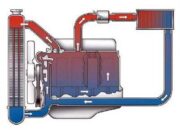
– Less risk of engine overheating in hot weather because of side positioning system for cooling.

– Cheap but high quality spare parts.

Instructions for using the central grease system (machine grease)

Make sure you choose a genuine grease system instead of a grease system bought elsewhere. A physical check at the time of grease application is an additional time of preventive maintenance to the machine. Also most of the parts will have a lot of dirt and it can cause a lot of problems for an automatic machine system.

 , ,

4 responses to “The power of Reach Stacker”

    • Chào Vu Giao Huong
      Vâng bạn có thể nêu yêu cầu cụ thể hơn bên mình cần sửa phần gì ạ?
      Hay có thể gọi cho chúng tôi qua hotline để trao đổi sơ bộ nhé

      Cảm ơn

Leave a Reply

Your email address will not be published. Required fields are marked *

Related posts

  • xe-chup-kalma Frequently Asked Questions about Kalmar Container Reach Stackers

    Frequently Asked Questions about Kalmar Container Reach Stackers 1. What is the maximum lifting capacity of a Kalmar Reach stacker? A Kalmar Reach stacker has a maximum lifting capacity ranging from 45 to 50 tons, depending on the specific model. For example, the DRG450-65S5X model can lift up to 45 tons in the first row, while some higher-end models like the DRG500-75S5X can lift up to 50 tons. 2. is the average lifespan of a Kalmar Container Reach stacker? With proper maintenance, a Kalmar Container Reach stacker can operate efficiently for around 15-20 years. However, the exact lifespan depends on various factors such as usage frequency, working conditions, and maintenance quality. Some of our customers have reported that their machines are still running well after more than 25 years of use. 3. How much is the annual maintenance cost for a Kalmar Reach stacker? The annual maintenance cost for a Kalmar Reach stacker typically ranges from 3% to 5% of the initial value of the machine. This means that for a machine priced at around $500,000, the annual maintenance cost could be between $15,000 and $25,000. However, this figure may vary depending on usage intensity and operating conditions. 4. What are some special safety features of Kalmar Reach stackers? Kalmar Reach stackers are equipped with advanced safety features including: – Anti-Tipping System – Load weight sensors and overload warning – 360-degree cameras for comprehensive visibility – Regenerative braking system – ROPS (Roll-Over Protective Structure) compliant cabin design – Obstacle detection and warning system – Safety lockout system when operator is absent 5. What is the average fuel consumption of a Kalmar Reach stacker? The average fuel consumption of a Kalmar Reach stacker typically ranges from 12 to 18 liters of diesel per hour of operation, depending on the model and working conditions. Our latest models come with fuel-saving Eco Drive Mode technology that can reduce consumption to as low as 10-15 liters per hour under normal operating conditions. 6. Which Kalmar Reach stacker models are suitable for small and medium-sized ports? Kalmar offers several Reach stacker models suitable for small and medium-sized ports: – DRG420-60S5: This model can lift 42 tons, suitable for ports with moderate container traffic. – DRG450-65S5: With a lifting capacity of 45 tons, this is a flexible choice for various types of ports. – Gloria DRG100-54S6: This compact model is ideal for ports with limited space. These models have smaller dimensions, lower fuel consumption, but still ensure high performance. 7. How to optimize the performance of a Kalmar Reach stacker in a port environment? To optimize performance, it is important to: – Provide thorough training for operators on efficient driving techniques and stacking operations. – Use Kalmar’s fleet management software to monitor and analyze performance. – Implement preventive maintenance to minimize downtime. – Optimize traffic flow and workspace layout within the port. – Use Eco Drive mode whenever possible to save fuel. – Update software regularly to take advantage of the latest improvements. 8. What are the key advantages of Kalmar Reach stackers compared to other brands? Kalmar Reach stackers stand out with: – Stable operation, high reliability and long lifespan. – Advanced technology such as SmartWheel intelligent control system. – Low fuel consumption thanks to Eco Drive technology. – Ergonomic cabin design with good visibility for operator comfort. – Global support network and service offerings from the brand. – Many integration options with automation systems in warehouses and ports. 9. How long does training for operating a Kalmar Reach stacker typically last? Training usually lasts from 2 to 4 weeks including: – One week theoretical training on safety, operational mechanisms and basic maintenance. – One-two weeks practical training on simulator machines. – One week practical training on real machines under supervision. After training completion, operators need an additional 100–200 hours of practice to become proficient. Kalmar also provides advanced training courses and regular updates. 10. How to troubleshoot common issues on a Kalmar Reach stacker? Common troubleshooting steps for issues on a Kalmar Container reach Stacker include: – Use onboard diagnostic systems to identify faults. – Refer to user manuals for basic troubleshooting procedures. – For engine issues check fuel levels, air filters and electrical connections. – For hydraulic issues check oil levels and leaks. – For electrical issues check fuses and connections. 11. What automation features are available on the latest models of Kalmar Reach Stackers? The latest models of Kalmar reach Stackers come equipped with advanced automation features such as: […]

  • xe-nang-2-tan Forklift 1.5 tons, tons, 2.5 tons, 3 tons

    Forklift 1.5 tons, tons, 2.5 tons, 3 tons – Which one is suitable for your needs? Forklifts are widely used in various fields such as factories, warehouses, ports… for transporting and stacking goods. However, choosing a forklift with the right lifting capacity is not a simple task. Choosing a too small forklift will cause overload, danger and inefficiency. On the other hand, choosing a too large forklift will result in cost waste and space inefficiency. So in the segments of forklifts 1.5 tons, 2 tons, 2.5 tons and 3 tons, which one should you choose to best suit the actual conditions of your business? Factors determining the appropriate lifting capacity: Type and size of goods being transported The first important factor to consider is the type of goods and their weight, size. If most of the goods are in the range of 1-1.5 tons, forklifts with capacities of 1.5-2 tons will be suitable. If you frequently transport heavy materials as steel, wood… then you should choose a forklift from 2.5 tons onwards. In addition, the size of the goods affects the choice of forklift because each type of forklift has different lifting heights and dimensions. Operating environment of the forklift The operating environment is also an important factor to consider when choosing a forklift. In closed warehouses or workshops, lightweight forklifts like 1.5-2 tons can be used to move around easily. On the other hand, if operating outdoors, heavy-duty forklifts like 2.5-3 tons should be chosen to meet load-bearing requirements and operate on rough terrain. For narrow operating spaces, it is best to avoid large cumbersome forklifts. Load capacity and distribution capability of the forklift Each type of forklift has different load limits according to its design. Some types are designed to carry loads evenly across their floors while others are only suitable for concentrated loads. Therefore, you need to understand the load capacity of the forklift and consider how the actual will be distributed. Furthermore, it is necessary to consider production scale and future business expansion plans. If there are plans to expand in scale in the future, it is better to choose a higher load capacity forklift to meet future needs and avoid investing in new equipment. Comparing different segments of forklifts based on lifting capacity: 1.5-ton Forklift Advantages: Low cost, flexible movement in narrow spaces. Disadvantages: Only suitable for transporting light goods under 1 ton. Recommendation: Choose this type if operating space is limited and mainly transporting goods under 1 ton weight. 2-ton Forklift Advantages: Versatile; can transport various types of goods from light to heavy within a load range of 1-2 tons. Disadvantages: Higher cost than a 1.5-ton model; not suitable for loads over 2 tons. Recommendation: A popular choice among small and medium-sized warehouses and manufacturing facilities; suitable for various heavy goods weighing between 1-2 tons such as paper rolls, fabrics, food items… 2.5-ton Forklift Advantages: Superior load capacity compared to lower models; can lift heavy loads. Disadvantages: Requires larger operating space. Recommendation: Ideal choice for large-scale warehouses or manufacturing facilities requiring transportation of heavy goods such as crates or construction materials weighing between 2 – 2.5 tons; especially suitable near coastal areas or ports due to its strong load-bearing capabilities. 3-ton Forklift Advantages: High load capacity; efficient transportation of heavy items. Disadvantages: High cost; difficult maneuverability in small spaces. Based on an analysis of factors influencing choice and comparing advantages/disadvantages among different segments mentioned above: If mainly transporting light goods under 1 ton weight in limited operating spaces – opt for a 1.5-ton model but consider future business expansion plans before making a decision. For shops or small-medium manufacturing facilities needing transportation within a range from light (under) up-to medium-heavy (around) two tonnes – go with a two-ton model which offers cost savings while meeting requirements effectively. For large factories or warehouses frequently moving heavy items like steel beams or cement bags weighing between two-three tonnes – choose a two-and-a-half ton model ensuring productivity & safety standards are met efficiently. In cases where handling super-heavy materials over two-and-a-half tonnes becomes necessary – invest in three-ton models after careful consideration due to their higher load-bearing capabilities. Additionally recommended selecting models with slightly higher loading capacities (10-20%) than anticipated maximum loads prevent overloading ensuring safety measures are maintained properly while considering financial capabilities when making investment decisions possibly opting rental services if regular usage isn’t required saving costs effectively. Moreover once selecting an appropriate model ensure following correct operational procedures maintenance schedules recommended by manufacturers prolonging equipment lifespan significantly catering special transportation needs considering specialized models optimizing operations efficiently.

  • xe-nang-boc-xep-container Optimizing Container Forklift Selection

    Optimizing Container Forklift Selection In the dynamic landscape of international trade, containers have become an indispensable means of transporting goods, playing a pivotal role in connecting global supply chains. To ensure operational efficiency and optimize logistics costs, selecting the appropriate container handling forklift is a critical factor that businesses must carefully consider. Overview of Container […]

  • phu tung cho xe nang Genuine Container Forklift Spare Parts The Golden Key to Performance Optimization and Safety Assurance

    Genuine Container Forklift Spare Parts: The Golden Key to Performance Optimization and Safety Assurance Meta Description: Discover the pivotal role of genuine container forklift spare parts in boosting performance, extending lifespan, and ensuring safe operations. This in-depth article analyzes benefits and risks, helping you make smart, strategic investment decisions. Container Forklifts – The Backbone of […]

  • xe-nang-cang Forklifts commonly used in ports

    Types of Forklifts commonly used in ports In ports, there is a range of forklifts used for loading and unloading cargo and performing other transportation activities. Below are some common types of forklifts often used in ports: Reach Stacker: A reach stacker is a type of forklift capable of stacking containers on top of each […]

Gọi ngay
Chat Zalo