What is Reach truck? Address to rent and buy cheap

What is Reach truck? Address to rent and buy cheap prestigious Reachtruck forklifts

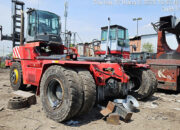
Reach trucks are forklifts used in warehouses and factories to move goods from one place to another. The name “Reach truck” comes from its ability to “reach” to high and narrow locations to pick up or place goods. It is considered one of the best forklifts for use in warehouses with narrow and tall spaces.

The Reach truck is designed with a long and 360-degree rotating boom, making it easy to move goods from the middle of the warehouse to the corners. It can also pick up goods from the upper floors such as the upper floors in the warehouse, which saves time and energy for moving goods.

The main components of a Reach truck include: fork, handlebars, engine, transmission and controls. It can use electricity, diesel, gas or gasoline to power the operation.

Reach trucks can also be equipped with features such as safety systems, control systems and screens that display information on operating status and loads. This helps the user to easily control and adjust the operation of the forklift, increasing safety and efficiency.

In addition, Reach trucks can be customized with other features such as roll count counters, activity logging systems and load managers to help with inventory and production management. done easily and efficiently.

In summary, Reach truck is one of the important and effective tools in moving goods in warehouses and factories. It saves time and energy, increases safety and operational efficiency, and makes warehouse and production management easier. If you are looking for a good tool to move goods in your warehouse, consider using a Reach truck.

Some popular reach trucks include:

– Electric Reach truck: Using electricity to operate, this type of vehicle can operate in the internal environment and has high speed, improving operational efficiency and energy saving.

– Reach truck with internal combustion engine: Using gasoline, diesel, and gas fuel to operate, this vehicle can operate in outdoor environments and has the ability to transport larger loads than other types of forklift trucks. other forklifts.

Fixed Reach Truck: Can be attached to a specific area in a warehouse or factory, this vehicle can operate in a specific area and has the ability to switch between different load values.

– Two-wheeled Reach truck: Using two wheels to operate, this type of truck can operate in a number of different environments and has the ability to switch between different load values.

In addition, Reach trucks can be customized with a number of options such as storage compartment design, crane height, vehicle width and the maximum load it can handle. To choose the right Reach truck, users need to consider the requirements of the job and the operating environment.

Reach trucks can also be customized with a number of features such as a safety protection system, a total management system for transportation operations and a total management system for resources.

Overall, the reach truck is one of the key transportation devices for many businesses as it provides the ability to efficiently and safely transport loads in storage and production environments. Choosing a reach truck that fits the requirements of the job and the environment will help increase efficiency and reduce costs for your business.

Notes on using reachtruck
When using a Reach truck, there are some important notes that users need to pay attention to:
– Operators must be trained: Only persons who have been trained in the safe use of Reach trucks are authorized to use this equipment.

– Check the status before use: Before starting to use, the user needs to check the status of the forklift and associated equipment to ensure that all is in good working order.

– Use according to safety regulations: Users need to follow the safety regulations and manufacturer’s policies regarding the use of Reach trucks.

Use with Attention: When using Reach trucks, users need to be focused and attentive to safety hazards and procedures.

– Store the forklift correctly: After use, users need to store the Reach truck correctly to ensure the good operation of the equipment and a longer life.

Perform periodic maintenance: Reach trucks need periodic maintenance to ensure that all equipment is in good working order and safe to use.

– Use Genuine Accessories and Parts: When using Reach trucks, users need to use only genuine accessories and components to ensure the best safety and performance.

– Use with responsibility: When using Reach truck, users need to be responsible
Leave a Reply

Your email address will not be published. Required fields are marked *

Related posts

  • xe-nang-2-tan Forklift 1.5 tons, tons, 2.5 tons, 3 tons

    Forklift 1.5 tons, tons, 2.5 tons, 3 tons – Which one is suitable for your needs? Forklifts are widely used in various fields such as factories, warehouses, ports… for transporting and stacking goods. However, choosing a forklift with the right lifting capacity is not a simple task. Choosing a too small forklift will cause overload, danger and inefficiency. On the other hand, choosing a too large forklift will result in cost waste and space inefficiency. So in the segments of forklifts 1.5 tons, 2 tons, 2.5 tons and 3 tons, which one should you choose to best suit the actual conditions of your business? Factors determining the appropriate lifting capacity: Type and size of goods being transported The first important factor to consider is the type of goods and their weight, size. If most of the goods are in the range of 1-1.5 tons, forklifts with capacities of 1.5-2 tons will be suitable. If you frequently transport heavy materials as steel, wood… then you should choose a forklift from 2.5 tons onwards. In addition, the size of the goods affects the choice of forklift because each type of forklift has different lifting heights and dimensions. Operating environment of the forklift The operating environment is also an important factor to consider when choosing a forklift. In closed warehouses or workshops, lightweight forklifts like 1.5-2 tons can be used to move around easily. On the other hand, if operating outdoors, heavy-duty forklifts like 2.5-3 tons should be chosen to meet load-bearing requirements and operate on rough terrain. For narrow operating spaces, it is best to avoid large cumbersome forklifts. Load capacity and distribution capability of the forklift Each type of forklift has different load limits according to its design. Some types are designed to carry loads evenly across their floors while others are only suitable for concentrated loads. Therefore, you need to understand the load capacity of the forklift and consider how the actual will be distributed. Furthermore, it is necessary to consider production scale and future business expansion plans. If there are plans to expand in scale in the future, it is better to choose a higher load capacity forklift to meet future needs and avoid investing in new equipment. Comparing different segments of forklifts based on lifting capacity: 1.5-ton Forklift Advantages: Low cost, flexible movement in narrow spaces. Disadvantages: Only suitable for transporting light goods under 1 ton. Recommendation: Choose this type if operating space is limited and mainly transporting goods under 1 ton weight. 2-ton Forklift Advantages: Versatile; can transport various types of goods from light to heavy within a load range of 1-2 tons. Disadvantages: Higher cost than a 1.5-ton model; not suitable for loads over 2 tons. Recommendation: A popular choice among small and medium-sized warehouses and manufacturing facilities; suitable for various heavy goods weighing between 1-2 tons such as paper rolls, fabrics, food items… 2.5-ton Forklift Advantages: Superior load capacity compared to lower models; can lift heavy loads. Disadvantages: Requires larger operating space. Recommendation: Ideal choice for large-scale warehouses or manufacturing facilities requiring transportation of heavy goods such as crates or construction materials weighing between 2 – 2.5 tons; especially suitable near coastal areas or ports due to its strong load-bearing capabilities. 3-ton Forklift Advantages: High load capacity; efficient transportation of heavy items. Disadvantages: High cost; difficult maneuverability in small spaces. Based on an analysis of factors influencing choice and comparing advantages/disadvantages among different segments mentioned above: If mainly transporting light goods under 1 ton weight in limited operating spaces – opt for a 1.5-ton model but consider future business expansion plans before making a decision. For shops or small-medium manufacturing facilities needing transportation within a range from light (under) up-to medium-heavy (around) two tonnes – go with a two-ton model which offers cost savings while meeting requirements effectively. For large factories or warehouses frequently moving heavy items like steel beams or cement bags weighing between two-three tonnes – choose a two-and-a-half ton model ensuring productivity & safety standards are met efficiently. In cases where handling super-heavy materials over two-and-a-half tonnes becomes necessary – invest in three-ton models after careful consideration due to their higher load-bearing capabilities. Additionally recommended selecting models with slightly higher loading capacities (10-20%) than anticipated maximum loads prevent overloading ensuring safety measures are maintained properly while considering financial capabilities when making investment decisions possibly opting rental services if regular usage isn’t required saving costs effectively. Moreover once selecting an appropriate model ensure following correct operational procedures maintenance schedules recommended by manufacturers prolonging equipment lifespan significantly catering special transportation needs considering specialized models optimizing operations efficiently.

  • pin-xe-nang Trends and New Technologies in the Forklift Industry

    Trends and New Technologies in the Forklift Industry Introduction The forklift industry has witnessed significant developments recently, driven by emerging trends and new technologies. This has spurred improvements in efficiency and safety in material handling operations. In this article, we will briefly overview some important trends and technologies in this field. Trends in the Forklift […]

  • nap-dien-xe-nang Notes when charging batteries for electric forklifts

    Notes when charging batteries for electric forklifts The power source of electric forklift is mainly battery and DC motor. Proper use of forklift batteries, including proper charging, proper replacement and other operational issues, is the basis for keeping electric forklift accessories in top condition. The first is the operation of charging the forklift battery. Forklift […]

  • xe nang kho pallet dien A Comprehensive Guide to Selecting Electric Pallet Trucks for Small Warehouses Introduction

    For small-scale warehouses, supermarkets, or production workshops, optimizing space and operational efficiency presents a significant challenge. The reliance on traditional manual hand pallet jacks not only curtails labor productivity but also introduces potential safety risks. Conversely, investing in a full-sized counterbalance forklift is often not feasible due to spatial and financial constraints. In this context, […]

  • xe nang dien cho nganh thuc pham Forklift Solutions for the Food and Beverage Industry

    Forklift Solutions for the Food and Beverage Industry The food and beverage (F&B) industry is one of the sectors that demands precision, efficiency, and strict adherence to hygiene standards in every operation. From production to storage and distribution, cargo management not only needs to be fast but also to ensure absolute food safety. This is […]

Gọi ngay
Chat Zalo