Store and maintain forklifts properly

Store and maintain forklifts properly

No matter how often your forklift is used daily or periodically during the week or month, it is always important to store and maintain the forklift properly.

Proper storage and maintenance of the forklift will ensure it is safe and always ready to be put into use when needed. On the other hand, proper forklift maintenance will also extend the life of this lifting equipment.

Properly maintained forklifts will also reduce overall maintenance costs, minimizing potential downtime from wear and tear of forklift components when exposed to bad weather. .

So, how to properly store and maintain forklifts?
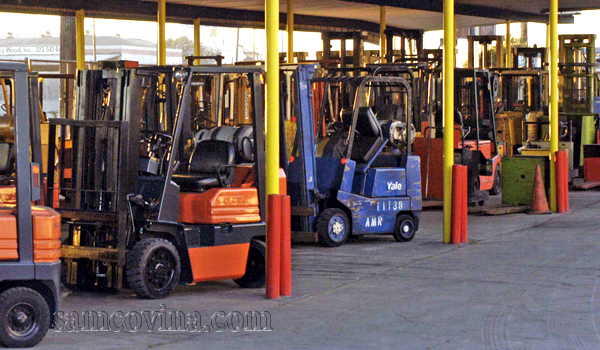
bao quan xe nang (1)

Samcovina.com would like to offer a few tips as follows:

Store and maintain forklifts after daily use

– Park the car (storage, stack the car) on a dry area and higher than the surrounding areas to prevent the car from being soaked in water when it rains.

– Make sure the forklift brake is properly engaged.

– Make sure the forks are in an upright position and are lowered to the ground.

– Turn the key switch to the “off” position and remove the key from the vehicle.

– Move the lift lever and tilt the lever in and out a few times to release the remaining pressure in the cylinder line.

– When using an LPG engine, close the petrol valve on the LPG tank and turn the key switch “off” after the engine has stopped naturally.

bao quan xe nang (2)

  1. Store and preserve forklifts for a long time (in case the forklift is used periodically on a weekly or monthly basis)

    – Disconnect the battery plug to prevent discharge and store in a dark, sheltered place.

    – Regularly apply anti-rust grease to shafts, joints and other contacting parts.

    – Cover the exhaust pipe and other places where moisture can enter.

    – Cover the entire forklift with a tarp, a cover with a similar function, or park the vehicle in a covered area to protect it from rain.

    – Lubricate all points to be lubricated.

    – Maintain the standard tire air pressure (always pay attention to the air and gas in the tires to avoid the situation of the tires running out of “air” – gas that can easily damage the tires).

    – Enter the working state and run the forklift once a week.

    – When using an LPG engine, close the petrol valve on the LPG tank and turn the key switch “off” after the engine has stopped naturally.

    By following the simple steps outlined in this article, you will be able to store and maintain your forklift correctly and ensure optimal function for the entire forklift life.

 ,

2 responses to “Store and maintain forklifts properly”

  1. Cảm ơn bài viết của bạn,
    Mình có một kinh nghiệm xin chia sẻ,
    Công ty mình có 4 chiếc xe nâng điện, khoảng hơn 1 năm trước do di dời nhà máy, mấy chiếc xe nâng này cho nghỉ tạm thời, bên mình cũng để chỗ khô ráo an toàn, cho anh em vệ sinh lau chùi dầu mỡ cần thận. Vậy mà khoảng 6 tháng sau mang ra sử dụng thì 3 cái hư, qua kiểm tra thì hầu hết hư acqui, bên thay aqui họ nói do bên mình không kiểm tra và xạc cho nó trong thời gian dài, nghĩa là không sử dụng nhưng lâu lâu vẫn phải xạc acqui.

    Vui đó thay acqui cho 3 chiếc xe cũng khá nhiều tiền, chiếc còn lại sử dụng không được bao lâu cũng phải thay acqui luôn
    Vậy khi xe nâng không sử dụng các bạn cũng thường xuyên kiểm tra mang ra xạc nó nhé

Leave a Reply

Your email address will not be published. Required fields are marked *

Related posts

  • phu tung loc dau cho xe nang Periodic Filter Replacement Checklist for Container Handlers

    Periodic Filter Replacement Checklist for Container Handlers (500h – 1000h – 2000h) In port operations and logistics, container handlers (reach stackers) and heavy-duty forklifts are true workhorses, operating under extremely high workloads. For machines from leading brands such as Kalmar, Konecranes, Hyster, or TCM to perform reliably over the long term, the filtration system plays […]

  • Where to rent a forklift for cheap?

    Benefits of renting a forklift The head of the business always considers the company’s financial flow, so when deciding to buy an asset, means, and tools of great value, it is often a very difficult decision. Forklift is also considered as a vehicle of great value, whether a business should rent or buy is also […]

  • xe nang container dau -dien Diesel or Electric Container Reachstackers?

    Advantages and Disadvantages of Each Option As the global and Vietnamese logistics industries rapidly transition toward the “Green Port” model, selecting material handling equipment is no longer just a purchasing decision—it is a long-term capital investment strategy. When comparing two major options—traditional diesel-powered container reachstackers and next-generation electric reachstackers—which solution is truly optimal for your […]

  • xe-nang-2-tan Forklift 1.5 tons, tons, 2.5 tons, 3 tons

    Forklift 1.5 tons, tons, 2.5 tons, 3 tons – Which one is suitable for your needs? Forklifts are widely used in various fields such as factories, warehouses, ports… for transporting and stacking goods. However, choosing a forklift with the right lifting capacity is not a simple task. Choosing a too small forklift will cause overload, danger and inefficiency. On the other hand, choosing a too large forklift will result in cost waste and space inefficiency. So in the segments of forklifts 1.5 tons, 2 tons, 2.5 tons and 3 tons, which one should you choose to best suit the actual conditions of your business? Factors determining the appropriate lifting capacity: Type and size of goods being transported The first important factor to consider is the type of goods and their weight, size. If most of the goods are in the range of 1-1.5 tons, forklifts with capacities of 1.5-2 tons will be suitable. If you frequently transport heavy materials as steel, wood… then you should choose a forklift from 2.5 tons onwards. In addition, the size of the goods affects the choice of forklift because each type of forklift has different lifting heights and dimensions. Operating environment of the forklift The operating environment is also an important factor to consider when choosing a forklift. In closed warehouses or workshops, lightweight forklifts like 1.5-2 tons can be used to move around easily. On the other hand, if operating outdoors, heavy-duty forklifts like 2.5-3 tons should be chosen to meet load-bearing requirements and operate on rough terrain. For narrow operating spaces, it is best to avoid large cumbersome forklifts. Load capacity and distribution capability of the forklift Each type of forklift has different load limits according to its design. Some types are designed to carry loads evenly across their floors while others are only suitable for concentrated loads. Therefore, you need to understand the load capacity of the forklift and consider how the actual will be distributed. Furthermore, it is necessary to consider production scale and future business expansion plans. If there are plans to expand in scale in the future, it is better to choose a higher load capacity forklift to meet future needs and avoid investing in new equipment. Comparing different segments of forklifts based on lifting capacity: 1.5-ton Forklift Advantages: Low cost, flexible movement in narrow spaces. Disadvantages: Only suitable for transporting light goods under 1 ton. Recommendation: Choose this type if operating space is limited and mainly transporting goods under 1 ton weight. 2-ton Forklift Advantages: Versatile; can transport various types of goods from light to heavy within a load range of 1-2 tons. Disadvantages: Higher cost than a 1.5-ton model; not suitable for loads over 2 tons. Recommendation: A popular choice among small and medium-sized warehouses and manufacturing facilities; suitable for various heavy goods weighing between 1-2 tons such as paper rolls, fabrics, food items… 2.5-ton Forklift Advantages: Superior load capacity compared to lower models; can lift heavy loads. Disadvantages: Requires larger operating space. Recommendation: Ideal choice for large-scale warehouses or manufacturing facilities requiring transportation of heavy goods such as crates or construction materials weighing between 2 – 2.5 tons; especially suitable near coastal areas or ports due to its strong load-bearing capabilities. 3-ton Forklift Advantages: High load capacity; efficient transportation of heavy items. Disadvantages: High cost; difficult maneuverability in small spaces. Based on an analysis of factors influencing choice and comparing advantages/disadvantages among different segments mentioned above: If mainly transporting light goods under 1 ton weight in limited operating spaces – opt for a 1.5-ton model but consider future business expansion plans before making a decision. For shops or small-medium manufacturing facilities needing transportation within a range from light (under) up-to medium-heavy (around) two tonnes – go with a two-ton model which offers cost savings while meeting requirements effectively. For large factories or warehouses frequently moving heavy items like steel beams or cement bags weighing between two-three tonnes – choose a two-and-a-half ton model ensuring productivity & safety standards are met efficiently. In cases where handling super-heavy materials over two-and-a-half tonnes becomes necessary – invest in three-ton models after careful consideration due to their higher load-bearing capabilities. Additionally recommended selecting models with slightly higher loading capacities (10-20%) than anticipated maximum loads prevent overloading ensuring safety measures are maintained properly while considering financial capabilities when making investment decisions possibly opting rental services if regular usage isn’t required saving costs effectively. Moreover once selecting an appropriate model ensure following correct operational procedures maintenance schedules recommended by manufacturers prolonging equipment lifespan significantly catering special transportation needs considering specialized models optimizing operations efficiently.

  • ban-va-cho-thue-xe-nang Calculating ROI When Investing in Forklifts for Businesses

    Calculating ROI When Investing in Forklifts for Businesses Optimizing logistics operations and warehouse management is key for businesses to improve production and business efficiency. Investing in forklifts is one of the effective solutions to help businesses achieve this goal. However, before making an investment decision, businesses need to carefully consider the cost and benefit factors. […]

Gọi ngay
Chat Zalo