Comparison of Reach Stacker, Reach Truck, and Pallet Truck: Which is Best for Your Warehouse?
When deciding which type of forklift to use for your specific needs, choosing the wrong equipment can lead to significant investment losses and disrupt your entire operation.
Among the numerous types of forklifts, three commonly compared options are the Reach Stacker, Reach Truck, and Pallet Truck. Are they similar? Not at all. Each is designed to solve distinct challenges.
Step 1: Understanding the Types of Forklifts
Before diving into comparisons, let’s clarify what each type is.
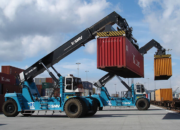
– Reach Stacker (Container Forklift): Picture this as the heavyweight champion of logistics. Its primary role isn’t handling small pallets but lifting and stacking containers weighing tens of tons. With its long, powerful arm, it can effortlessly lift and stack containers. You’ll find these at seaports, inland container depots (ICDs), and large-scale logistics hubs.
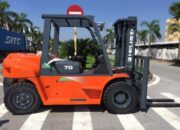
– Reach Truck (High-Reach Forklift): This is the master of warehouse space optimization. Its standout feature is a mast that can “reach” forward to pick or place pallets deep within racking systems. Its design allows it to maneuver in very narrow aisles where standard counterbalance forklifts can’t operate.
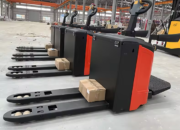
– Pallet Truck (Hand/Electric Pallet Truck): The diligent worker of warehouse floors. From manual hydraulic pallet trucks powered entirely by human effort to electric walk-behind pallet movers, their job is simple: lift pallets off the ground and move them from point A to point B. They’re ideal for low-level transport, loading/unloading trucks, or moving goods within production areas.
Step 2: Which Forklift Suits Your Real-World Needs?
This is the critical part. Apply the above information to your warehouse.
Handling containers? Reach Stacker is your answer!
Consider a Reach Stacker if:
– You operate in heavy industry: You manage an inland container depot (ICD), container yard, steel mill, or import/export distribution center, dealing daily with 20ft or 40ft containers.
– You handle massive loads: Pallets weighing a few tons are no match for you. You need to lift containers with total weights of 30–40 tons.
– Space costs money: You stack containers 5–6 tiers high to maximize yard space. Only a Reach Stacker can do this efficiently.
– Expert Tip: Investing in a Reach Stacker is a major decision. Beyond the machine, you need a robust yard surface to handle the massive weight of both the vehicle and cargo. Operators must be specially trained and certified due to the high complexity and risks.
Sky-high warehouse with narrow aisles? Reach Truck is the solution.
Choose a Reach Truck if:
– You maximize vertical space: Your warehouse has selective or double-deep racking systems with heights of 6 meters or more. Reach Trucks can access the highest tiers that standard forklifts can’t reach.
– Every centimeter of aisle space counts: To increase storage density, your aisles are narrow (typically under 3 meters). With a tight turning radius and extendable mast, Reach Trucks excel in these spaces.
– Your warehouse is clean: Operating on 100% electric power, Reach Trucks produce no emissions and minimal noise, making them ideal for food, pharmaceutical, cold storage, or electronics warehouses.
– Speed and precision are critical: Retrieving and placing pallets at great heights requires absolute accuracy, which is a Reach Truck’s strength.
– Expert Tip: For Reach Trucks to perform effectively, the warehouse floor must be perfectly flat. Any unevenness can pose risks when lifting at maximum height. Operators need thorough training in high-level operations and safety protocols.
Need a quick, lightweight ground solution? Pallet Truck is the champion.
A Pallet Truck is the perfect choice if:
– Your need is simple ground transport: Your main task is moving pallets from a truck’s tailgate to a staging area, between production lines, or from buffer storage to dispatch zones.
– Budget is a top priority: Starting at just a few million VND for a manual hydraulic pallet truck, this is the most cost-effective solution for basic transport needs.
– You need maximum flexibility in tight spaces: Pallet Trucks can navigate elevators, tight corners, and low racks where no other forklift can go.
– Usage is low or for auxiliary tasks: They’re a great support for larger forklifts, handling smaller transport tasks to free up bigger machines for heavy lifting.
– Expert Tip: The biggest limitation of Pallet Trucks is that they CANNOT stack goods on racks. Their sole purpose is low-level transport. If you have high transport frequency or long distances, consider an electric pallet truck to boost productivity and reduce worker fatigue.