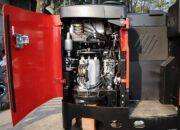
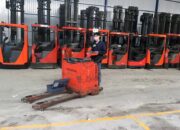
Driving a Kalmar Container Forklift

Kalmar Container Forklift has now become a famous brand in the world, in Vietnam market the most commonly used models at ports are: DRF450 container forklift, DRF100 empty forklift…

Currently, Samcovina has imported some of the above vehicles and is in storage at the bus station in District 9, we sell or rent it at a good price, attentive technical and after-sales service.

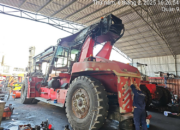
xe nâng container Kalmar


3 responses to “Driving a Kalmar Container Forklift”

  1. Phó Tổng biên tập phụ trách Tạp chí
    Doanh nghiệp và Thương hiệu Nguyễn Nam Thắng tặng ảnh kỷ niệm cho Chủ tịch Hội Doanh nghiệp Nhỏ và Vừa
    ngành nghề nông thôn Việt Nam Nguyễn Ngọc Quang.

    GD&TĐ – Ngày 17/6 tại Hà Nội, Tạp chí Doanh nghiệp và Thương hiệu long trọng tổ chức chương trình giao lưu kết nối “Báo chí
    đồng hành cùng doanh nghiệp” Nhân dịp kỷ niệm 93
    năm ngày Báo chí cách mạng Việt Nam (21/6/1925 – 21/6/2018) và Kỷ niệm 01
    năm ra mắt bộ mới nhằm khẳng định và phát huy hơn nữa vai trò của Tạp chí
    trong thời gian qua.

    Phát biểu tại buổi lễ ông Nguyễn Ngọc Quang – Chủ tịch Hội Doanh
    nghiệp Nhỏ và Vừa ngành nghề nông thôn Việt Nam cho biết: Sau 13 năm hoạt
    động Tạp chí Doanh nghiệp và Thương hiệu
    chưa phát huy hết vai trò của mình trong việc phản ánh những mặt trái
    của xã hội, cũng như đấu tranh chống tiêu cực và nâng cao
    vai trò của Đảng, phản ánh tâm tư nguyện vọng
    của nhân dân.

Leave a Reply

Your email address will not be published. Required fields are marked *

Related posts

  • kiem tra an toan khi su dung xe nang Occupational Safety When Using Forklifts

    Occupational Safety When Using Forklifts: Essential Regulations to Know In industrial environments such as warehouses, factories, or construction sites, forklifts have become indispensable tools due to their ability to quickly and efficiently transport and lift goods. However, if not operated correctly, forklifts can pose significant risks, leading to serious workplace accidents that affect both people […]

  • luu-y-khi-bao-duong-xe-nang Forklift maintenance, six notes to know

    Forklift maintenance, six notes to know First: How often should a forklift be serviced? This is very important. In general, such as manual forklifts, due to fewer parts and compared to electric forklifts, internal combustion forklifts, liquefied petroleum gas forklifts, etc. Maintenance cycles can be made longer, such as every six months. For electric forklift, […]

  • Forklift rental in Long An

    Forklift rental In order to bring the best solution for companies that do not have forklifts, Samcovina Joint Stock Company specializes in providing professional forklift rental services for individuals and businesses in Long An. Samcovina offers forklift rental from months to years. In addition, we also provide forklift rental services according to shifts or specific […]

  • xe-nang-tay-keo-pallet What is a Pallet Truck?

    What is a Pallet Truck? A pallet truck is a specialized type of forklift designed for transporting and lifting palletized goods. It is commonly used in warehouses, factories, ports, and other locations where packaged goods on pallets need to be moved. A pallet truck typically consists of a sturdy frame, large wheels for easy movement […]

  • xe-nang-2-tan Forklift 1.5 tons, tons, 2.5 tons, 3 tons

    Forklift 1.5 tons, tons, 2.5 tons, 3 tons – Which one is suitable for your needs? Forklifts are widely used in various fields such as factories, warehouses, ports… for transporting and stacking goods. However, choosing a forklift with the right lifting capacity is not a simple task. Choosing a too small forklift will cause overload, danger and inefficiency. On the other hand, choosing a too large forklift will result in cost waste and space inefficiency. So in the segments of forklifts 1.5 tons, 2 tons, 2.5 tons and 3 tons, which one should you choose to best suit the actual conditions of your business? Factors determining the appropriate lifting capacity: Type and size of goods being transported The first important factor to consider is the type of goods and their weight, size. If most of the goods are in the range of 1-1.5 tons, forklifts with capacities of 1.5-2 tons will be suitable. If you frequently transport heavy materials as steel, wood… then you should choose a forklift from 2.5 tons onwards. In addition, the size of the goods affects the choice of forklift because each type of forklift has different lifting heights and dimensions. Operating environment of the forklift The operating environment is also an important factor to consider when choosing a forklift. In closed warehouses or workshops, lightweight forklifts like 1.5-2 tons can be used to move around easily. On the other hand, if operating outdoors, heavy-duty forklifts like 2.5-3 tons should be chosen to meet load-bearing requirements and operate on rough terrain. For narrow operating spaces, it is best to avoid large cumbersome forklifts. Load capacity and distribution capability of the forklift Each type of forklift has different load limits according to its design. Some types are designed to carry loads evenly across their floors while others are only suitable for concentrated loads. Therefore, you need to understand the load capacity of the forklift and consider how the actual will be distributed. Furthermore, it is necessary to consider production scale and future business expansion plans. If there are plans to expand in scale in the future, it is better to choose a higher load capacity forklift to meet future needs and avoid investing in new equipment. Comparing different segments of forklifts based on lifting capacity: 1.5-ton Forklift Advantages: Low cost, flexible movement in narrow spaces. Disadvantages: Only suitable for transporting light goods under 1 ton. Recommendation: Choose this type if operating space is limited and mainly transporting goods under 1 ton weight. 2-ton Forklift Advantages: Versatile; can transport various types of goods from light to heavy within a load range of 1-2 tons. Disadvantages: Higher cost than a 1.5-ton model; not suitable for loads over 2 tons. Recommendation: A popular choice among small and medium-sized warehouses and manufacturing facilities; suitable for various heavy goods weighing between 1-2 tons such as paper rolls, fabrics, food items… 2.5-ton Forklift Advantages: Superior load capacity compared to lower models; can lift heavy loads. Disadvantages: Requires larger operating space. Recommendation: Ideal choice for large-scale warehouses or manufacturing facilities requiring transportation of heavy goods such as crates or construction materials weighing between 2 – 2.5 tons; especially suitable near coastal areas or ports due to its strong load-bearing capabilities. 3-ton Forklift Advantages: High load capacity; efficient transportation of heavy items. Disadvantages: High cost; difficult maneuverability in small spaces. Based on an analysis of factors influencing choice and comparing advantages/disadvantages among different segments mentioned above: If mainly transporting light goods under 1 ton weight in limited operating spaces – opt for a 1.5-ton model but consider future business expansion plans before making a decision. For shops or small-medium manufacturing facilities needing transportation within a range from light (under) up-to medium-heavy (around) two tonnes – go with a two-ton model which offers cost savings while meeting requirements effectively. For large factories or warehouses frequently moving heavy items like steel beams or cement bags weighing between two-three tonnes – choose a two-and-a-half ton model ensuring productivity & safety standards are met efficiently. In cases where handling super-heavy materials over two-and-a-half tonnes becomes necessary – invest in three-ton models after careful consideration due to their higher load-bearing capabilities. Additionally recommended selecting models with slightly higher loading capacities (10-20%) than anticipated maximum loads prevent overloading ensuring safety measures are maintained properly while considering financial capabilities when making investment decisions possibly opting rental services if regular usage isn’t required saving costs effectively. Moreover once selecting an appropriate model ensure following correct operational procedures maintenance schedules recommended by manufacturers prolonging equipment lifespan significantly catering special transportation needs considering specialized models optimizing operations efficiently.