-
 Comparison between Buying and Renting Container Forklifts
Comparison between Buying and Renting Container Forklifts 1. Benefits of Buying a Container Forklift compared to Renting – Lower initial cost: When buying a container forklift, the initial cost will be lower compared to renting. Users only need to make a one-time payment and own the container forklift. – No time limitation on usage: When buying a forklift, users are not limited by time. They can use the container forklift for as long as necessary without worrying about returning it after a certain period. – Decision-making power for upgrades and repairs: When buying a forklift, users have the freedom to decide on upgrades or repairs according to their needs and preferences. – Depreciation of assets for tax reduction: Buying a container forklift allows users to depreciate the asset for tax reduction, helping save costs in business operations. 2. Benefits of Renting a Container Forklift compared to Buying – No large upfront investment: When renting a container forklift, users do not need to make a large upfront investment like when buying. Instead, they only need to pay monthly or yearly rental fees. – Reduced risk when business models change: Renting a container forklift helps reduce risks when business models change. If there is a need to change scale or type of business, users can easily switch to using the appropriate type of forklift without financial difficulties. – Reduced regular maintenance costs: When renting, users do not have to worry about regular maintenance and servicing of the forklift. These costs will be covered by the rental company. – Always using the latest forklift technology: When renting, users always have access to the latest and most advanced container forklifts in the market. This helps increase work efficiency and reduces the risk of breakdowns. 3. Comparison of cost factors between both options – Initial purchase/rental cost: When buying, users have to pay a large upfront amount to own the container forklift, while renting only requires a small rental fee or deposit. – Fuel costs: Both options have fuel costs for operating the container forklift. However, these costs may vary depending on the type of forklift and level of usage. – Regular maintenance costs: When owning a forklift, users have to bear the regular maintenance and servicing costs. On the other hand, when renting, these costs are covered by the rental company. – Insurance costs: When owning a forklift, users need to purchase insurance for the vehicle and driver. When renting, the rental company already has insurance coverage for their fleet. – Replacement parts costs: When owning a forklift, users have to provide and pay for replacement parts when necessary. When renting, the rental company takes responsibility for this. 4. Analysis of factors when making a decision to buy or rent a container forklift – Usage needs: Users need to consider their long-term or short-term usage needs of the container forklift to decide whether to buy or rent. – Available budget: Users need to consider their current budget to decide whether they have enough funds to buy or only rent a forklift. – Long/short-term business strategy: Users need to consider their long-term or short-term business strategy to decide whether buying or renting is more suitable for their container forklift needs. Trusted Sales and Rental Address of Container Forklifts in Binh Duong Are you in need of renting or buying a container forklift in Binh Duong but unsure of any reputable and quality addresses? Let Samcovina Joint Stock Company help you! Samcovina currently has a diverse range of container forklifts in various types and models. Customers can choose from electric-powered, diesel-powered, or pneumatic-powered forklifts that suit their job requirements. Our experienced team of technicians is always ready to advise and support customers in the selection process. In addition, Samcovina provides competitive rental services for container forklifts. Customers can rent on a daily, weekly, or monthly basis, offering flexibility and cost savings. We guarantee the quality and safety of the container forklifts for each customer. Moreover, Samcovina offers maintenance and repair services for container forklifts. Our professional team of technicians is ready to assist with any related issues. We use genuine replacement parts and adhere to strict inspection procedures to ensure the quality of our work. With the goal of customer satisfaction, Samcovina not only provides sales and rental services for container forklifts but also supports customers in choosing the most suitable type of forklift. Contact Samcovina today for consultation and detailed pricing. SAMCOVINA JOINT STOCK COMPANY Tax Code: 0313121108 Address: No. 3 Street 1, Song Than Industrial Zone, Di An Ward, Di An City, Binh Duong Province, Vietnam Email: info@samcovina.com
-
 5 Warning Signs Your Reachstacker Brake System is Failing
5 Warning Signs Your Reachstacker Brake System is Failing — And When to Replace Brake Pads Meta Description: Don’t wait until brake failure becomes a disaster. Learn the 5 critical warning signs of brake issues on reachstackers and when to replace brake pads for maximum safety and uptime. Brake Failure = Disaster for Safety and […]
-
 FAQs about Forklift
Frequently Asked Questions about Forklifts 1. What is a forklift? Answer: A forklift is a specialized vehicle designed to lift, lower, and move goods and materials in warehouses and factories easily and safely. It is equipped with front lifting forks and an engine for movement. 2. What are the most common types of forklifts? Answer: Some common types of forklifts include counterbalance forklifts, electric forklifts, pneumatic forklifts, and manual pallet jacks. Among them, electric forklifts are the most popular due to their flexibility, ease of use, and environmental friendliness. 3. What is the typical lifting range of a forklift? Answer: The standard lifting range of a forklift is usually between 2m – 5.5m depending on the type and capacity. For high-rise warehouses, taller lifting ranges up to 7-12 meters can be used. 4. What is the maximum safe load capacity of regular forklifts? Answer: The safe load capacity of regular forklifts ranges from 1 – 5 tons depending on the capacity and size of the vehicle. For heavy-duty forklifts, the load capacity can go up to 10-15 tons. Always follow the manufacturer’s recommended load limits to ensure safety. 5. What are the common fuel options for forklifts? Answer: Forklifts commonly run on electricity (battery) or diesel/gasoline fuel. Electric forklifts are preferred in indoor warehouses due to their clean operation, quietness, and ease of use. 6. How should a forklift be regularly maintained? Answer: To ensure proper operation and safety, a forklift should undergo regular maintenance every month or after a certain number of operating hours. Maintenance tasks typically include checking oil levels, replacing oil/fuel filters, inspecting brakes/tires, charging/replacing batteries (for electric forklifts), etc. 7. How much does it cost to operate and maintain a forklift annually? Answer: The annual operating and maintenance cost for a regular forklift is around 15 – 30 million VND, including fuel costs (diesel, gasoline, electricity), regular maintenance, and small component replacements. For higher-end forklifts, the cost can go up to 50-70 million VND per year. 8. How to safely lift and lower palletized loads with a forklift? Answer: When lifting loads, tilt the forks forward by 15 degrees to ensure stability, move slowly, and maintain a safe distance from the surroundings. Lift the load slowly according to the driver’s visibility. Lower the load slowly in a tilted direction. Avoid sudden lifting or lowering that may cause load spills. 9. What qualifications or certifications are required to operate a forklift? Answer: Forklift operators need to have certification in safe operation and handling of forklifts. They also need to possess a Forklift Driver’s License issued by the authorized agency to legally operate the vehicle. 10. What are the standard dimensions of different types of forklifts? Answer: The dimensions of forklifts vary depending on their load capacity and type. Typically, length ranges from 1.5 – 3m; width ranges from 0.5 – 1m; height ranges from 1.5 – 4m. Some models have smaller dimensions to fit narrow aisles. 11. On what types of terrains can forklifts operate? Answer: Forklifts can operate well on most flat surfaces such as concrete, asphalt, tiled floors, etc. However, they should not be used on rough or uneven terrains or muddy areas. 12. What is the safe traveling speed of a forklift when carrying loads? Answer: The recommended safe traveling speed for a forklift carrying loads is 8-12 km/h. Speed should be reduced when going around corners or narrow paths. 13. How to stack loads on a forklift to ensure safety? Answer: Loads should be stacked evenly and within the allowed load capacity. Do not stack higher than the fork height. Maintain stability while moving. Stack in a way that does not obstruct the driver’s visibility. 14. What safety features do forklifts have? Answer: Forklifts are equipped with reverse alarms, turn signals, warning horns, anti-tip frames, and guardrails to protect the driver and cargo. 15. How long does it take to fully charge an electric forklift battery? Answer: The average charging time for an electric forklift battery is 6-8 hours. It should be fully charged before each shift. Some models can have fast charging options within 2-3 hours. 16. Which countries are the most common sources of imported forklifts? Answer: Forklifts are mostly imported from Japan, South Korea, China, and Taiwan. These countries are known for their quality and popular brands in Vietnam. 17. What are some popular forklift brands? Answer: Some popular forklift brands include Toyota, Mitsubishi, Komatsu, Nissan, TCM, Hangcha, Lonking… 18. Is it better to buy a new or used forklift? Why? Answer: It is recommended to buy a new forklift to ensure quality and longevity of the vehicle. New forklifts have high durability, fewer breakdowns, and lower maintenance costs. Used forklifts may be cheaper but come with higher risks of issues. 19. How much does it cost to insure a forklift annually? Answer: The insurance cost for a forklift is around 4-8% of the vehicle’s value. For example, for a 500 million VND forklift, the insurance fee would be approximately 20-40 million VND per year depending on the coverage. 20. What is the process for inspection and registration of a forklift? Answer: Forklifts need to undergo inspection and registration procedures according to local regulations. This typically involves submitting necessary documents, paying fees, and obtaining registration plates or stickers.
-
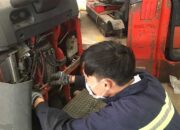 Questions and quick answers about common malfunctions of forklifts
Questions and quick answers about forklifts Question 1: Why does the forklift not work? Causes and remedies? A: Due to electrical system faults, engine, hydraulics. Check and repair faulty systems. Question 2: How to determine the cause when the forklift breaks down? A: Check each system such as brakes, steering, lifting to detect faults. […]
-
 What is a Container Forklift? Detailed Comparison of Reach Stacker vs. Forklift Handler
What is a Container Forklift? Detailed Comparison of Reach Stacker vs. Forklift Handler Are you managing a warehouse, a dry port, or a factory and facing the decision to invest in a container forklift? Choosing the wrong equipment between a Reach Stacker and a Forklift Handler could cost you billions in operational expenses and significantly […]


