

Safety for forklift users
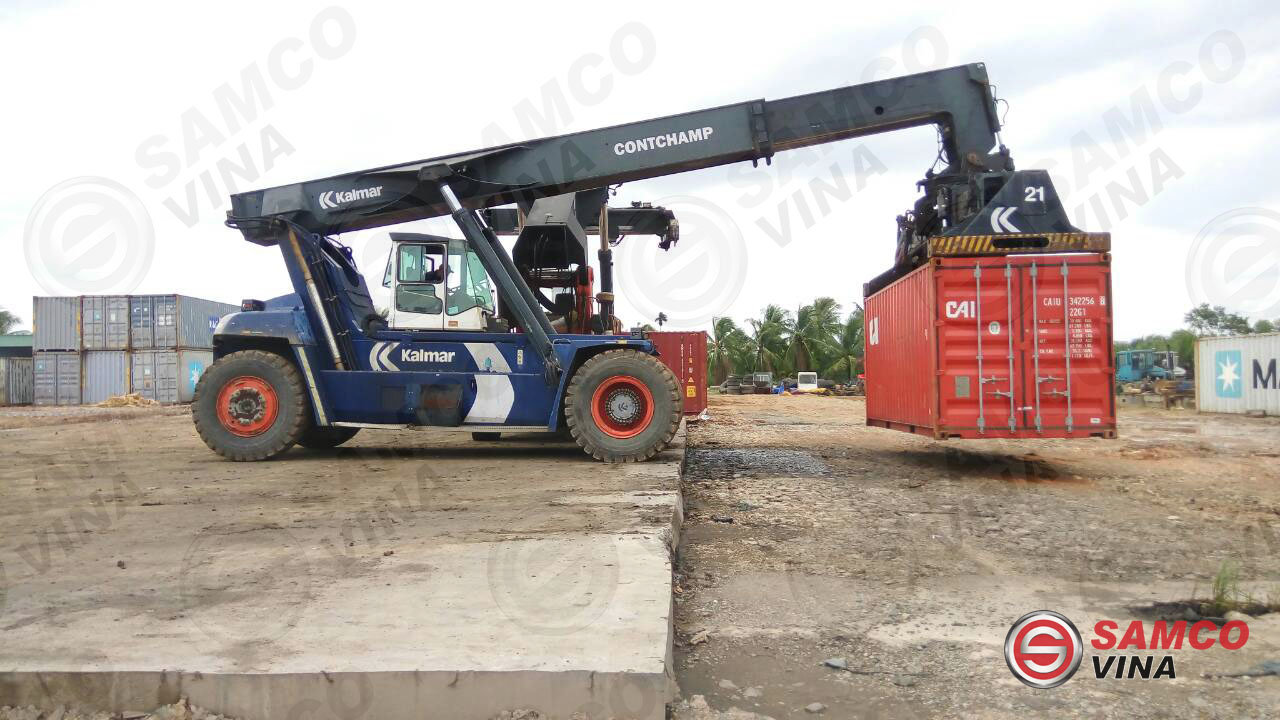
Electric forklifts, forklifts with internal combustion engines (forklifts), container reachstackers are collectively known as motorized forklifts.
While motorized forklifts are often used to move in the internal area, forklift operators without training and basic training will be very dangerous to people, vehicles and goods. We would like to point out general notes to help forklift users to be aware of the work and possible problems to prevent and avoid problems and risks to people and vehicles.
Grouping them together into specific groups can make it easier to analyze accidents and, ultimately, to prevent them effectively.
Group of factors on work organization:
• Lack of training or improper training of forklift operators.
• Production pressures such as speed or work stress.
• Lack of suitable working tools, spare parts and accessories.
• Assigning the wrong operator or the wrong vehicle.
• Failure to maintain the forklift regularly or periodically.
• The age of the forklift.
Group of factors on operation and driver behavior:
• Go at a speed exceeding the legal limit.
• Move the vehicle while the load is overhead.
• Incorrect reverse and turning techniques.
• Incorrect technique of turning, stopping or accelerating (suddenly)
• Incorrect warning signal to others about nearby forklift operation.
• Information exchange, communication is limited while working.
• Hanging, climbing on forklifts or loads while the vehicle is working
• Incorrect forklift parking.
• Holding and braking trailers and containers is not good, leading to drifting.
• Joking, performing, or acting inappropriately while driving.
• Lack of forklift services.
Group of elements about workspace:
• The aisle is narrow.
• The aisles are crowded and messy.
• Congestion at intersections or doors.
• Traffic volume in the work area.
• Walk and work in forklift operating areas.
• Other conditions in the workplace such as noise, odors, toxic gases, dust, or lack of light.
• Many slopes, rough road surface.
• The condition of the gathering area is lacking.
Load factor group
• Goods and loads are not neatly stacked on pallets.
• Pallets are damaged, do not replace or repair.
• The load is too heavy.
• Unstable load, obstructing vision.
Group of elements belonging to the original design of the vehicle
• Failure of the brake system.
• Failure of the steering system
• Malfunction of the clutch, motion navigation system, or transmission.
• Problems in assembling fork fork.
• Leaks in hydraulic or transmission systems.
• Missing, incomplete, or damaged safety equipment.
• Emissions from forklifts.
• Blind spots or obstacles block the driver’s view.
• Unprofessional layout and installation of control and display systems.
How can pedestrian accidents be prevented or reduced?
• Separate pedestrian and forklift aisles.
• Restrict access to areas where forklifts are operating.
• Keep a safe distance from forklifts whenever possible.
• Pedestrians must always let drivers know they are in the area. Look the driver directly in the eye to make sure the driver knows your presence.
• Make sure the work area is well-lit and free of obstructions.
• Use caution near blind corners, doors, and narrow aisles. Sound your horn at intersections or bends.
• Use reflective clothing where appropriate
• Limit the forklift moving speed.
• Do not go near or stand under the forklift fork.
• Do not load the forklift when the driver’s field of view is limited.
• Limit driving forklifts near high-traffic areas.
We hope the above sharing is useful in protecting people’s safety and protecting vehicles and goods from being damaged by subjectivity!


Làm nghề nào cũng vậy vấn đề an toàn cho người và tài sản luôn đặt lên hàng đầu
Bạn có biết nơi nào đào tạo và cấp bằng lái xe nâng không? Học bao lâu? học phí thế nào?
Bên mình không có dịch vụ và cũng không rành dịch vụ đào tạo lái xe bạn nhé. Vậy bạn có thể liên hệ với những đơn vị chuyên môn nha
Thân mến