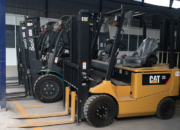
Technical Selection Criteria for Specialized Hydraulic Fluid for Container Handlers
A container handler is a piece of heavy-duty lifting equipment wherein the hydraulic system serves as the core actuating mechanism, responsible for all lifting, lowering, and container positioning operations. The operating medium for this entire system is the hydraulic fluid—a complex engineering component tasked with power transmission, lubrication, heat dissipation, and the protection of mechanical parts from wear and corrosion.
The selection of a hydraulic fluid that fails to meet the required technical specifications can lead to diminished operational performance, increased frequency of unscheduled maintenance, and catastrophic, costly damage to major components such as pumps, control valves, and hydraulic cylinders. This document will analyze the critical technical criteria that must be considered to select the appropriate hydraulic fluid, ensuring the reliability and optimizing the operational lifecycle of the equipment.
1. The Technical Role of Hydraulic Fluid in Container Handler Operation (H2)
Hydraulic fluid is more than a simple power transmission liquid. In the high-pressure hydraulic system of a container handler, it simultaneously performs multiple critical engineering functions:
- Pressure and Energy Transmission: Converting mechanical power from the engine into hydrostatic energy to operate the actuators.
- Lubrication and Anti-Wear Protection: Forming an oil film between metal surfaces in relative motion (e.g., pistons and cylinders, gears within pumps) to minimize friction and prevent wear.
- Heat Transfer (Cooling): Absorbing and transporting heat generated from friction and fluid compression to the heat exchanger (cooler), thereby maintaining a stable operating temperature for the system.
- Sealing: Filling microscopic clearances between components to prevent internal leakage and maintain working pressure.
- Corrosion and Contamination Control: Protecting metallic components from oxidation and rust, and neutralizing harmful agents generated during operation.
Using an unsuitable hydraulic fluid will lead to the following technical problems:
- Cavitation and Frictional Wear: Occurring in hydraulic pumps and motors, leading to reduced performance and eventual failure.
- Decreased Volumetric Efficiency: Caused by an overly thin oil film at high temperatures, resulting in internal leakage that reduces the speed and lifting capacity of the equipment.
- Localized or System-Wide Overheating: Leading to oil degradation and the destruction of seals and gaskets.
- Control Valve Obstruction (especially solenoid valves): Caused by the formation of sludge and varnish from oil oxidation.
2. Key Technical Specifications for Consideration (H2)
The selection of hydraulic fluid must be based on an analysis of technical data and specific operating conditions. The following are the five most important parameters.
Viscosity Grade (ISO VG) and Viscosity Index (VI) (H3)
Viscosity is a measure of a fluid’s internal friction. Selecting the correct viscosity grade is the paramount factor.
- ISO VG (International Standards Organization Viscosity Grade): Defines the kinematic viscosity of the oil at 40°C. Common grades for container handlers include:
- ISO VG 46: Often recommended for systems operating in moderate ambient temperatures or for newer system designs that require lower viscosity for improved efficiency.
- ISO VG 68: The most widely used viscosity grade in tropical climates like Vietnam. It ensures the maintenance of a sufficient oil film thickness to protect machine parts when operating temperatures are high.
- Viscosity Index (VI): A dimensionless number that indicates the change in oil viscosity with temperature variations. An oil with a high VI (typically > 95) will exhibit less viscosity change across a range of temperatures. This is critically important for ensuring stable system performance from start-up to maximum operating temperature.
Compliance with Original Equipment Manufacturer (OEM) Specifications (H3)
OEMs such as Kalmar, Konecranes, and Liebherr provide recommendations based on the design and materials of their hydraulic systems. These recommendations include not only the viscosity grade but also the performance standards the oil must meet, for example:
- DIN 51524 Part 2 (HLP)
- DIN 51524 Part 3 (HVLP) (For high viscosity index oils)
- Denison HF-0, HF-1, HF-2
- Eaton (Vickers) M-2950-S or I-286-S
Using a product that does not meet these standards may void the equipment’s warranty.
Analysis of Actual Operating Conditions (H3)
- Working Environment: Seaport areas with high airborne chloride concentration demand oil with superior rust and corrosion inhibition. Dusty environments require oil with good filterability and resistance to deposit formation.
- Operating Duty Cycle: Equipment operating continuously (24/7) requires oil with high oxidative stability to resist thermal degradation, thereby extending the oil drain interval.
Base Oil Classification (H3)
The quality and performance of a hydraulic fluid are heavily dependent on the type of base oil used, as classified by the American Petroleum Institute (API):
- API Group I & II (Mineral Base Oils): The most common, meeting standard operational requirements at a reasonable cost. Group II oils offer higher purity and better oxidation stability than Group I.
- API Group III (Synthetic Technology Mineral Oil) & Group IV (PAO – Polyalphaolefin): Often referred to as synthetic oils.
- They possess a very high natural Viscosity Index (VI).
- They exhibit excellent thermal and oxidative stability, permitting extended oil life.
- They provide better low-temperature lubrication performance.
- Recommended for modern equipment operating under the most severe conditions.
The Engineering Additive Package (H3)
An additive package is blended into the base oil to enhance or impart properties that the base oil lacks:
- Anti-Wear (AW) Additives: Typically zinc-based compounds (ZDDP), which form a chemical film on metal surfaces to prevent direct contact under high-load conditions.
- Rust & Oxidation (R&O) Inhibitors: Protect metal surfaces from corrosion by water and air; slow down the oil’s reaction with oxygen at high temperatures, preventing the formation of acids and sludge.
- Anti-foam Agents: Reduce the surface tension of air bubbles, causing them to collapse quickly, thus ensuring the incompressibility of the fluid.
- Demulsifiers: Help the oil to separate rapidly from water in case of moisture contamination, allowing water to be removed via filters or drain ports.
3. Common Failures in Hydraulic Fluid Operation and Maintenance (H2)
- Selecting a non-compliant product based on cost: A lower initial cost can lead to exponentially higher repair and downtime costs in the long term.
- Mixing different types of hydraulic fluids: This carries the risk of incompatibility between different additive packages and base oils, which can cause precipitation, reduce performance, and clog filters.
- Neglecting scheduled oil drain intervals and routine oil analysis: Degraded and contaminated oil loses its protective capabilities. Oil analysis is an effective diagnostic tool to determine the health of both the oil and the system.
- Improper storage and handling: Allowing moisture and particulate contamination to enter the oil before use significantly reduces the service life of both the fluid and the equipment.