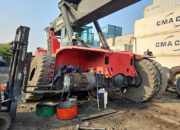
Forklift Rental in Ho Chi Minh City: Electric Forklifts, Reach Trucks, Pallet Trucks & Reach Stackers
Forklift rental services in Ho Chi Minh City are primarily available in four categories: electric counterbalance forklifts, reach trucks, pallet trucks, and container handlers (reach stackers). Each type is designed for a specific application. Electric forklifts are widely used in factories, warehouses, and general cargo handling; reach trucks are ideal for high-bay warehousing; pallet trucks are intended for short-distance pallet transportation; while reach stackers are specialized for container handling at ports and container yards.
Rental rates vary significantly depending on the equipment type, ranging from only a few dollars per day for manual pallet trucks to hundreds of millions of VND per month for heavy-duty reach stackers. The following guide provides an overview of each equipment category, indicative market rental rates, and important considerations before signing a rental agreement.
What Types of Forklifts Are Available for Rental in Ho Chi Minh City?
Ho Chi Minh City is home to numerous industrial parks, seaports, logistics hubs, and distribution centers, creating demand for a wide range of material handling equipment. Manufacturing plants typically require electric or diesel forklifts with medium lifting capacities. Logistics warehouses rely on reach trucks for high-racking operations. Assembly plants commonly use pallet trucks to transport semi-finished products, while container terminals and depots require specialized container handling equipment.
Choosing the correct equipment is more important than simply comparing rental prices. For example, using a standard counterbalance forklift for applications requiring an 8–10 meter lift height is neither safe nor productive.
Electric Forklift Rental in Ho Chi Minh City
Electric counterbalance forklifts are the most commonly rented forklifts. They use a rear counterweight to balance loads lifted at the front and are typically available in capacities ranging from 1.5 to 3.5 tons, with lifting heights of approximately 3–6 meters.
These forklifts are suitable for:
– Manufacturing facilities
– General warehouses
– Distribution centers
– Loading and unloading general cargo containers
Typical rental rates in Ho Chi Minh City are:
– 1.5-ton electric forklift: approximately VND 18–22 million/month
– 3-ton electric forklift: approximately VND 25–30 million/month
– Daily rental: approximately VND 1.0–1.8 million/day, depending on capacity
Long-term contracts of three to six months or longer generally receive discounted monthly pricing.
Reach Truck Rental in Ho Chi Minh City
Reach trucks feature an extendable mast that allows the forks to reach into storage racks without requiring a heavy rear counterweight. They can achieve lifting heights of 10–12 meters while operating in aisles as narrow as 2.7–3 meters, making them ideal for:
– High-rack warehouses
– Cold storage facilities
– Distribution centers
– Modern logistics warehouses
Indicative rental rates for 1.5–2.0-ton electric reach trucks range from VND 16–25 million/month, depending on lift height and brand, excluding VAT and transportation.
Because operating a reach truck requires greater skill than operating a standard forklift—particularly when extending the mast and handling loads at height—it is advisable to rent from companies that provide operator training.
Pallet Truck Rental in Ho Chi Minh City
Pallet trucks are designed to lift and transport pallets at floor level and are not intended for stacking goods onto storage racks.
Two types are commonly available:
– Manual pallet trucks (hand pallet trucks)
– Electric pallet trucks (powered pallet trucks)
This is the most economical category of material handling equipment.
Typical rental rates include:
– Manual pallet truck: only a few tens of thousands of VND per day
– Electric pallet truck: approximately VND 200,000–400,000/day
These are suitable for:
– Small warehouses
– Assembly workshops
– Short-distance pallet movement
– Supplementary warehouse operations
Reach Stacker Rental in Ho Chi Minh City
A reach stacker is specialized container handling equipment used to stack and transport loaded shipping containers at ports, inland container depots (ICDs), and container yards. Typical lifting capacities range from 30 to 45 tons.
Among the four equipment categories, reach stackers have the highest rental costs.
Indicative monthly rental rates include:
– 32-ton reach stacker: approximately VND 150–180 million/month
– 45-ton reach stacker: approximately VND 180–220 million/month
Actual pricing depends on the rental company, contract duration, and whether a certified operator is included.
Because reach stackers represent a significant investment and require highly skilled operation, rental agreements should clearly define responsibilities regarding maintenance, fuel, and operators before the contract begins.
Reference Forklift Rental Rates in Ho Chi Minh City
| Equipment Type | Typical Capacity | Indicative Rental Rate | Suitable Applications |
| Manual Pallet Truck | 1.5 – 2.5 tons | A few tens of thousands of VND / day | Small workshops, short-distance pallet movement |
| Electric Pallet Truck | 1.5 tons | VND 200,000 – 400,000 / day | Medium warehouses requiring continuous operation |
| Reach Truck | 1.5 – 2.5 tons | VND 16 – 25 million / month | High-rack warehouses, cold storage, distribution centers |
| Electric Counterbalance Forklift | 1.5 – 3.5 tons | VND 18 – 30 million / month | Factories, general warehouses, cargo yards |
| Reach Stacker | 30 – 45 tons | VND 150 – 220 million / month | Ports, ICDs, container depots |
The above prices are for reference only and exclude VAT and transportation charges. Actual rental rates depend on equipment brand, condition, rental duration, and fleet size.*
Short-Term vs. Long-Term Forklift Rental
Rental pricing generally decreases as the rental period becomes longer.
– Daily rentals carry the highest unit cost.
– Monthly rentals provide lower daily costs.
– Contracts of six months or longer usually offer the most competitive monthly rates.
For example, a 3-ton electric forklift may rent for approximately VND 30 million/month on a one-month contract, while a six-month agreement may reduce the monthly rate to approximately VND 25 million.
Companies renting five or more forklifts under a single contract often receive additional discounts of 5–10%. If your project is expected to last longer than three months, negotiating a long-term contract from the outset is generally more economical than renewing monthly.
What to Check Before Signing a Forklift Rental Agreement
Before finalizing a rental contract, confirm the following with the rental provider:
– Scheduled Maintenance: Does the rental company cover routine servicing, hydraulic oil changes, battery maintenance, and inspections throughout the rental period?
– Breakdown Support: What is the response time in case of equipment failure? Is a replacement unit available?
– Transportation Costs: Are delivery and collection charges included in the rental fee?
– Security Deposit & Early Termination: Clarify deposit requirements, refund conditions, and penalties for early contract termination.
– Equipment Condition: Ensure that a detailed inspection report documents the condition of the forklift, tires, battery, mast, and other major components at both delivery and return to avoid disputes over damage.
Why Choose Samcovina for Forklift Rental in Ho Chi Minh City?
Samcovina offers a complete fleet of material handling equipment, including electric forklifts, reach trucks, pallet trucks, and reach stackers. This enables customers to source all their equipment from a single supplier rather than coordinating multiple rental companies.
Established in 2006, Samcovina operates a branch in Song Than Industrial Park (Ho Chi Minh City) and its headquarters in Binh Duong Province. The company has supplied equipment to organizations including Saigon Newport Corporation and Southern Warehouse Joint Stock Company.
All rental agreements include scheduled preventive maintenance and technical support throughout the rental period.
Samcovina Forklift Rental Process
- Provide your operational requirements, including load type, lifting capacity, lift height, and expected rental duration.
- Receive professional equipment recommendations and quotations for daily, monthly, or annual rental options.
- Sign the rental agreement and complete a joint equipment inspection before delivery.
- Operate the equipment with ongoing preventive maintenance and technical support.
- Return the equipment upon contract completion or extend the rental if additional time is required.
Frequently Asked Questions
Is a security deposit required for forklift rental in Ho Chi Minh City?
Yes. Security deposits are generally required and vary depending on the value of the equipment and the rental period. Always clarify the deposit refund policy before signing the agreement.
Should I rent or purchase a forklift if I only need it for several months?
If your project is expected to last less than one year or future workload remains uncertain, renting is typically more cost-effective than purchasing because it eliminates maintenance expenses and equipment disposal concerns.
Should I rent an electric forklift or a diesel forklift for indoor warehouse operations?
Electric forklifts are generally the preferred choice for indoor warehouses because they produce zero exhaust emissions and operate more quietly. Diesel forklifts are better suited for outdoor applications or heavy-duty operations requiring continuous use without battery charging.
Are reach trucks available for daily rental?
Yes, although monthly rentals are much more common because reach trucks are typically used for continuous warehouse operations rather than short-term projects.
What is the difference between a reach stacker and a standard electric forklift?
A reach stacker is specialized container handling equipment designed to lift and stack 30–45-ton ISO shipping containers at ports and container depots. A standard electric counterbalance forklift, by contrast, typically has a lifting capacity of 1.5–3.5 tons and is intended for handling palletized goods in factories and warehouses. The two types of equipment serve completely different applications and are not interchangeable.