How Does Lithium Electric Forklift Battery Maintenance Differ From Lead-Acid?
Many businesses transitioning from lead-acid forklift batteries to lithium batteries (most commonly Lithium Iron Phosphate — LFP) expect a reduction in maintenance time and costs. This is partly true, but it does not mean lithium batteries are entirely “maintenance-free.” The difference lies in the nature of the work required, not whether work is required at all.
The Quick Answer:
Lead-acid batteries require manual, periodic maintenance: topping up with distilled water, measuring the electrolyte’s specific gravity in each cell, performing equalizing charges, and strictly adhering to charge/run/rest cycles to prevent sulfation. Lithium batteries do not require water topping or specific gravity checks because the Battery Management System (BMS) automatically balances cells and monitors their condition. However, they still require connector maintenance, BMS data monitoring, and adherence to proper temperature conditions during charging.
In other words, lead-acid batteries demand manual chemical-mechanical maintenance, whereas lithium batteries require electronic monitoring and operational compliance.
Why Different Battery Principles Lead to Different Maintenance
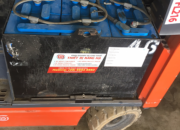
Lead-acid batteries (often called wet cells) generate electricity through a reaction between lead plates, lead oxide, and a diluted sulfuric acid electrolyte. During charging, a portion of the water in the electrolyte electrolyzes into hydrogen and oxygen gases and escapes. This is why lead-acid batteries need periodic distilled water topping and well-ventilated charging areas to prevent the accumulation of flammable gases.
Lithium-ion (LFP) batteries operate based on lithium ions moving back and forth between two solid electrodes. There is no gassing reaction under normal operating conditions, and the cells are completely sealed. Every lithium battery pack comes with a Battery Management System (BMS)—an electronic circuit that monitors the voltage, temperature, and current of each cell in real-time, automatically balancing them and triggering protective shutdowns if anomalies are detected. Most of the manual work technicians perform on lead-acid batteries is automated by the BMS on lithium batteries.
This core difference in operating principles is the root of all variations in maintenance procedures between the two battery types.
Lead-Acid Battery Maintenance
Routine Maintenance Items
- Topping up with distilled water: Replaces water lost to electrolysis during charging; must be performed after a full charge (never top up when the battery is depleted to avoid overflowing during the next charge).
- Measuring electrolyte specific gravity: Uses a hydrometer to check each cell and detect weak or imbalanced cells.
- Equalizing charge: Performed periodically according to manufacturer recommendations to equalize voltage across cells and reduce accumulated sulfation.
- Cleaning and greasing terminals: Prevents corrosion caused by gases escaping during charging.
- Checking plate degradation: Monitors the battery’s ability to hold voltage under load to assess capacity decline.
- Ensuring charging area ventilation: Necessary to mitigate the explosion risk of accumulated hydrogen gas generated during charging.
Operational Rules to Follow
Traditional lead-acid batteries (which do not support fast or opportunity charging) typically follow the 8-8-8 rule: an 8-hour shift, an 8-hour charge, and an 8-hour rest cycle to allow the battery to cool down before reuse. Opportunity charging between shifts or deep discharging (beyond recommended thresholds) accelerates sulfation and significantly shortens battery lifespan.
Lithium (LFP) Battery Maintenance
Routine Maintenance Items
- No water topping or specific gravity checks: Cells are fully sealed with no liquid electrolyte requiring manual intervention.
- Monitoring BMS data: Many industrial lithium battery systems allow exporting logs for cell voltage, temperature, and cycle counts. These should be checked periodically to detect cell imbalances or abnormal warnings early.
- Cleaning connectors and inspecting the casing: Although there is no gas-induced corrosion like in lead-acid batteries, connectors must remain clean and properly torqued to prevent overheating from poor contact. Casings need inspection for cracks or impact damage.
- Controlling charging temperature: Lithium batteries have a narrower safe charging temperature range than lead-acid ones. The BMS typically shuts down or limits the charging current when cell temperatures fall outside the allowable range, but operators should still avoid charging in extremely low or high temperatures unless strictly necessary.
- Updating BMS software/firmware: Manufacturers occasionally release updates to improve battery management algorithms; these should be applied per the supplier’s recommendations.
Operational Advantages
Lithium batteries tolerate opportunity charging during shifts without sustaining significant damage, unlike lead-acid batteries. This allows them to maintain nearly continuous operation without needing battery swaps or full rest cycles. This is a primary reason businesses running multiple shifts switch to lithium to reduce the number of spare batteries required.
Quick Comparison Table
| Criteria | Lead-Acid Battery | Lithium Battery (LFP) |
| Distilled Water Topping | Periodic topping required | Not required (Maintenance-free) |
| Specific Gravity Checks | Manual measurement per cell | Not applicable |
| Cell Balancing | Manual (via Equalize charge) | Fully automatic via BMS |
| Gassing During Charge | Emits Hydrogen/Oxygen (Requires ventilation) | No gassing under normal conditions |
| Opportunity Charging | Not recommended (Reduces lifespan) | Highly tolerant (Supports multi-shift) |
| Post-Charge Rest | Mandatory (Standard 8h run, 8h charge, 8h rest) | Not required (Ready for immediate use) |
| Condition Monitoring | Manual measurement and logging | Automatic via BMS (Exportable data logs) |
| Low-Temp Charge Sensitivity | Causes plate sulfation | Risk of lithium plating without BMS protection |
Maintenance Costs and Frequency: Points to Consider
The routine maintenance costs (labor, consumables like distilled water, and measuring tools) for lead-acid batteries are incurred regularly and require a fixed schedule. Lithium batteries significantly reduce this manual maintenance, but their initial capital investment is higher. Furthermore, when issues arise at the cell or BMS level, they typically require a specialized technician rather than on-site maintenance.
Because capital expenditure, replacement parts pricing, and warranty policies vary by supplier and model, businesses should request quotes and compare the Total Cost of Ownership (TCO)—including maintenance, materials, and labor—before making a decision.
Considerations When Switching from Lead-Acid to Lithium
- Check charger compatibility: Lithium batteries require dedicated chargers that match BMS specifications; you cannot use a lead-acid charger.
- Confirm physical compatibility: Check with the forklift supplier regarding battery compartment fit, weight distribution, and dimensions if retrofitting an existing lead-acid forklift.
- Retrain personnel: Operators and maintenance technicians need training on the new procedures, as old lead-acid habits (like water topping or specific gravity checks) no longer apply.
- Establish data tracking: Set up a routine for tracking BMS data to replace the outdated manual specific gravity logging schedule.
Frequently Asked Questions (FAQs)
Are lithium batteries truly “maintenance-free” as advertised?
Not entirely. Lithium batteries significantly reduce manual chemical-mechanical maintenance (water topping, specific gravity checks, equalizing charges), but they still require connector cleaning, casing inspections, BMS data monitoring, and adherence to proper charging temperatures.
Can I use a lead-acid charger to charge a lithium battery?
You should not. Lead-acid and lithium chargers have different charging profiles (charge curves). Using the wrong charger can cause the BMS to trigger protective shutdowns constantly, result in inefficient charging, or pose severe risks to the battery if proper protections are absent. Always use the charger specified by the lithium battery manufacturer.
Does switching to lithium require changes to warehouse charging infrastructure?
It depends on your fleet size and required charging capacity. Since lithium batteries don’t produce gas during charging, ventilation requirements are generally much lighter than for lead-acid. However, you must still assess the electrical load of your facility’s charging system, especially if utilizing high-frequency opportunity charging multiple times a day. An electrical infrastructure survey is recommended prior to transitioning.
Should I choose lead-acid or lithium batteries for my forklifts?
There is no one-size-fits-all answer. Lead-acid suits lower initial budgets and fixed single-shift operations. Lithium is ideal for continuous multi-shift operations, reducing maintenance labor, and situations where a higher initial investment is acceptable. Decisions should be based on actual operating frequency, shift counts, and Total Cost of Ownership (TCO), rather than just the upfront purchase price.