Selling and Renting Toyota Forklifts

Selling and Renting Toyota Forklifts

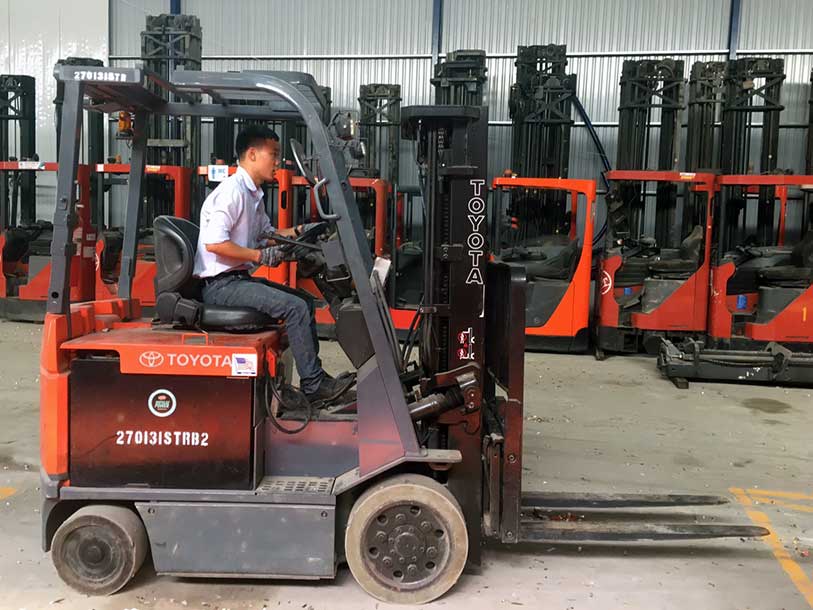
Introduction to Toyota Forklifts Toyota forklifts are a renowned product line in the transportation and material handling industry. Toyota is one of the world’s leading manufacturers of forklifts, known for their quality, reliability, and high performance.

Toyota forklifts are designed and built to meet the rigorous demands of industrial applications. They produce a range of forklift types, including electric forklifts, diesel forklifts, and LPG forklifts, with different capacities and lifting capabilities to suit various work environments.

Some popular Toyota forklift product lines include:

Toyota Electric Forklifts: Equipped with rechargeable batteries, Toyota electric forklifts produce zero emissions and noise, making them an ideal choice for enclosed work environments such as warehouses, factories, and supermarkets.

Toyota Diesel Forklifts: With strong power and high load-bearing capacity, Toyota diesel forklifts are suitable for heavy-duty material handling applications in challenging industrial environments.

Toyota LPG Forklifts: Toyota LPG forklifts combine the flexibility of electric forklifts with the power of diesel forklifts. They are widely used in outdoor applications and in environments that require diverse lifting requirements.

Toyota also prioritizes comfort and safety. Toyota forklifts are designed with a low center of gravity, wide visibility, and safety features such as an alarm system and tilt control. This improves work efficiency and reduces the risk of accidents during operation.

Additionally, Toyota provides quality aftermarket services, including maintenance, repairs, and genuine spare parts supply to ensure that forklifts continue to perform well.

With its long-standing reputation and global presence, Toyota has built a widespread distribution network worldwide. As a result, customers can easily find and purchase Toyota forklifts in most countries around the world.

One of the prominent advantages of Toyota forklifts is their advanced technology and continuous innovation. Toyota constantly researches and applies the latest technologies to improve work efficiency, energy savings, and forklift safety. Examples include the adoption of electronic technology, automation systems, and intelligent solutions to optimize operational processes.

Furthermore, Toyota also focuses on environmental protection. They have made commitments to reduce emissions and noise from forklifts, use recycled materials, and optimize production processes to minimize environmental impact.

With a combination of quality, reliability, performance, and convenience, Toyota forklifts have become the top choice for many businesses and organizations worldwide. Over the years, Toyota has built a strong reputation and brand presence in the forklift industry.

In summary, Toyota forklifts are a combination of quality, reliability, performance, and convenience. With continuous innovation and a commitment to environmental protection, Toyota continues to play a significant role in providing high-quality material handling solutions for the transportation and material handling industry.
xe-nang-hieu-toyota

Samco Vina Joint Stock Company specializes in selling and renting various models of Toyota forklifts.

Samco Vina Joint Stock Company – Professional Solutions for Toyota Forklifts

Samco Vina Joint Stock Company, with its leading experience and reputation in the field of selling and renting forklifts, is pleased to introduce high-quality services with various models of Toyota forklifts ranging from 1.5 to 4 tons.

With our diverse portfolio, customers can choose from a range of Toyota forklift models with load capacities ranging from 1.5 to 4 tons, suitable for various applications in industrial work environments. From energy-saving electric forklifts that produce no emissions to powerful diesel forklifts and versatile LPG forklifts, we meet all customer needs.

Leave a Reply

Your email address will not be published. Required fields are marked *

Related posts

  • day-lai-xe-nang-container-1 Where can I learn to drive a reachstacker?

    Learning to drive a forklift to take a container, lifting equipment? Today, when the economy is growing, learning to drive a container truck will open up a lot more job opportunities. However, there are some people who still wonder if there are any reputable and professional places to teach container forklifts and lifting equipment? Understanding […]

  • Repair services for boards and control units of forklifts

    Samco Vina provides repair services for boards and control units of forklifts Samco Vina is a specialized company offering repair and installation services for control units and circuit boards of forklifts—critical components that manage all forklift operations, including starting, moving, and lifting. A malfunctioning control unit can disrupt operations, reduce productivity, and pose safety risks. […]

  • xe nang hang cho logistic Optimizing Forklift Performance in Logistics Environments

    Revealing 10 Ways to Optimize Forklift Performance in Logistics Environments Did you know that forklifts play a critical role in the logistics industry, but operating them efficiently is always a challenging task? From selecting the right type of forklift, training professional staff, to regular maintenance and applying advanced technology, there are many factors that affect […]

  • hoi-dap-xe-nang-toyota Frequently Asked Questions about Common Issues with Toyota Forklifts

    Frequently Asked Questions about Common Issues with Toyota Forklifts 1. What are the causes and solutions for hydraulic oil leaks in Toyota forklifts? – The causes can be worn or damaged hydraulic oil lines, loose or damaged seals and gaskets, stuck or faulty hydraulic control valves, or leaking lift cylinders. – The solutions include checking and replacing damaged parts, regularly cleaning and maintaining the hydraulic system, and ensuring that the hydraulic oil is clean and at the required level. 2. What are the causes and solutions for difficult or failed engine starting in Toyota forklifts? – Common causes include weak or faulty batteries, malfunctioning starter systems, fuel injection/fuel system issues, or fouled spark plugs. – Solutions involve checking, charging, or replacing the battery; inspecting the starter system; cleaning or replacing fuel injection/fuel system components; and cleaning or replacing spark plugs if necessary. 3. How should you handle an overheating engine in a Toyota forklift? – Causes may include low engine coolant levels, a faulty cooling fan, clogged coolant lines, or a leaking water pump. – Solutions involve immediately stopping the operation of the forklift, checking the cooling system, adding coolant if needed, replacing the cooling fan or water pump if necessary, and cleaning and repairing any clogged coolant lines. 4. What are the causes and solutions for weak or loss of lifting power in Toyota forklifts? – Causes can include decreased hydraulic pressure in the system, inefficient hydraulic pumps, or leaking or damaged lift cylinders. – Solutions involve checking and addressing any factors that reduce hydraulic pressure, replacing the hydraulic pump if needed, and repairing or replacing faulty lift cylinders. 5. What should you do when the steering system of a Toyota forklift becomes stiff or too heavy? Firstly, check the hydraulic fluid level for the steering system and top it up if it’s low. Then inspect the hydraulic lines and control valves for the steering system, replacing them if damaged. If the issue persists, it may be due to worn steering worm gears or a faulty steering shaft that needs replacement. 6. How should you handle ineffective braking in a Toyota forklift? Firstly, check the brake fluid, replacing it if contaminated or low. Then inspect the friction surface of the brake discs, replacing them if worn. If the issue continues, check the brake cylinders, brake lines, and brake pump for any faults, repairing or replacing any damaged components. 7. What are the causes and solutions for non-functioning turn signals and lights in Toyota forklifts? – Causes can include blown fuses, broken wires, burnt-out bulbs, or faulty light switches. – Solutions involve checking and replacing blown fuses, repairing or replacing broken wires, installing new bulbs, and replacing faulty light switches if necessary. 8. How should you handle a malfunctioning battery charger in a Toyota forklift? Firstly, check the battery itself; replace it if corroded or too old. Then inspect the wiring from the charger to the battery; replace any broken wires or shorts. Next, check the charger; replace it if not functioning properly. Finally, adjust the charger settings to match the type of battery being used. 9. What should you do when there is hydraulic system leakage or loss of pressure in a Toyota forklift? Firstly, check the hydraulic fluid level; top it up to the required level if low. Then inspect the entire hydraulic system to identify any leaks or loss of pressure. Causes can include faulty hydraulic cylinders, hoses, valves, or seals/gaskets. Replace any damaged parts to restore pressure and ensure a tight seal in the system. 10. What are the causes and solutions for worn or damaged wheels on Toyota forklifts? – The main causes are overloading, driving on rough terrain, sudden changes in direction leading to increased tire wear. Additionally, wheels can be damaged due to rough handling. – Solutions involve ensuring proper loading during operation, driving cautiously on flat surfaces, and being careful when changing directions. Replace worn or damaged wheels with new ones. 11. How should you address transmission issues in a Toyota forklift? Firstly, check the transmission fluid level; top it up if low. Then inspect the components of the transmission system such as the clutch, drive shaft, couplings, and belts; replace any damaged parts if necessary. Finally, check the gearbox and gearbox oil pump; replace them if faulty. Regularly maintain and clean the entire transmission system. 12. What are the causes and solutions for a stuck parking brake in a Toyota forklift? – Common causes include a jammed or broken parking brake cable, deteriorated rubber grommets causing cable sticking, or a stuck or rusted brake drum. – Solutions involve removing and cleaning the parking brake cable, replacing it if broken, replacing deteriorated rubber grommets, lubricating the brake drum with grease if necessary, and replacing heavily rusted brake drums. 13. How should you handle a malfunctioning stability control system in a Toyota forklift? Firstly, check the hydraulic fluid level for the stability control system; top it up to the required level if low. Then inspect the hydraulic control valve and hydraulic cylinders to ensure there are no leaks. Replace valves or cylinders as needed.

  • hoi-dap-ve-xe-nang-komatsu FAQs, Common Questions about Komatsu Forklift Malfunctions

    FAQs, Common Questions about Komatsu Forklift Malfunctions 1. What are the common causes of reduced engine power in Komatsu forklifts? – Air filter clogged and needs to be replaced – Fuel injection system issues such as clogged or stuck nozzles – Ignition system not working properly, like burnt spark plugs or faulty ignition wires – Turbocharger with compressed air leaks – Low engine oil level or old oil needing replacement 2. Why do rubber tire wheels on forklifts wear out faster than normal? – Incorrect tire pressure, either too high or too low – Overloading causing tires to wear out quickly – Uneven tire wear due to continuous movement on rough terrain with rocks and debris – Uneven tire wear due to sharp turns or sudden braking habits – Tire lifespan has expired according to recommended intervals and needs replacement 3. What are common hydraulic system malfunctions in Komatsu forklifts? – Hydraulic fluid leakage from cylinders, hoses, or damaged pipes – Stuck or malfunctioning hydraulic control valves – Hydraulic pump worn out, reducing operational efficiency – Contaminated hydraulic fluid requiring replacement for quality maintenance – Broken, deformed, or displaced hydraulic oil pipes 4. How to detect and fix hydraulic fluid leaks? – Regularly check hydraulic fluid levels by visually inspecting the gauge – Use a pressure gauge tool to check system pressure levels – Spray powder to detect leaks at joints, hoses to locate leak points – Replace damaged components like seals, cylinders, or hoses – Clean and refill with new hydraulic fluid following correct procedures 5. When should the battery pack on a Komatsu forklift be replaced? – When the battery has exceeded the recommended lifespan, typically 3–5 years – Signs of battery leakage, low water level or swollen caps – Rapid battery drain after full charge indicates a faulty battery – Inability to start, slow engine turnover during startup – Cracks or corrosion in the battery core indicate the need for replacement 6. Why do error lights on the control panel frequently illuminate? – Possible electrical system issues such as faulty relays or blown fuses – Faulty sensors measuring operational parameters – Electronic control circuits in the central control box malfunctioning – Weak battery or malfunctioning charging system causing lights to come on – Software bugs requiring updates in the system 7. Causes and solutions for insufficient braking force in forklifts? Causes: – Insufficient brake fluid levels or depletion – Worn-out brake discs that are warped or corroded – Brake oil lines leaking or blocked – Pump failure or faulty brake oil injectors Solutions: – Check and refill brake fluid according to standards – Replace worn-out brake pads if they have exceeded their limit – Polish or replace brake discs if they are worn out – Replace new brake oil lines if they are leaking – Check, repair, replace pumps and brake oil injectors 8. What are common faults in reverse alarm systems on forklifts? Reverse alarm horn is damaged and does not sound an alert Motion detection sensors for reverse movement are faulty or broken Electrical wires leading to reverse alarm horn are cut off Relay controlling reverse alarm horn is short-circuited Battery supplying power to reverse alarm system is weak or depleted […]