Container Forklift and Electric Forklift Rental Services in Binh Duong

Container Forklift and Electric Forklift Rental Services in Binh Duong

Quick Answer: SAMCO VINA provides container forklift (Reach Stacker, Empty Container Handler) and electric forklift rental services in the Binh Duong area, offering both short-term (daily/weekly/monthly) and long-term (project contract) options. This service is ideal for logistics companies, ports, ICDs, warehouses, and factories that require forklift operations but do not need or want to invest in purchasing equipment outright. Specific vehicle specifications, rental rates, and delivery times depend on the model and fleet availability at the time of inquiry and require direct contact for confirmation.

For businesses operating in Binh Duong and surrounding areas—hubs with numerous industrial parks, logistics warehouses, and container depots—the need for forklift rentals typically arises when workloads fluctuate seasonally, primary equipment is undergoing maintenance, or during short-term project expansions that do not justify long-term investments. The following article details the service scope, rental models, and criteria for selecting a suitable rental provider.

What Does the Container Forklift Rental Service in Binh Duong Include?

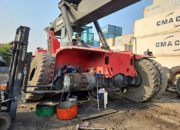
Container forklifts are specialized equipment used for lifting, moving, and stacking containers, comprising two main categories:

  • Reach Stacker (Laden Container Handler): Suitable for handling loaded containers at ports, ICDs, freight stations, and logistics yards with heavy lifting capacity requirements.
  • Empty Container Handler: Ideal for depots and empty container storage yards that require multi-tier stacking.
  • Choosing the right type depends on the nature of the cargo and the specific operational model of each business. If unsure, consult with the technical department for proper advice before signing the lease to avoid renting the wrong type and causing workflow disruptions.

Electric Forklift Rental Services in Binh Duong

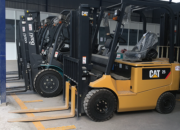
In addition to container handling equipment, SAMCO VINA also offers electric forklift rentals—cargo forklifts powered by electric motors, ideal for:

  • Warehouses and factories requiring indoor operations with strict emission limits.
  • Work environments needing noise reduction (cold storage, food warehouses, areas near offices).
  • Businesses seeking to optimize operational costs compared to internal combustion engine (ICE) forklifts for moderate usage frequencies.

The lifting capacity, lifting height, and specific technical specifications of each electric forklift model available in the rental fleet must be confirmed based on actual requirements at the time of contact, as the fleet changes according to operational rotation.

Short-Term and Long-Term Rental Models

SAMCO VINA accommodates both rental models based on customer operational needs:

Rental ModelBest Suited ForCore Advantages
Short-Term Rental


(Daily / Weekly / Monthly)

• Sudden spikes in cargo handling demand during peak seasons.


• Primary fleet vehicles experience breakdowns and are awaiting repairs/maintenance.


• Executing short-term projects, events, or batch loading/unloading contracts.

Maximum time flexibility, no binding long-term commitments, rapid resolution of urgent needs.
Long-Term Rental


(Yearly / Project-based contracts)

• Businesses requiring a continuously stable source of operating equipment.


• Desiring cash flow optimization, avoiding excessive Capital Expenditure (CAPEX) for outright purchases.


• Piloting operational scaling before committing to a purchase investment.

Significantly preferential rental rates; maintenance and repair costs are often fully covered by the rental provider.

For both models, specific contract terms (minimum duration, transportation costs, maintenance responsibilities during the rental period) must be directly agreed upon by both parties prior to signing. This article does not provide fixed figures as these terms are typically tailored to each specific case.

Why Should Businesses Consider Renting Instead of Buying?

The decision to rent or buy a forklift should be based on an analysis of actual operational needs rather than general market trends:

  • Optimize cash flow: Avoids large initial capital investments, ideal for businesses that are expanding or piloting operational scales.
  • Flexibility with workload fluctuations: Easily scale the number of vehicles up or down according to seasonal demands without the burden of liquidating surplus equipment.
  • Reduce maintenance burdens: Depending on contract terms, a portion of the maintenance/repair responsibilities may fall on the lessor, which should be explicitly clarified in the contract.
  • Immediate backup equipment: When the primary forklift faces technical issues, short-term rentals help maintain continuous operations rather than disrupting workflows to wait for repairs.

Conversely, if the frequency of use is consistently high over a long period, investing in purchasing a vehicle is often more cost-effective in the long run. This requires careful calculation based on the actual workload of each specific enterprise.

Forklift Rental Process at SAMCO VINA

  • Contact and requirement description: Specify vehicle type (container/electric), required lifting capacity, expected rental duration, and operating location.
  • Technical consultation: The technical team identifies the vehicle type and model suited to the specific nature of the work.
  • Fleet availability confirmation and quotation: Check currently available vehicles and agree on unit prices and contract terms.
  • Transportation and handover: Deliver the vehicle to the client’s location and inspect the equipment’s condition prior to handover.
  • Support during the rental period: Provide technical support for arising issues in accordance with agreed-upon terms.

Criteria for Selecting a Forklift Rental Provider in Binh Duong

  • Clear equipment origin and transparent technical condition: Physical inspection of the equipment before signing the contract is highly recommended, especially for heavy-duty container forklifts.
  • On-site technical support team: Must have the capability to handle sudden breakdowns swiftly during the rental period to prevent workflow disruptions.
  • Geographical proximity: A rental provider near the operational area reduces transportation time and expedites technical emergency responses when needed.
  • Clear contract terms: Explicit details regarding maintenance responsibilities, incurred costs, and conditions for contract renewal or early termination.

Frequently Asked Questions (FAQ)

Is a deposit required to rent a container forklift?

This depends on the policy applied to each contract and rental duration. It is necessary to discuss this directly to understand specific terms before signing.

How are issues handled if the rented vehicle breaks down during use?

Maintenance and repair responsibilities during the rental period are stipulated in the mutually agreed contract. Clarify this clause before signing to prevent potential disputes.

Is it possible to rent a forklift outside the Binh Duong area?

You should contact the provider directly to confirm the service scope and equivalent transportation costs for your specific operating location.

Does the operator of the rented vehicle need a forklift operation certificate?

Yes. Whether renting or owning the vehicle, the direct operator is legally required to hold a valid forklift operator certificate under current regulations.

Leave a Reply

Your email address will not be published. Required fields are marked *

Related posts

  • an-toan-xe-nang Instructions on how to operate a forklift safely

    Pay attention to safety and prevent accidents when operating forklifts Forklift is a device that handles internal handling tasks. Its working environment and working conditions are always in the process of changing at any time, the safety of forklift driving depends on the instantaneous action of the driver. The working environment of forklifts is often […]

  • xe nang container dau -dien Diesel or Electric Container Reachstackers?

    Advantages and Disadvantages of Each Option As the global and Vietnamese logistics industries rapidly transition toward the “Green Port” model, selecting material handling equipment is no longer just a purchasing decision—it is a long-term capital investment strategy. When comparing two major options—traditional diesel-powered container reachstackers and next-generation electric reachstackers—which solution is truly optimal for your […]

  • xe nang chup cong Detailed Analysis of Reach stacker Brands in the Market

    Detailed Analysis of Leading reachstacker Brands in the Market Container-handling forklifts play an indispensable role in logistics, seaports, and warehousing, where performance and durability are key to success. With a wide array of renowned forklift brands available, choosing the right product can be a significant challenge. In this article, we provide a detailed analysis of […]

  • mitsubishi-pallet Frequently Asked Questions About Pallet Trucks

    Frequently Asked Questions About Pallet Trucks 1. What is a pallet truck? A pallet truck is a specialized device designed to lift, lower, and move pallets containing goods in warehouses, factories, and distribution centers. It consists a sturdy steel frame, two forks to slide under the pallet, and a hydraulic or mechanical system for lifting and lowering goods. 2. What are the common types pallet trucks on the market? There are several common types of pallet available on the market, including: – Manual pallet trucks: Operated by human power. – Walkie electric pallet trucks: Electric motor-powered with a walk-behind operator. – Stand-on electric pallet trucks: Operator stands on a platform to control. – Sit-on electric pallet trucks: Equipped with a seat for the operator. – Automated guided vehicles (AGVs): Combining manual and automatic control. – Explosion-proof pallet trucks: Specifically designed for hazardous environments. 3. How do electric and manual pallet trucks differ? The main differences between electric and manual pallet trucks include: – Power source: Electric trucks use batteries, while manual ones rely on human power. – Performance: Electric trucks can lift heavier loads and move faster. – Flexibility: Manual trucks are suitable for tight spaces, while electric ones are better for longer distances. – Cost: Manual trucks are cheaper to purchase and maintain. – Fatigue level: Electric trucks reduce operator fatigue during long working hours. 4. What is the average price of a pallet truck? The price of a pallet truck varies depending on the type and features: – Manual pallet truck: $200 – $600 – Walkie electric pallet truck: $1,500 – $4,000 – Stand-on electric pallet truck: $5,000 – $10,000 – Sit-on electric pallet truck: $10,000 – $20,000 Note that prices may vary based on brand, capacity, and special features. 5. What is the maximum lifting capacity of a pallet truck? The maximum lifting capacity of a pallet truck depends on the type: – Manual pallet truck: Typically 2,000 kg to 3,000 kg. – Walkie electric pallet truck: 1,500 kg to 3,500 kg. – Stand-on electric pallet truck: Up to 4,000 kg. – Sit-on electric pallet truck: Some models can lift up to 5,000 kg or more. However, actual load capacity also depends on lifting height and load center. 6. Is a driver’s license required to operate a pallet truck? – Manual pallet truck: No license required – Walkie electric pallet truck: Usually no license needed but training is recommended – Stand-on/sit-on electric pallet truck: Many countries require certification for operating a forklift based on specific regulations

  • hoi-dap-xe-nang-toyota Frequently Asked Questions about Common Issues with Toyota Forklifts

    Frequently Asked Questions about Common Issues with Toyota Forklifts 1. What are the causes and solutions for hydraulic oil leaks in Toyota forklifts? – The causes can be worn or damaged hydraulic oil lines, loose or damaged seals and gaskets, stuck or faulty hydraulic control valves, or leaking lift cylinders. – The solutions include checking and replacing damaged parts, regularly cleaning and maintaining the hydraulic system, and ensuring that the hydraulic oil is clean and at the required level. 2. What are the causes and solutions for difficult or failed engine starting in Toyota forklifts? – Common causes include weak or faulty batteries, malfunctioning starter systems, fuel injection/fuel system issues, or fouled spark plugs. – Solutions involve checking, charging, or replacing the battery; inspecting the starter system; cleaning or replacing fuel injection/fuel system components; and cleaning or replacing spark plugs if necessary. 3. How should you handle an overheating engine in a Toyota forklift? – Causes may include low engine coolant levels, a faulty cooling fan, clogged coolant lines, or a leaking water pump. – Solutions involve immediately stopping the operation of the forklift, checking the cooling system, adding coolant if needed, replacing the cooling fan or water pump if necessary, and cleaning and repairing any clogged coolant lines. 4. What are the causes and solutions for weak or loss of lifting power in Toyota forklifts? – Causes can include decreased hydraulic pressure in the system, inefficient hydraulic pumps, or leaking or damaged lift cylinders. – Solutions involve checking and addressing any factors that reduce hydraulic pressure, replacing the hydraulic pump if needed, and repairing or replacing faulty lift cylinders. 5. What should you do when the steering system of a Toyota forklift becomes stiff or too heavy? Firstly, check the hydraulic fluid level for the steering system and top it up if it’s low. Then inspect the hydraulic lines and control valves for the steering system, replacing them if damaged. If the issue persists, it may be due to worn steering worm gears or a faulty steering shaft that needs replacement. 6. How should you handle ineffective braking in a Toyota forklift? Firstly, check the brake fluid, replacing it if contaminated or low. Then inspect the friction surface of the brake discs, replacing them if worn. If the issue continues, check the brake cylinders, brake lines, and brake pump for any faults, repairing or replacing any damaged components. 7. What are the causes and solutions for non-functioning turn signals and lights in Toyota forklifts? – Causes can include blown fuses, broken wires, burnt-out bulbs, or faulty light switches. – Solutions involve checking and replacing blown fuses, repairing or replacing broken wires, installing new bulbs, and replacing faulty light switches if necessary. 8. How should you handle a malfunctioning battery charger in a Toyota forklift? Firstly, check the battery itself; replace it if corroded or too old. Then inspect the wiring from the charger to the battery; replace any broken wires or shorts. Next, check the charger; replace it if not functioning properly. Finally, adjust the charger settings to match the type of battery being used. 9. What should you do when there is hydraulic system leakage or loss of pressure in a Toyota forklift? Firstly, check the hydraulic fluid level; top it up to the required level if low. Then inspect the entire hydraulic system to identify any leaks or loss of pressure. Causes can include faulty hydraulic cylinders, hoses, valves, or seals/gaskets. Replace any damaged parts to restore pressure and ensure a tight seal in the system. 10. What are the causes and solutions for worn or damaged wheels on Toyota forklifts? – The main causes are overloading, driving on rough terrain, sudden changes in direction leading to increased tire wear. Additionally, wheels can be damaged due to rough handling. – Solutions involve ensuring proper loading during operation, driving cautiously on flat surfaces, and being careful when changing directions. Replace worn or damaged wheels with new ones. 11. How should you address transmission issues in a Toyota forklift? Firstly, check the transmission fluid level; top it up if low. Then inspect the components of the transmission system such as the clutch, drive shaft, couplings, and belts; replace any damaged parts if necessary. Finally, check the gearbox and gearbox oil pump; replace them if faulty. Regularly maintain and clean the entire transmission system. 12. What are the causes and solutions for a stuck parking brake in a Toyota forklift? – Common causes include a jammed or broken parking brake cable, deteriorated rubber grommets causing cable sticking, or a stuck or rusted brake drum. – Solutions involve removing and cleaning the parking brake cable, replacing it if broken, replacing deteriorated rubber grommets, lubricating the brake drum with grease if necessary, and replacing heavily rusted brake drums. 13. How should you handle a malfunctioning stability control system in a Toyota forklift? Firstly, check the hydraulic fluid level for the stability control system; top it up to the required level if low. Then inspect the hydraulic control valve and hydraulic cylinders to ensure there are no leaks. Replace valves or cylinders as needed.

Gọi ngay
Chat Zalo