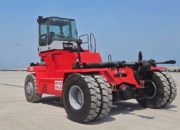
Container Reachstacker Overheating – A Warning You Should Never Ignore
In logistics operations, container reachstackers are often regarded as the “heart” of port terminals. However, under heavy-duty workloads and Vietnam’s harsh climate conditions, engine overheating has become a fairly common issue. Many operators treat this as a minor fault, but in reality, it is often the final distress signal before a multi-billion-VND engine suffers catastrophic failure.
- Warning Signs That Your Reachstacker Is Overheating
Do not wait until smoke rises from the engine hood to stop the machine. A professional operator must be able to identify the following early warning signs:
Dashboard alerts:
The temperature gauge rises above the midpoint and approaches—or enters—the red zone. Engine Overheat or Check Engine warning lights flash continuously.
Noticeable performance loss:
The engine feels sluggish; throttle response is poor; lifting and stacking operations become slow and imprecise.
Abnormal noises and odors:
Knocking or pinging sounds (engine knocking/pre-ignition) from the engine compartment, accompanied by a burnt oil smell or a sweet, pungent odor caused by evaporating coolant.
Unusual exhaust smoke:
Thick black smoke from incomplete combustion, or dense white smoke indicating coolant intrusion into the combustion chamber.
- Common Causes of Reachstacker Overheating
Based on Samcovina’s experience maintaining thousands of machines, the most common root causes include:
Blocked cooling system:
Dust, grease, and port debris clog the radiator fins, restricting airflow and reducing heat dissipation efficiency.
Low coolant level or coolant leaks:
Aged or cracked hoses, or a faulty water pump, prevent proper coolant circulation, causing engine temperature to rise rapidly.
Overheated hydraulic oil:
Reachstackers operate under extreme hydraulic loads. If hydraulic oil is degraded, loses viscosity, or the oil filter is clogged, oil temperature increases and transfers excess heat back into the engine system.
Faulty cooling fan or drive belts:
Loose or broken belts prevent the cooling fan from operating at the required speed, limiting heat evacuation.
Poor-quality diesel fuel:
Contaminated fuel causes early or incomplete combustion, generating excessive heat inside the combustion chamber.
- Serious Consequences of Ignoring Overheating Warnings
Continuing to operate a reachstacker while the engine is overheating can result in severe damage:
Blown head gasket and warped cylinder head:
Excessive heat deforms metal components, allowing coolant to leak into the combustion chamber. At this stage, engine overhaul costs can reach hundreds of millions of VND.
Turbocharger failure:
Turbochargers operate at extremely high speeds and are highly sensitive to heat. Insufficient cooling can instantly destroy bearings and turbine blades.
Fire and explosion risks:
Extreme engine temperatures can melt hydraulic oil lines, causing leaks and ignition, potentially leading to terminal fires.
Severe economic losses:
Equipment downtime disrupts the supply chain, causes contractual penalties, and damages the company’s operational reputation.
- Emergency Procedures When the Overheat Warning Appears
When the temperature warning light activates, operators should remain calm and take the following steps immediately:
Stop the machine at once:
Park in a safe, level area and lower the container to the ground to reduce load.
Let the engine idle:
Allow the engine to idle for 3–5 minutes so coolant can continue circulating and reduce temperature gradually
(except when coolant is visibly leaking underneath—in that case, shut down the engine immediately).
Never open the radiator cap immediately:
Pressurized boiling coolant can spray out and cause severe burns. Wait at least 30 minutes.
Perform a visual inspection:
Check for hose leaks or broken belts. If you lack technical expertise, contact professional technical support immediately.
- Preventive Solutions Recommended by Samcovina Experts
“Prevention is always better than repair.” Samcovina recommends the following maintenance practices:
Weekly radiator cleaning:
Use specialized compressed air to remove dust and debris from radiator fins.
Use genuine spare parts:
Samcovina supplies European-standard filters, coolant, and replacement parts, ensuring optimal cooling system performance.
Regular hydraulic system inspections:
Ensure hydraulic oil remains clean and is replaced at recommended service intervals.
Operator training:
Train operators to fully understand dashboard indicators and respond correctly to abnormal temperature warnings.