Reach truck – reach truck – warehouse forklift – cold storage

Sell ​​and rent Reachtruck forklifts – forklifts to high-altitude warehouse shelves – cold storage forklifts

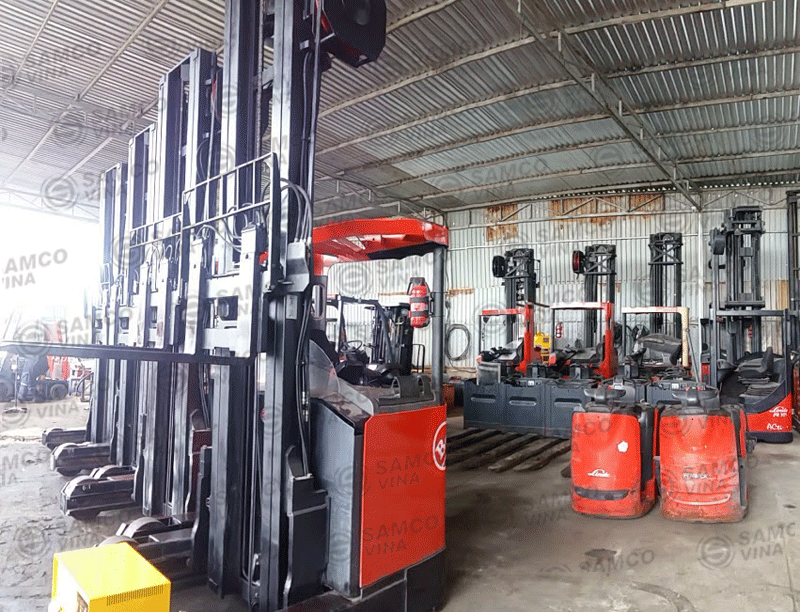
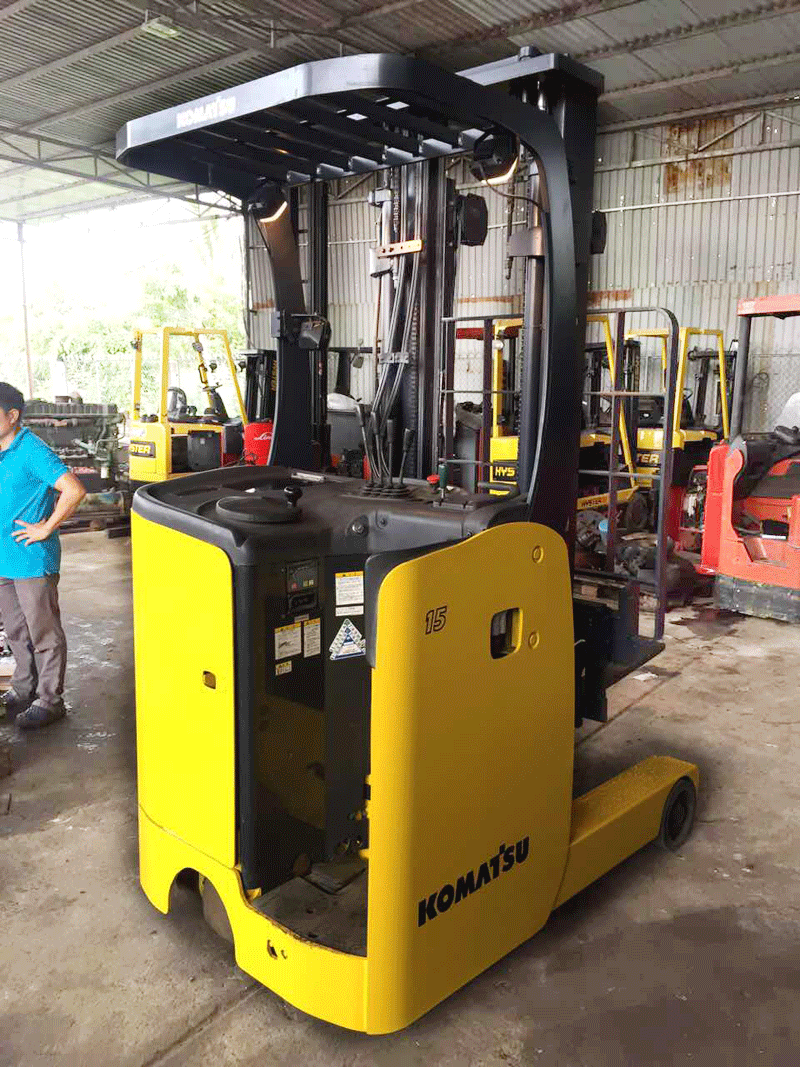
Reach Truck or Reach Forklift Truck, reach forklift, warehouse forklift, electric forklift for cold storage. Reach trucks are often used in warehouses, storage, cold storage with a working range on warehouse shelves up to 12m.

This reach truck is designed to pick up goods by approaching with a moving frame, so it is called Reach. Reach Truck – reach truck is an improved forklift from the Forklift type electric forklift, the body is shortened to save aisles (for tight areas. The lifting frame can be moved. Out – in for flexible picking.Thanks to the 2 front pillars reaching farther, when picking up goods at height, the Reach Truck forklift is less likely to lose its load.It is also because of this factor that the manufacturer has designed Reach Truck design has the ability to pick up goods up to more than 12m (while forklift can only pick up goods at 6m).

Reach Truck also inherits the technologies of electric forklifts, besides the high-end Reach Truck lines (Reach Truck Linde from Europe) are also equipped with more terrible technologies to make picking up goods easier and safer. .

When intending to invest in Reach Truck for the factory, it is necessary to have a combination of Reach Truck consultants and warehouse shelf designers. For professional Racking designers, they are very knowledgeable about Reach Truck and choose which type of reach truck is suitable for design drawings, combining the design of warehouse shelves suitable for each type of reach truck is very important. very necessary. If you don’t pay attention, your vehicle may not run through the shelf system, or if there is a lack of load leading to high, there is a feeling of vibration – shaking causing insecurity for the operator.

Our company is an importer and distributor of Reach trucks – high-lift forklifts from Europe, all vehicles are in their original condition, when sold, we guarantee to meet the transportation factors. effective, safe, besides, we have a thoughtful warranty.

Sell ​​or rent Reachtruck electric forklifts used in warehouses

Some cars are currently available in stock

Reach truck Linde R16HD

Code: G1X115T53138

Brand: Linde

Origin: Germany

Electric power

Voltage: 48 volts

Maximum load: 1600 kg

Maximum lift: depending on vehicle from 10200 mm

Year of manufacture 2006

Condition: used, quality >80%

xe nang dien kho

xe nang cao 12m

xe-nang-dien-komatsu-(1)

xe nang dien Reachtruck-BT

 ,

28 responses to “Reach truck – reach truck – warehouse forklift – cold storage”

  1. Chào Cty,
    Bên mình muốn mướn 2 chiếc xe nâng điện loại có thể nâng hàng lên kệ cao 9m. Mình thấy bên mình có các loại xe hợp với nhu cầu bên cty mình. Vậy cho hỏi giá thuê thế nào? Cty mình ở Sóng Thần Bình Dương

    Xin cảm ơn

    • Chào Hồng Phúc,
      Giá thuê cụ thể còn phụ thuộc thời gian thuê, loại xe và các thỏa thuận dịch vụ khác. Để nhanh và chi tiết hơn bạn vui lòng liên lạc qua số hotline nhé

      Thân mến

  2. Xe nâng Reachtruck này có sử dụng được với lối đi 1.2m không? Bên tôi đang có nhu cầu mua cái xe sử dụng để bốc dỡ hàng lên kệ

    Mong nhận được tư vấn

  3. Xin cho hỏi,
    Xe nâng Reachtruck bên mình bán có dịch vụ sửa chữa và có bán phụ tùng không? Tôi muốn mua chiếc xe nâng reach truck chạy điện loại 3 tấn. vui lòng cho xin bản chào của một số xe

    Thanks

    • Chào anh Nhất,
      Bên chúng tôi có xưởng sửa chữa cũng như đội ngũ kỹ thuật với chuyên môn cao, tất cả các xe chúng tôi đều tuyển chọn kỹ cả về chất lượng cũng như model thông dụng, do đó cũng khá dễ dàng nếu kiếm phụ tùng cho nó.
      Vâng chúng tôi xin gửi anh bản chào 1 số xe anh tham khảo và phản hồi lại nhé

      Thân mến!

    • Chào anh Tùng
      Vâng về giá thì phụ thuộc nhiều yếu tố VD: Thương hiệu, tìm trạng xe, loại xe… Chúng tôi sẽ liên lạc với anh để tư vấn và báo giá cụ thể cho mình nhé

      Cảm ơn

  4. Vâng câu hỏi của anh đã được chuyển đến bộ phận tư vấn xe và hàng hóa. Chúng tôi sẽ trả lời anh sớm nhé.
    Thân mến!

Leave a Reply

Your email address will not be published. Required fields are marked *

Related posts

  • phu tung chon xe nang cong Experience in Purchasing Imported Container Forklift Spare Parts

    Experience in Purchasing Imported Container Forklift Spare Parts – Avoiding Risks and Optimizing Costs Subtitle: A complete A-to-Z guide to help you choose reliable suppliers and high-quality products for Kalmar, Konecranes, Hyster, Linde forklifts and many other brands. In Vietnam’s logistics and import-export industry, container forklifts (Reach Stackers) are indispensable “giants” at every seaport, ICD, […]

  • cac-loai-cang-nang Common Forklift Damage and Troubleshooting

    Common Forklift Damage and Troubleshooting 1. Fork damage: – Question: How to detect and handle fork damage? – Answer: To detect fork damage, you need to regularly check for bending, cracking, or deformation. If any abnormal signs are found, regular maintenance and replacement of the forks are necessary to ensure safety and work efficiency. 2. Uneven forks: – Question: What should we do when we notice uneven forks? – Answer: When the forks are not even, you need to check and adjust them to ensure proper alignment. This may require the intervention of an experienced technician or the use of specialized equipment for adjustment. 3. Hydraulic oil leakage: – Question: How does hydraulic oil leakage affect the forklift and what is the solution? – Answer: Hydraulic oil leakage can affect the operation of the forklift and workplace safety. The solution is to check hydraulic system connections, hoses, cylinders, and other components to find the cause of the leakage. Then proceed with repairing or replacing damaged components. 4. Loss of pressure: – Question: What causes loss of pressure in a forklift and how to troubleshoot it? – Answer: Loss of pressure can be caused by oil leakage, air in the system, or worn components. To fix this issue, you need to check the entire system from pump, valves to cylinders to determine the problem and repair or replace components as needed. 5. Stuck or damaged mechanical parts: – Question: How should we handle stuck or damaged mechanical parts in a forklift? – Answer: For issues related to mechanical parts such as wheels or rotating shafts, maintaining regular maintenance is crucial to prevent machine deterioration. If a jammed or damaged occurs, detailed inspection is needed to determine the cause followed by repair or replacement of components as required. 6. Broken cables or shaking: – Question: What should be done when forklift cables are broken or shaking? – Answer: If cables are broken or shaking, stop using the forklift immediately and conduct an inspection. Replace damaged cables with new ones according to manufacturer specifications by an experienced technician. 7. Loss of control or electrical system failure: – Question: When encountering problems with electrical systems, how do we restore control of a forklift? – Answer: Check electrical components such as fuses, relays, switches, and control circuits. Repair or replace faulty components while always following safety procedures when working with electrical systems. 8. Uneven shaking: – Question: How does uneven shaking during lifting affect operations and how can it be fixed? – Answer: Uneven shaking not only makes it difficult to control the forklift but can also damage goods and operators. Check forks, wheels, suspension components to determine causes of shaking then proceed with necessary repairs or adjustments. 9. Malfunctioning safety sensors: – Question: Why is maintaining safety sensors important and what should be done when they malfunction? – Answer: Safety sensors help prevent accidents and unwanted incidents. When a sensor malfunctions, use diagnostic equipment to identify issues then proceed with repairs or replacements. 10. Cooling system failure: – Question: What are consequences of cooling system failure and how can it be fixed? – Answer: Ineffective cooling can lead to overheating which affects performance and damages components. Check fans, radiators, hoses, coolant fluid flow blockages or leaks. 11.Brake system failure Question : When brake system fails what needs 2 b done Answer : First stop using d lift n inspect d brake sys . Check d master cylinder , brake fluid n connections 2 find d cause . If any signs f wear r damage r found , immediately replace those parts . Regular maintenance s important 2 prevent brake sys issues . 12.Poor mechanical response Question : How 2 fix poor mechanical response f d lift not moving smoothly r getting stuck ? Answer : This could b due 2 lack f lubrication r worn out parts . Clean n lubricate d mechanical parts , then apply lubricant as per manufacturer’s recommendations . If severe wear s found , replace those parts 2 ensure stable n safe operation . Remember that regular maintenance n inspections f d lift will not only extend its lifespan but also ensure safe operations .

  • xe-nang-hang-pallet Electric Pallet Trucks

    An electric pallet truck, also known as an Electric Pallet Truck, is a commonly used material handling equipment in warehouses, storage yards, supermarkets, and various industries. Its purpose is to easily and efficiently move, lift, and transport palletized goods. The electric pallet truck operates using electric power sources such as batteries or accumulators. It is […]

  • nang-dien-pallet Electric Forklift Pallet

    Electric Forklift Pallet The electric pallet truck is one of the most popular types of electric forklift in the field of transporting and arranging goods. Electric pallet trucks help reduce time and effort in moving and arranging goods, increasing efficiency and safety during work. In this article, we will learn about the characteristics, advantages and […]

  • Pin su dung cho xe nang Why Forklift Batteries Fail Quickly in Cold Storage and How to Extend Their Lifespan

    Forklifts operating in cold storage environments (cold rooms, blast freezers -18°C to 4°C) often experience significantly shorter battery lifespans than those working at ambient temperatures, despite having the same duty cycle and battery chemistry. This is not a coincidence, but a direct result of electrochemical and mechanical reactions occurring inside the battery at low temperatures. […]

Gọi ngay
Chat Zalo