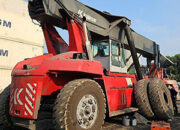
Measures to save fuel for forklifts

The finished product price of any manufacturer, any product field is calculated from raw materials, labor costs, raw material costs for machinery and vehicles. In which the materials consumed for forklifts also belong to that cost chain. So how to operate the forklift to minimize it? With our experience, we would like to list ways that car users can apply to save fuel

tiet-kiem-nhien-lieu-cho-xe-nang

1. Sudden acceleration of throttle

Sudden acceleration or sudden braking can increase fuel consumption by up to 40% while harmful emissions can be as high as 5 times. In addition, careful lifting drivers also help you limit the cause of occupational accidents.

2. Tires

Under-inflated forklift wheels increase road friction and can add up to 6% more fuel consumption. Check the standard pressure readings in the manual or right on the B-pillar by the driver’s door. According to the US Department of Energy, for every PSI below standard, you increase fuel consumption by 0.4%.

3. Stable speed

In the process of operating the forklift, the driver must master his speed and manipulation to reduce unnecessary braking movements, which will help you save fuel. It is recommended to let the car operate regularly, all at 80% throttle mode

4. Don’t brake much

Drivers should not use the brakes much, because each time the brake is applied, the engine consumes an amount of fuel that at the same time is not effective. Avoid sudden emergency braking when stopping. Take advantage of the vehicle’s inertia to move the vehicle and stop the vehicle, instead of stepping on the accelerator and then suddenly braking. Let the truck drift slowly to its stop when the forklift driver wants to stop.

5. Regular maintenance for vehicles

A forklift that is regularly serviced will operate at peak performance. Your forklift will operate inefficiently, consume more fuel, if the alternator is dirty.

6. Forklift engine maintenance

Regular attention to engine maintenance will help your car operate smoothly, save fuel and improve labor productivity.

7. Do not lift overloaded goods

Every forklift has an allowable load according to the manufacturer’s standards. If you overload the load, the engine will work too hard, surpassing the effective zone, causing fuel consumption to increase sharply. In addition, lifting and overloading also causes your tires to wear faster.

8. Do not exceed the allowed speed

Every forklift has a certain speed limit. If exceeded, it will lead to unnecessary consumption of electricity, oil, and gasoline and may lead to occupational accidents.

9. Using the right materials for forklifts

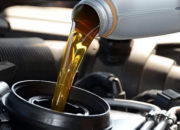
Using the right oil will help you save 1-2% fuel. In addition, regular oil changes as recommended by the manufacturer help your car run more efficiently and last longer.

Each forklift is different, may use a different engine oil and has a machine oil code. The digits before the “W” indicate low-temperature starting capability. The numbers after the letter “W” indicate the viscosity at 100 degrees Celsius. For vehicles operating in areas with not too harsh weather conditions, the viscosity index can be in the range of 30 – 50, while Vehicles operating in high temperature areas, this index can be above 60.

10. Check the air filter regularly

A clean air filter can reduce fuel consumption by about 10%. The air filter is the element that filters dust from the air before it is introduced into the combustion chamber. The average car needs about 1,600 liters of air when operating for 1 minute. Due to such high performance, the air filter is very dirty, especially in a forklift working environment with a lot of dust such as sawdust, powder, and particles.

 , ,

Leave a Reply

Your email address will not be published. Required fields are marked *

Related posts

  • xe chup chui container Sale and Rental of Container Reach Forklifts

    Sale and Rental of Container Reach Forklifts – Samcovina’s Optimal Solution In the context of the rapidly growing logistics and import-export industries, the demand for container forklifts, especially container reach forklifts, has become a key factor in ensuring efficiency in loading, unloading, and retrieving goods. With years of experience in providing lifting equipment solutions, Samcovina […]

  • ac-qui-xe-nang Measures to improve the life of forklift batteries

    How to extend the life of forklift batteries? The electric forklift charger when charging needs to be equipped with a meter that displays the vehicle lights in normal circumstances. When the battery power drops from 70% to 100%, that is also the best charging time. When the electric forklift’s power source is short, it must […]

  • cach-chon-xe-nang-cho-nha-may Important Considerations When Choosing Forklifts for Your Warehouse

    Important Considerations When Choosing Forklifts for Your Warehouse   In today’s manufacturing and logistics environment, selecting the right forklift is crucial for optimizing both performance and safety in your facility. This article aims to guide warehouse owners and technical managers through the key factors to consider when making a forklift purchase decision.    Assessing Your […]

  • phu tung cho xe nang Genuine Container Forklift Spare Parts The Golden Key to Performance Optimization and Safety Assurance

    Genuine Container Forklift Spare Parts: The Golden Key to Performance Optimization and Safety Assurance Meta Description: Discover the pivotal role of genuine container forklift spare parts in boosting performance, extending lifespan, and ensuring safe operations. This in-depth article analyzes benefits and risks, helping you make smart, strategic investment decisions. Container Forklifts – The Backbone of […]

  • xe-chup-kalma Frequently Asked Questions about Kalmar Container Reach Stackers

    Frequently Asked Questions about Kalmar Container Reach Stackers 1. What is the maximum lifting capacity of a Kalmar Reach stacker? A Kalmar Reach stacker has a maximum lifting capacity ranging from 45 to 50 tons, depending on the specific model. For example, the DRG450-65S5X model can lift up to 45 tons in the first row, while some higher-end models like the DRG500-75S5X can lift up to 50 tons. 2. is the average lifespan of a Kalmar Container Reach stacker? With proper maintenance, a Kalmar Container Reach stacker can operate efficiently for around 15-20 years. However, the exact lifespan depends on various factors such as usage frequency, working conditions, and maintenance quality. Some of our customers have reported that their machines are still running well after more than 25 years of use. 3. How much is the annual maintenance cost for a Kalmar Reach stacker? The annual maintenance cost for a Kalmar Reach stacker typically ranges from 3% to 5% of the initial value of the machine. This means that for a machine priced at around $500,000, the annual maintenance cost could be between $15,000 and $25,000. However, this figure may vary depending on usage intensity and operating conditions. 4. What are some special safety features of Kalmar Reach stackers? Kalmar Reach stackers are equipped with advanced safety features including: – Anti-Tipping System – Load weight sensors and overload warning – 360-degree cameras for comprehensive visibility – Regenerative braking system – ROPS (Roll-Over Protective Structure) compliant cabin design – Obstacle detection and warning system – Safety lockout system when operator is absent 5. What is the average fuel consumption of a Kalmar Reach stacker? The average fuel consumption of a Kalmar Reach stacker typically ranges from 12 to 18 liters of diesel per hour of operation, depending on the model and working conditions. Our latest models come with fuel-saving Eco Drive Mode technology that can reduce consumption to as low as 10-15 liters per hour under normal operating conditions. 6. Which Kalmar Reach stacker models are suitable for small and medium-sized ports? Kalmar offers several Reach stacker models suitable for small and medium-sized ports: – DRG420-60S5: This model can lift 42 tons, suitable for ports with moderate container traffic. – DRG450-65S5: With a lifting capacity of 45 tons, this is a flexible choice for various types of ports. – Gloria DRG100-54S6: This compact model is ideal for ports with limited space. These models have smaller dimensions, lower fuel consumption, but still ensure high performance. 7. How to optimize the performance of a Kalmar Reach stacker in a port environment? To optimize performance, it is important to: – Provide thorough training for operators on efficient driving techniques and stacking operations. – Use Kalmar’s fleet management software to monitor and analyze performance. – Implement preventive maintenance to minimize downtime. – Optimize traffic flow and workspace layout within the port. – Use Eco Drive mode whenever possible to save fuel. – Update software regularly to take advantage of the latest improvements. 8. What are the key advantages of Kalmar Reach stackers compared to other brands? Kalmar Reach stackers stand out with: – Stable operation, high reliability and long lifespan. – Advanced technology such as SmartWheel intelligent control system. – Low fuel consumption thanks to Eco Drive technology. – Ergonomic cabin design with good visibility for operator comfort. – Global support network and service offerings from the brand. – Many integration options with automation systems in warehouses and ports. 9. How long does training for operating a Kalmar Reach stacker typically last? Training usually lasts from 2 to 4 weeks including: – One week theoretical training on safety, operational mechanisms and basic maintenance. – One-two weeks practical training on simulator machines. – One week practical training on real machines under supervision. After training completion, operators need an additional 100–200 hours of practice to become proficient. Kalmar also provides advanced training courses and regular updates. 10. How to troubleshoot common issues on a Kalmar Reach stacker? Common troubleshooting steps for issues on a Kalmar Container reach Stacker include: – Use onboard diagnostic systems to identify faults. – Refer to user manuals for basic troubleshooting procedures. – For engine issues check fuel levels, air filters and electrical connections. – For hydraulic issues check oil levels and leaks. – For electrical issues check fuses and connections. 11. What automation features are available on the latest models of Kalmar Reach Stackers? The latest models of Kalmar reach Stackers come equipped with advanced automation features such as: […]

Gọi ngay
Chat Zalo