Forklift used for Cold storage

Electric forklift for cold storage

In warehouses that store goods in large quantities, loading and unloading cannot completely depend on human strength, especially with warehouses using high-height pallets. For such warehouses, the use of a specialized lifting equipment is a very necessary solution. Capacitive forklifts in cold storage are the most suitable choice. So what’s so special about cold storage electric forklifts?

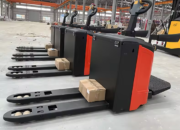
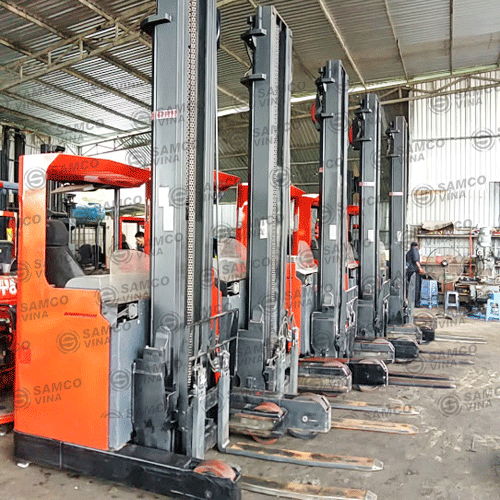
The commonly used cold storage forklift is the reachtruck electric forklift (a forklift with a high reach that allows loading and unloading of goods on high shelves, moving in narrow aisles). Pallettruck electric forklift (a low-lift electric forklift that mainly moves loading and unloading on pallets placed on the floor, this model has the ability to move in narrow aisles, good maneuverability). Another very important condition is that forklifts used in cold storage are not allowed to emit high heat, minimizing pollutant waste.
xe-nang-ke-kho-lanh

Cold storage forklifts are often used in warehouses for storing pharmaceuticals, electronic products, food processing, preserving foods, agricultural products, vegetables, and products of the chemical industry. .. For deep cold storage, the problems forklifts often face such as: Freezing of hydraulic oil, condensation of water in electrical cabinets, freezing of battery acid, expansion of metal structures, etc. rubber, plastic…  Therefore, conventional electric forklifts cannot operate well in deep cold storage conditions. Therefore, cold storage forklifts will be calculated and manufactured to work well in those conditions.

Cold storage forklifts are the strength of brands such as: LINDE, BT. Most electric forklift models of LINDE and BT have versions for cold storage, except for diesel and gas forklifts. The cold storage version of LINDE, BT is equipped to help protect the oil in the car from freezing, and to support the heating Carbin so that the operator can work longer in the cold storage to increase labor productivity. motion.

Manufacturing structure, working principle, cold storage electric forklift is no different from normal car. But the most noticeable feature is the motor system and the circuit board of the electric forklift used in cold storage LINDE, BT designed with protective boxes to prevent water condensation when moving from cold storage to cold storage or outside. The wiring is also fully protected. At the electrical contact jacks, the IC pins… are also carefully wrapped to prevent water condensation. In addition, LINDE, BT forklifts operating in normal conditions can also work perfectly in environments where the temperature is not too high.

 ,

9 responses to “Forklift used for Cold storage”

  1. Xe nâng kho lạnh có loại nào chuyên dùng cho kho lạnh sâu không, chúng tôi cần cái xe có thể chạy liên tục trong kho lạnh và sếp hàng lên kệ kho cao

    • Vâng, chúng tôi có xe nâng điện kiểu forklift, reach truck, Pallet truck dùng cho kho lạnh và có cả loại xe chuyên dụng cho kho lạnh sâu nữa nhé. Đặc biệt có cả xe chuyên dùng cho lối đi hẹp nữa

  2. Ad cho hỏi
    Dòng xe nâng dùng trong kho lạnh này có thể vừa dùng cho kho lạnh vừa dùng cho môi trường bên ngoài được không? Cần tư vấn thêm
    Xin cảm ơn

    • Vâng, dòng xe nâng kho này vừa dùng cho kho lạnh, vừa chạy bên ngoài được nhé.
      Nếu anh cần tư vấn cụ thể vui lòng gọi lại cho chúng tôi nhé.
      Thân mến

    • Vâng dòng xe nâng kho lạnh vẫn sử dụng bên ngoài được, tuy nhiên dòng xe nâng kho lạnh sâu không nên sử dụng ở môi trường bên ngoài quá nóng với thời gian dài.
      Thân mến

Leave a Reply

Your email address will not be published. Required fields are marked *

Related posts

  • Where to rent a forklift for cheap?

    Benefits of renting a forklift The head of the business always considers the company’s financial flow, so when deciding to buy an asset, means, and tools of great value, it is often a very difficult decision. Forklift is also considered as a vehicle of great value, whether a business should rent or buy is also […]

  • cam bien cho xe nang Why Do Reach Stacker Travel/Limit Sensors Frequently Fail at Seaports?

    Why Do Reach Stacker Travel/Limit Sensors Frequently Fail at Seaports? Meta Description: Discover the 5 primary reasons why travel-limit sensors on Reach Stackers and heavy-duty lift trucks frequently fail in harsh port environments. Samcovina provides proven technical solutions to eliminate recurring breakdowns.   The “Blind Spot” That Brings Port Operations to a Halt A familiar […]

  • cac-loai-cang-nang Common Forklift Damage and Troubleshooting

    Common Forklift Damage and Troubleshooting 1. Fork damage: – Question: How to detect and handle fork damage? – Answer: To detect fork damage, you need to regularly check for bending, cracking, or deformation. If any abnormal signs are found, regular maintenance and replacement of the forks are necessary to ensure safety and work efficiency. 2. Uneven forks: – Question: What should we do when we notice uneven forks? – Answer: When the forks are not even, you need to check and adjust them to ensure proper alignment. This may require the intervention of an experienced technician or the use of specialized equipment for adjustment. 3. Hydraulic oil leakage: – Question: How does hydraulic oil leakage affect the forklift and what is the solution? – Answer: Hydraulic oil leakage can affect the operation of the forklift and workplace safety. The solution is to check hydraulic system connections, hoses, cylinders, and other components to find the cause of the leakage. Then proceed with repairing or replacing damaged components. 4. Loss of pressure: – Question: What causes loss of pressure in a forklift and how to troubleshoot it? – Answer: Loss of pressure can be caused by oil leakage, air in the system, or worn components. To fix this issue, you need to check the entire system from pump, valves to cylinders to determine the problem and repair or replace components as needed. 5. Stuck or damaged mechanical parts: – Question: How should we handle stuck or damaged mechanical parts in a forklift? – Answer: For issues related to mechanical parts such as wheels or rotating shafts, maintaining regular maintenance is crucial to prevent machine deterioration. If a jammed or damaged occurs, detailed inspection is needed to determine the cause followed by repair or replacement of components as required. 6. Broken cables or shaking: – Question: What should be done when forklift cables are broken or shaking? – Answer: If cables are broken or shaking, stop using the forklift immediately and conduct an inspection. Replace damaged cables with new ones according to manufacturer specifications by an experienced technician. 7. Loss of control or electrical system failure: – Question: When encountering problems with electrical systems, how do we restore control of a forklift? – Answer: Check electrical components such as fuses, relays, switches, and control circuits. Repair or replace faulty components while always following safety procedures when working with electrical systems. 8. Uneven shaking: – Question: How does uneven shaking during lifting affect operations and how can it be fixed? – Answer: Uneven shaking not only makes it difficult to control the forklift but can also damage goods and operators. Check forks, wheels, suspension components to determine causes of shaking then proceed with necessary repairs or adjustments. 9. Malfunctioning safety sensors: – Question: Why is maintaining safety sensors important and what should be done when they malfunction? – Answer: Safety sensors help prevent accidents and unwanted incidents. When a sensor malfunctions, use diagnostic equipment to identify issues then proceed with repairs or replacements. 10. Cooling system failure: – Question: What are consequences of cooling system failure and how can it be fixed? – Answer: Ineffective cooling can lead to overheating which affects performance and damages components. Check fans, radiators, hoses, coolant fluid flow blockages or leaks. 11.Brake system failure Question : When brake system fails what needs 2 b done Answer : First stop using d lift n inspect d brake sys . Check d master cylinder , brake fluid n connections 2 find d cause . If any signs f wear r damage r found , immediately replace those parts . Regular maintenance s important 2 prevent brake sys issues . 12.Poor mechanical response Question : How 2 fix poor mechanical response f d lift not moving smoothly r getting stuck ? Answer : This could b due 2 lack f lubrication r worn out parts . Clean n lubricate d mechanical parts , then apply lubricant as per manufacturer’s recommendations . If severe wear s found , replace those parts 2 ensure stable n safe operation . Remember that regular maintenance n inspections f d lift will not only extend its lifespan but also ensure safe operations .

  • xe-nang-dung-cho-kho Forklifts are commonly used in warehouses

    Common types of warehouse forklifts include: All-electric pallet truck The carrying capacity is 1.6-3 tons, the general working channel width is 2.3-2.8 meters, and the common fork lifting height is 210mm. The electric pallet truck series is mainly used for horizontal loading and unloading of goods and goods in warehouses. There are three types of […]

  • xe nang container the he moi Trends in New Technology Applications in the Forklift Industry

    Trends in New Technology Applications in the Forklift Industry As logistics and warehouse management continue to evolve, the forklift industry is experiencing a breakthrough thanks to technological advancements. From Automated Guided Vehicles (AGVs) to Artificial Intelligence (AI) and lithium-ion battery-powered electric forklifts, these trends not only improve operational efficiency but also shape the future of […]