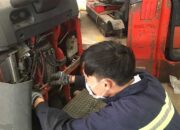
Choosing the Right Container Forklift for Ports and Large Warehouses

Experience in Choosing the Right Container Forklift for Ports and Large Warehouses


In the logistics industry, container forklifts play a critical role in handling and transporting goods at seaports and large warehouses. With containers weighing tens of tons, selecting the right forklift not only optimizes performance but also minimizes operating costs and ensures workplace safety. A suitable forklift enhances productivity, reduces loading/unloading time, and improves warehouse management efficiency. So, how do you choose the most appropriate container forklift for ports and large warehouses?


 Common Types of Container Forklifts

To select the right container forklift, you first need to understand the types available on the market. Each type is designed for specific purposes, meeting different needs at ports and large warehouses.


  1. Empty Container Handler

– Features: Designed specifically for handling empty containers, these forklifts have a lighter capacity, typically 8-10 tons. They can stack empty containers high, saving warehouse space.

– Applications: Suitable for ports or warehouses with high volumes of empty containers, such as import/export ports or transit warehouses.

– Advantages: Fuel-efficient, low operating costs, and easy to maneuver in tight spaces.

– Disadvantages: Not suitable for loaded containers or heavy loads.


  1. Loaded Container Handler

– Features: Designed to handle loaded containers with capacities of 30-45 tons. These forklifts have robust chassis and powerful engines.

– Applications: Ideal for large seaports or warehouses handling heavy loaded containers.

– Advantages: Capable of handling heavy loads and stable on rough terrain.

– Disadvantages: Higher investment and operating costs compared to empty container handlers.


  1. Reach Stacker

– Features: The most versatile container forklift, capable of lifting and stacking both empty and loaded containers with extended reach and flexible rotation.

– Applications: Ideal for ports or warehouses requiring long-distance container movement or high stacking.

– Advantages: Versatile, space-efficient, and suitable for various container types.

– Disadvantages: High cost and requires highly skilled operators.


  1. Sidelift Forklift

– Features: Lifts containers from both sides, suitable for limited spaces or when moving containers without rotating the forklift.

– Applications: Suitable for small warehouses or ports with constrained spaces.

– Advantages: Flexible in tight spaces and efficient for handling empty containers.

– Disadvantages: Limited capacity, not suitable for heavy loaded containers.


 Key Factors to Consider When Choosing a Container Forklift

Selecting a container forklift requires careful consideration of specific criteria to ensure it meets the business’s operational needs.


  1. Container Weight and Size

– Determine the type of containers your business handles (20ft, 40ft, or specialized containers like refrigerated ones). The forklift must have an appropriate capacity, e.g., a loaded container handler needs at least 30 tons for a fully loaded 40ft container.

– Ensure the forklift can handle containers of varying sizes and weights for flexibility.


  1. Lifting Height and Stacking Capability

– At ports and large warehouses, containers are often stacked high to save space. Choose a forklift with a suitable lifting height, typically 4-6 containers (12-18m).

– Reach stackers are preferred for flexible stacking, while empty container handlers are suitable for warehouses stacking only empty containers.


  1. Fuel Type

– Diesel Forklifts: Most common, with powerful engines suitable for outdoor ports or warehouses. However, fuel and maintenance costs are higher.

– Electric Forklifts: Environmentally friendly, cost-efficient for operations, ideal for indoor warehouses or areas with emission regulations. The downside is long charging times.

– Hybrid Forklifts: Combine the benefits of both but have a higher initial investment cost.


  1. Operating Terrain

– For ports with rough terrain or exposure to saltwater, choose forklifts with corrosion-resistant chassis and durable tires.

– For indoor warehouses, electric or sidelift forklifts are optimal due to their maneuverability in tight spaces.


  1. Brand and Durability

– Trusted brands like Toyota, Hyster, Kalmar, or Linde are favored for their durability and reliable after-sales service.

– Choose suppliers with clear warranty policies and readily available spare parts to minimize downtime during maintenance.


  1. Maintenance and Spare Parts Costs

– Long-term maintenance costs are a critical factor. Diesel forklifts typically have higher maintenance costs than electric ones.

– Ensure the supplier provides readily available spare parts to avoid operational disruptions.


 Practical Experience in Choosing a Container Forklift

To ensure the investment in a container forklift delivers maximum efficiency, here are some practical tips:

– Identify Specific Needs: Evaluate workload, container types, operational frequency, and budget. For example, empty container handlers are more cost-effective than reach stackers for warehouses primarily handling empty containers.

– Test in Real Conditions: Request suppliers to allow testing the forklift in actual operating conditions to assess performance and suitability.

– Seek Feedback: Consult businesses that have used forklifts from the supplier to gain insights into quality and service.

– Negotiate Terms: Don’t focus solely on the initial purchase price; negotiate warranty, maintenance, and spare parts costs.

– Train Operators: Ensure the operating team is well-trained to use the forklift efficiently, minimizing risks and extending equipment lifespan.


 Benefits of Choosing the Right Container Forklift

Selecting the right container forklift brings significant benefits to ports and large warehouses:

– Increased Productivity: A suitable forklift speeds up container handling, reduces waiting times, and optimizes logistics processes.

– Reduced Operating Costs: Fuel-efficient or low-maintenance forklifts save significant costs in the long run.

– Improved Safety: High-quality, suitable forklifts minimize accidents and ensure employee safety.

– Enhanced Warehouse Management: Flexible, versatile forklifts support efficient container arrangement and optimize storage space.


 Common Mistakes to Avoid When Choosing a Container Forklift

Here are some common mistakes businesses should avoid:

– Choosing an Unsuitable Forklift: For example, purchasing an expensive reach stacker when an empty container handler would suffice for a small warehouse.

– Ignoring Long-Term Maintenance Costs: Focusing only on the initial purchase price without considering maintenance costs can lead to higher operating expenses.

– Overlooking Scalability: If the business plans to expand its warehouse or port, choose a forklift that can meet future demands.

– Buying from Unreliable Suppliers: Suppliers lacking experience or poor after-sales service can disrupt operations.


 FAQs About Container Forklifts

– Which forklift is suitable for large warehouses?

Depending on needs, reach stackers are ideal for handling both loaded and empty containers, while sidelift forklifts suit tight spaces.


– What is the average cost of a container forklift?

Prices range from hundreds of millions to billions of VND, depending on the type, capacity, and brand.


– Should you buy a new or used container forklift?

New forklifts offer better quality and warranties, but used ones can be cost-effective if thoroughly inspected.


– How to maintain a container forklift effectively?

Schedule regular maintenance, use genuine spare parts, and train operators properly.


– What are the advantages of electric container forklifts over diesel ones?

Electric forklifts save fuel costs, are environmentally friendly, and are suitable for indoor warehouses, but require charging time.
Leave a Reply

Your email address will not be published. Required fields are marked *

Related posts

  • hoi-dap-ve-xe-nang-komatsu FAQs, Common Questions about Komatsu Forklift Malfunctions

    FAQs, Common Questions about Komatsu Forklift Malfunctions 1. What are the common causes of reduced engine power in Komatsu forklifts? – Air filter clogged and needs to be replaced – Fuel injection system issues such as clogged or stuck nozzles – Ignition system not working properly, like burnt spark plugs or faulty ignition wires – Turbocharger with compressed air leaks – Low engine oil level or old oil needing replacement 2. Why do rubber tire wheels on forklifts wear out faster than normal? – Incorrect tire pressure, either too high or too low – Overloading causing tires to wear out quickly – Uneven tire wear due to continuous movement on rough terrain with rocks and debris – Uneven tire wear due to sharp turns or sudden braking habits – Tire lifespan has expired according to recommended intervals and needs replacement 3. What are common hydraulic system malfunctions in Komatsu forklifts? – Hydraulic fluid leakage from cylinders, hoses, or damaged pipes – Stuck or malfunctioning hydraulic control valves – Hydraulic pump worn out, reducing operational efficiency – Contaminated hydraulic fluid requiring replacement for quality maintenance – Broken, deformed, or displaced hydraulic oil pipes 4. How to detect and fix hydraulic fluid leaks? – Regularly check hydraulic fluid levels by visually inspecting the gauge – Use a pressure gauge tool to check system pressure levels – Spray powder to detect leaks at joints, hoses to locate leak points – Replace damaged components like seals, cylinders, or hoses – Clean and refill with new hydraulic fluid following correct procedures 5. When should the battery pack on a Komatsu forklift be replaced? – When the battery has exceeded the recommended lifespan, typically 3–5 years – Signs of battery leakage, low water level or swollen caps – Rapid battery drain after full charge indicates a faulty battery – Inability to start, slow engine turnover during startup – Cracks or corrosion in the battery core indicate the need for replacement 6. Why do error lights on the control panel frequently illuminate? – Possible electrical system issues such as faulty relays or blown fuses – Faulty sensors measuring operational parameters – Electronic control circuits in the central control box malfunctioning – Weak battery or malfunctioning charging system causing lights to come on – Software bugs requiring updates in the system 7. Causes and solutions for insufficient braking force in forklifts? Causes: – Insufficient brake fluid levels or depletion – Worn-out brake discs that are warped or corroded – Brake oil lines leaking or blocked – Pump failure or faulty brake oil injectors Solutions: – Check and refill brake fluid according to standards – Replace worn-out brake pads if they have exceeded their limit – Polish or replace brake discs if they are worn out – Replace new brake oil lines if they are leaking – Check, repair, replace pumps and brake oil injectors 8. What are common faults in reverse alarm systems on forklifts? Reverse alarm horn is damaged and does not sound an alert Motion detection sensors for reverse movement are faulty or broken Electrical wires leading to reverse alarm horn are cut off Relay controlling reverse alarm horn is short-circuited Battery supplying power to reverse alarm system is weak or depleted […]

  • xe nang container dau -dien Diesel or Electric Container Reachstackers?

    Advantages and Disadvantages of Each Option As the global and Vietnamese logistics industries rapidly transition toward the “Green Port” model, selecting material handling equipment is no longer just a purchasing decision—it is a long-term capital investment strategy. When comparing two major options—traditional diesel-powered container reachstackers and next-generation electric reachstackers—which solution is truly optimal for your […]

  • nang-dien-pallet Electric Forklift Pallet

    Electric Forklift Pallet The electric pallet truck is one of the most popular types of electric forklift in the field of transporting and arranging goods. Electric pallet trucks help reduce time and effort in moving and arranging goods, increasing efficiency and safety during work. In this article, we will learn about the characteristics, advantages and […]

  • toyota-xe-nang Common Errors in Electric Forklifts

    I. Common errors in electric forklifts Maintaining and repairing electric forklifts is crucial to ensure their performance and lifespan. During usage, electric forklifts may encounter common errors, including electrical system failures, mechanical issues, and battery problems. These errors can be caused by improper usage, lack of regular maintenance, and the impact of weather conditions. To effectively handle and maintain electric forklifts, regular inspections and maintenance should be conducted, users should be trained properly, and genuine spare parts should be used. Additionally, preventive measures such as safety instructions during usage, proposing basic repair training for managers, and enhancing maintenance awareness among users should be implemented. 1. Electrical system failures in forklifts Electrical system failures are one of the common errors in electric forklifts. Power loss is a common issue that can be caused by weak or faulty batteries. To address this problem, batteries should be checked and replaced if necessary. Controller malfunctions can also occur due to damaged or improperly functioning components. To resolve this issue, components should be inspected and repaired or replaced if necessary. 2. Mechanical issues in forklifts Mechanical issues are another problem that electric forklifts may encounter. The steering system can experience malfunctions due to damaged or improperly functioning components. To address this problem, components should be checked and replaced if necessary. The lifting system can also experience malfunctions due to damaged or improperly functioning parts. To resolve this issue, parts should be inspected and repaired or replaced. 3. Battery-related issues in forklifts Battery problems are also crucial factors affecting the performance of electric forklifts. Battery lifespan can be affected by various factors such as battery age, usage conditions, and maintenance procedures. To maintain battery lifespan, proper maintenance and charging procedures should be followed. Decreased battery performance is another issue that can be caused by battery age, overloading, or incomplete charging. To address this problem, batteries should be checked and charged according to proper procedures. II. Causes of errors in electric forklifts – Causes of errors in electric forklifts can be attributed to improper usage, lack of regular maintenance, and the impact of weather conditions. Improper usage can lead to errors such as overloading the forklift or using incorrect procedures. To avoid these errors, adherence to usage procedures and limiting forklift overload is necessary. – Lack of regular maintenance is also a common cause of errors. Failure to conduct regular maintenance can affect the performance and lifespan of the forklift. To keep the forklift operating well, regular maintenance should be performed following manufacturer instructions. – Weather conditions can also impact the operation of electric forklifts. Factors such as high temperatures, cold weather, or dampness can cause issues for the forklift. To minimize the impact of weather conditions, proper protection and storage practices should be implemented. III. Handling and maintaining electric forklifts – To effectively handle and maintain electric forklifts, regular inspections and maintenance are necessary. Regular inspection and maintenance procedures help maintain the performance of the forklift and detect potential issues early on. – Proper training of users is also crucial, providing users with instructions on safe and efficient usage of electric forklifts. The use of genuine spare parts is another essential factor that cannot be overlooked as it ensures quality and longevity. – Additionally, preventive measures should be implemented to avoid errors from occurring. Safety instructions during usage are one important measure, providing safety guidelines to users of electric forklifts. – Proposing basic repair training for managers is another suggestion; training managers on basic knowledge about repairing electric forklifts enables them to handle minor issues without having to call technical staff. – Enhancing maintenance awareness among users is also an important measure, strengthening maintenance and management awareness of electric forklifts from the users. This can be achieved through providing usage instructions, reminders about regular maintenance, and creating a safe and professional working environment. In conclusion, maintaining and repairing electric forklifts is crucial to ensure their performance and lifespan. Addressing common errors such as electrical system failures, mechanical issues, and battery problems should be done meticulously and accurately. Regular inspections and maintenance, proper user training, and the use of genuine spare parts are important measures to handle and maintain electric forklifts effectively. Preventive measures such as safety instructions during usage, proposing basic repair training for managers, and enhancing maintenance awareness among users are also crucial to prevent errors from occurring.

  • xe nang cho kho Solutions for Selecting Forklifts for Cold Storage

    Solutions for Selecting Forklifts for Cold Storage Cold storage plays a crucial role in the supply chain of numerous industries, ranging from food and pharmaceuticals to chemicals. Managing and operating cold storage facilities requires specialized equipment, particularly forklifts, to ensure efficiency and safety. In this article, we will introduce forklift solutions for cold storage, helping […]

Gọi ngay
Chat Zalo