Safety when using a forklift is often overlooked

Safety when using a forklift is often overlooked

One of the most important aspects of using a forklift is a safety issue that is often overlooked by many users.

Safe use of forklifts includes many of the following: Training in operating and driving procedures, proper vehicle maintenance, proper use, regular inspection of vehicle components such as tires and lights. lighting and signals. Without regular maintenance monitoring and regular forklift inspection, accidents are more likely to occur.
an-toan-khi-dung-xe-nang

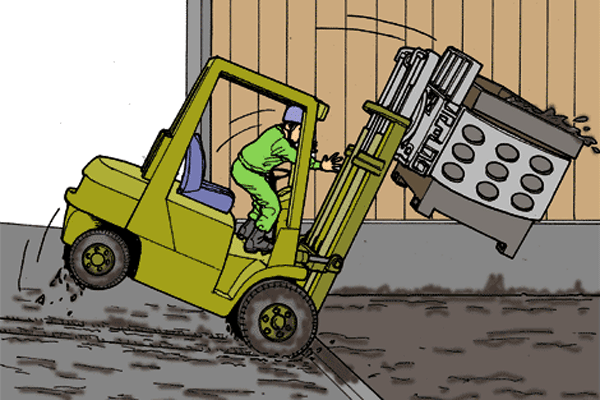
  1. Forklift working environment – ​​This is very important because it is important to know the terrain the forklift will be operated on, whether the vehicle will be operated indoors or outdoors, flat or rough, to choose the right tire to avoid slippery.

    Operating a forklift on rough terrain may have specific requirements, such as forklift tires that must be stronger to last longer and withstand the elements of friction and adhesion. Some tires are made for forklifts for indoor use, while others are made for rough terrain or outdoor use. It is very important to choose the right one for each requirement in order to achieve high mining efficiency, great durability, safer and especially more economical if choosing the right function.

    Types of Tires – There are three different types of tyres, each with its own advantages: Pneumatic forklift tires, solid rubber and polyurethane forklift tires.

    Pneumatic forklift tires are ideal for heavy-duty forklift trucks and are designed for durability.

    – Forklift tires made of solid rubber are the first choice for indoor forklift trucks of this type, which are prone to slippage after use because of their poor adhesion, so they are not ideal for use in areas where they are not suitable for use. rugged figure

    – Finally, are polyurethane tires, commonly used for electric forklifts and specialized forklifts.

    Turning radius – also known as the vehicle turning radius is the space for the forklift to work, this space will be limited by walls, obstacles in the working plane, warehouse ceiling height or any obstructions in the air differently. Turning radius – the best possible turning radius is to help the forklift work more efficiently and safely.
    Is it more economical to use a new forklift or a used forklift? This is an age-old question, no one can properly answer this question because it depends on many good factors such as usage level, financial ability, chance of luck… But standing on the side of security Always use new forklifts, forklifts of big brands are always the best choice
    What material source should the forklift use? Choose electric forklifts, Gasonline forklifts, diesel forklifts, this is usually based on the needs of use. For large load requirements, complex terrain, choosing forklifts using diesel fuel is optimal. Electric forklifts are more ideal for indoor operations and lighter lifting the right use the pros and cons of each model are also factors that increase safety.
an-toan-khi-lai-xe-nang

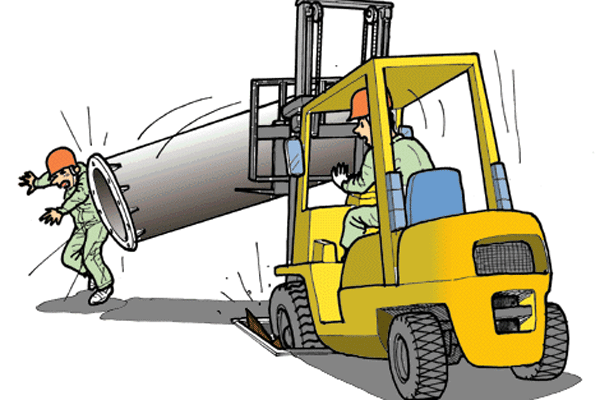
Finally, people. In any area other than forklift use, working sense, the ability to understand operations as well as predict hazards will be the most important factors to improve work efficiency. work as well as minimize the possible accidents


 , ,

Leave a Reply

Your email address will not be published. Required fields are marked *

Related posts

  • lai-xe-nang-trong-cang Safety regulations when operating container forklifts in ports

    Safety regulations when operating container forklifts in ports Operating a container forklift in a port requires strict adherence to safety regulations to ensure the safety of yourself and those around you. Here are some important regulations when operating a container forklift in a port: Training requirement: Before operating a container forklift, you must complete a […]

  • dau nhot boi tron Overview of Lubricants for Industrial Machinery

    Overview of Lubricants for Industrial Machinery In every factory or production line, every rotating shaft and sliding surface faces an invisible but destructive enemy: friction. To combat this enemy and ensure long-term equipment reliability, we rely on a silent hero — industrial lubricating oil. Selecting the right lubricant is far more than just “adding oil.” […]

  • cac-loai-cang-nang Common Forklift Damage and Troubleshooting

    Common Forklift Damage and Troubleshooting 1. Fork damage: – Question: How to detect and handle fork damage? – Answer: To detect fork damage, you need to regularly check for bending, cracking, or deformation. If any abnormal signs are found, regular maintenance and replacement of the forks are necessary to ensure safety and work efficiency. 2. Uneven forks: – Question: What should we do when we notice uneven forks? – Answer: When the forks are not even, you need to check and adjust them to ensure proper alignment. This may require the intervention of an experienced technician or the use of specialized equipment for adjustment. 3. Hydraulic oil leakage: – Question: How does hydraulic oil leakage affect the forklift and what is the solution? – Answer: Hydraulic oil leakage can affect the operation of the forklift and workplace safety. The solution is to check hydraulic system connections, hoses, cylinders, and other components to find the cause of the leakage. Then proceed with repairing or replacing damaged components. 4. Loss of pressure: – Question: What causes loss of pressure in a forklift and how to troubleshoot it? – Answer: Loss of pressure can be caused by oil leakage, air in the system, or worn components. To fix this issue, you need to check the entire system from pump, valves to cylinders to determine the problem and repair or replace components as needed. 5. Stuck or damaged mechanical parts: – Question: How should we handle stuck or damaged mechanical parts in a forklift? – Answer: For issues related to mechanical parts such as wheels or rotating shafts, maintaining regular maintenance is crucial to prevent machine deterioration. If a jammed or damaged occurs, detailed inspection is needed to determine the cause followed by repair or replacement of components as required. 6. Broken cables or shaking: – Question: What should be done when forklift cables are broken or shaking? – Answer: If cables are broken or shaking, stop using the forklift immediately and conduct an inspection. Replace damaged cables with new ones according to manufacturer specifications by an experienced technician. 7. Loss of control or electrical system failure: – Question: When encountering problems with electrical systems, how do we restore control of a forklift? – Answer: Check electrical components such as fuses, relays, switches, and control circuits. Repair or replace faulty components while always following safety procedures when working with electrical systems. 8. Uneven shaking: – Question: How does uneven shaking during lifting affect operations and how can it be fixed? – Answer: Uneven shaking not only makes it difficult to control the forklift but can also damage goods and operators. Check forks, wheels, suspension components to determine causes of shaking then proceed with necessary repairs or adjustments. 9. Malfunctioning safety sensors: – Question: Why is maintaining safety sensors important and what should be done when they malfunction? – Answer: Safety sensors help prevent accidents and unwanted incidents. When a sensor malfunctions, use diagnostic equipment to identify issues then proceed with repairs or replacements. 10. Cooling system failure: – Question: What are consequences of cooling system failure and how can it be fixed? – Answer: Ineffective cooling can lead to overheating which affects performance and damages components. Check fans, radiators, hoses, coolant fluid flow blockages or leaks. 11.Brake system failure Question : When brake system fails what needs 2 b done Answer : First stop using d lift n inspect d brake sys . Check d master cylinder , brake fluid n connections 2 find d cause . If any signs f wear r damage r found , immediately replace those parts . Regular maintenance s important 2 prevent brake sys issues . 12.Poor mechanical response Question : How 2 fix poor mechanical response f d lift not moving smoothly r getting stuck ? Answer : This could b due 2 lack f lubrication r worn out parts . Clean n lubricate d mechanical parts , then apply lubricant as per manufacturer’s recommendations . If severe wear s found , replace those parts 2 ensure stable n safe operation . Remember that regular maintenance n inspections f d lift will not only extend its lifespan but also ensure safe operations .

  • phu tung dung cho xe nang Why You Should Use Genuine Spare Parts for Container Handlers

    Why You Should Use Genuine Spare Parts for Container Handlers In bustling seaports, Inland Container Depots (ICDs), or logistics hubs, the image of “giant” Reachstackers powerfully lifting containers weighing tens of tons has become a familiar sight. This is not just a piece of equipment; it is a valuable asset worth billions of VND, the […]

  • xe-nang-moi Important notes when using a new forklift

    Important Notes When Using Forklifts One, check the overall forklift when operating – Before the forklift is operated, check its appearance and add fuel, lubricating oil and coolant. – Check the total of starter, main engine and brake. – Check that all lights, signal lights, horn system are full and working properly or not. – […]

Gọi ngay
Chat Zalo