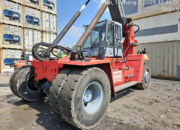
Boss Container Forklift

Boss Container Forklift – Container handler is a vertical lifting line with a lifting capacity of 10 tons manufactured by Lancer Boss.

Currently, Samcovina has imported used Boss container handlers, stored at the parking lot in District 9 (near Cat Lai port). We sell or rent at good prices with attentive technical service. Please contact us for consultation and car viewing


 ,

Leave a Reply

Your email address will not be published. Required fields are marked *

Related posts

  • xe-nang-toyota-chui-container Container Forklift Sales and Rentals for Loading and Unloading

    Container Forklift Sales and Rentals for Loading and Unloading In the rapidly evolving landscape of logistics and import-export, the demand for container forklifts to load and unload goods has surged. These compact, maneuverable machines play a crucial role in safely and efficiently handling cargo within tight spaces. 1. What is a Container ForkliftA container forklift is a specially designed forklift with narrow dimensions and low height, making it ideal for entering containers to perform loading and unloading tasks. With widths ranging from approximately 800mm to 2000mm, these forklifts can easily navigate standard 20-foot or 40-foot containers. Thanks to their compact size and flexible maneuverability, container forklifts offer several advantages over conventional forklifts when it comes to handling cargo inside containers: – Space Efficiency: Optimized for working in confined environments. – Maximized Container Utilization: Makes the most of available space. – Reduced Risk of Damage: Minimizes the risk of damaging goods during handling. – Increased Productivity: Replaces manual labor, enhancing speed and efficiency. – Enhanced Safety: Provides safer operations for both personnel and cargo. 2. Types of Container Forklifts The market offers various types of container forklifts tailored for different loading and unloading needs. These forklifts are categorized based on fuel type, load capacity, and functionality. By Fuel Type: – Electric Container Forklifts: Powered by batteries, eco-friendly, suitable for indoor use. – Gasoline/Diesel Container Forklifts: Operate on internal combustion engines, ideal for outdoor use with extended range. – Hybrid Container Forklifts: Utilize both electric power and fossil fuels, versatile across multiple environments. By Load Capacity: – Light-Duty Forklifts: Under 1.5 tons, suitable for lighter loads. – Medium-Duty Forklifts: Between 1.5 to 3 tons, versatile for various needs. – Heavy-Duty Forklifts: Over 3 tons, specialized for heavy or large-sized cargo. Each type has its own set of pros and cons regarding fuel costs, operational capabilities, machine lifespan, etc. Therefore, businesses should select the appropriate forklift type based on specific usage requirements to achieve optimal efficiency. 3. Popular Brands of Container Forklifts Several renowned brands dominate the market when it comes to container forklifts: Toyota Container Forklifts: As a leading global brand in material handling equipment, Toyota is well-known for its high-performance engines that offer smooth operation and fuel efficiency. The robust design ensures safety even in challenging environments. However, Toyota forklifts tend to be more expensive than other brands. TCM Container Forklifts: A subsidiary of Japan’s Nissan Group, TCM specializes in compact forklifts perfect for container operations. TCM offers affordable pricing with excellent after-sales service and abundant spare parts availability. However, some models may not match Toyota’s performance levels. Komatsu Container Forklifts: Komatsu is an established Japanese brand known for its powerful performance and durability in tough working conditions. Their machines are also equipped with numerous safety features but come at a higher price point with slightly lower productivity compared to Toyota. Linde Container Forklifts: Originating from Germany, Linde produces high-efficiency electric forklifts designed with environmental friendliness in mind. Linde has made significant advancements in optimizing vehicle weight and battery performance but tends to be more expensive due to import costs while offering modern features that facilitate operation. Hyundai Container Forklifts: This South Korean brand provides competitively priced options that perform well in warehouse settings or industrial facilities. While Hyundai’s quality is generally reliable, some models may lack advanced features or have limited battery life compared to other brands. Other notable brands like Nichiyu (TCM), Yale, Crown also offer high-quality container forklifts worth considering based on specific needs such as usage environment or budget constraints. Trusted Providers of Container Forklift Sales & Rentals In Vietnam, reputable providers like Samcovina JSC stand out as reliable sources for purchasing or renting container forklifts. With years of experience in material handling equipment sales and logistics solutions coupled with a knowledgeable team ready to assist customers’ unique requirements—Samcovina offers a wide range of products from various leading brands ensuring quality service every time you choose them as your partner! For businesses looking into acquiring or leasing efficient container-handling solutions—considering factors such as operational needs environmental conditions investment budget will help make informed decisions among numerous available options ensuring optimal results tailored specifically towards achieving business goals effectively!

  • Where to rent a forklift for cheap?

    Benefits of renting a forklift The head of the business always considers the company’s financial flow, so when deciding to buy an asset, means, and tools of great value, it is often a very difficult decision. Forklift is also considered as a vehicle of great value, whether a business should rent or buy is also […]

  • bao-duong-dinh-ky-xe-nang Diesel forklift maintenance manual

    Maintenance manual for diesel forklifts The maintenance cycle of diesel forklifts is daily maintenance, i.e. daily maintenance and pre-startup inspection of the forklift. The first level maintenance period is the cumulative operation of the diesel engine for 150 hours. If an internal combustion forklift’s annual service life is less than 150 hours, level one maintenance […]

  • hoi-dap-xe-nang-toyota Frequently Asked Questions about Common Issues with Toyota Forklifts

    Frequently Asked Questions about Common Issues with Toyota Forklifts 1. What are the causes and solutions for hydraulic oil leaks in Toyota forklifts? – The causes can be worn or damaged hydraulic oil lines, loose or damaged seals and gaskets, stuck or faulty hydraulic control valves, or leaking lift cylinders. – The solutions include checking and replacing damaged parts, regularly cleaning and maintaining the hydraulic system, and ensuring that the hydraulic oil is clean and at the required level. 2. What are the causes and solutions for difficult or failed engine starting in Toyota forklifts? – Common causes include weak or faulty batteries, malfunctioning starter systems, fuel injection/fuel system issues, or fouled spark plugs. – Solutions involve checking, charging, or replacing the battery; inspecting the starter system; cleaning or replacing fuel injection/fuel system components; and cleaning or replacing spark plugs if necessary. 3. How should you handle an overheating engine in a Toyota forklift? – Causes may include low engine coolant levels, a faulty cooling fan, clogged coolant lines, or a leaking water pump. – Solutions involve immediately stopping the operation of the forklift, checking the cooling system, adding coolant if needed, replacing the cooling fan or water pump if necessary, and cleaning and repairing any clogged coolant lines. 4. What are the causes and solutions for weak or loss of lifting power in Toyota forklifts? – Causes can include decreased hydraulic pressure in the system, inefficient hydraulic pumps, or leaking or damaged lift cylinders. – Solutions involve checking and addressing any factors that reduce hydraulic pressure, replacing the hydraulic pump if needed, and repairing or replacing faulty lift cylinders. 5. What should you do when the steering system of a Toyota forklift becomes stiff or too heavy? Firstly, check the hydraulic fluid level for the steering system and top it up if it’s low. Then inspect the hydraulic lines and control valves for the steering system, replacing them if damaged. If the issue persists, it may be due to worn steering worm gears or a faulty steering shaft that needs replacement. 6. How should you handle ineffective braking in a Toyota forklift? Firstly, check the brake fluid, replacing it if contaminated or low. Then inspect the friction surface of the brake discs, replacing them if worn. If the issue continues, check the brake cylinders, brake lines, and brake pump for any faults, repairing or replacing any damaged components. 7. What are the causes and solutions for non-functioning turn signals and lights in Toyota forklifts? – Causes can include blown fuses, broken wires, burnt-out bulbs, or faulty light switches. – Solutions involve checking and replacing blown fuses, repairing or replacing broken wires, installing new bulbs, and replacing faulty light switches if necessary. 8. How should you handle a malfunctioning battery charger in a Toyota forklift? Firstly, check the battery itself; replace it if corroded or too old. Then inspect the wiring from the charger to the battery; replace any broken wires or shorts. Next, check the charger; replace it if not functioning properly. Finally, adjust the charger settings to match the type of battery being used. 9. What should you do when there is hydraulic system leakage or loss of pressure in a Toyota forklift? Firstly, check the hydraulic fluid level; top it up to the required level if low. Then inspect the entire hydraulic system to identify any leaks or loss of pressure. Causes can include faulty hydraulic cylinders, hoses, valves, or seals/gaskets. Replace any damaged parts to restore pressure and ensure a tight seal in the system. 10. What are the causes and solutions for worn or damaged wheels on Toyota forklifts? – The main causes are overloading, driving on rough terrain, sudden changes in direction leading to increased tire wear. Additionally, wheels can be damaged due to rough handling. – Solutions involve ensuring proper loading during operation, driving cautiously on flat surfaces, and being careful when changing directions. Replace worn or damaged wheels with new ones. 11. How should you address transmission issues in a Toyota forklift? Firstly, check the transmission fluid level; top it up if low. Then inspect the components of the transmission system such as the clutch, drive shaft, couplings, and belts; replace any damaged parts if necessary. Finally, check the gearbox and gearbox oil pump; replace them if faulty. Regularly maintain and clean the entire transmission system. 12. What are the causes and solutions for a stuck parking brake in a Toyota forklift? – Common causes include a jammed or broken parking brake cable, deteriorated rubber grommets causing cable sticking, or a stuck or rusted brake drum. – Solutions involve removing and cleaning the parking brake cable, replacing it if broken, replacing deteriorated rubber grommets, lubricating the brake drum with grease if necessary, and replacing heavily rusted brake drums. 13. How should you handle a malfunctioning stability control system in a Toyota forklift? Firstly, check the hydraulic fluid level for the stability control system; top it up to the required level if low. Then inspect the hydraulic control valve and hydraulic cylinders to ensure there are no leaks. Replace valves or cylinders as needed.

  • phu tung chon xe nang cong Experience in Purchasing Imported Container Forklift Spare Parts

    Experience in Purchasing Imported Container Forklift Spare Parts – Avoiding Risks and Optimizing Costs Subtitle: A complete A-to-Z guide to help you choose reliable suppliers and high-quality products for Kalmar, Konecranes, Hyster, Linde forklifts and many other brands. In Vietnam’s logistics and import-export industry, container forklifts (Reach Stackers) are indispensable “giants” at every seaport, ICD, […]