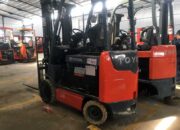
 FAQs about Forklift Battery and Electrical System
 1. What is the average lifespan of a forklift battery? The average lifespan of a forklift battery is typically between 4-6 years for lead-acid batteries, depending on usage, working conditions, and maintenance. Gel batteries have a shorter lifespan, around 3-5 years. 2. How should I maintain my forklift battery? To maintain your forklift battery, you should regularly check and top up the water level, clean the charging terminals and battery poles, ensure full charging without overcharging, regularly check electrolyte density and cell voltage. 3. How can I maximize the lifespan of my forklift battery? To maximize the lifespan of your forklift battery, you should use the correct capacity battery, follow proper installation procedures, maintain full charging, avoid deep discharging, perform regular maintenance, adjust electrolyte density as needed, and keep it clean. 4. What factors affect the lifespan of a forklift battery? The main factors that affect the lifespan of a forklift battery include initial battery quality, using the correct capacity battery, charging and discharging methods, operating temperature conditions, maintenance and storage practices, and working conditions (vibration, humidity, dust). 5. When should I replace my forklift battery? Typically, you should replace your forklift battery after 4-6 years of use depending on the quality of the battery, usage level, and maintenance conditions. If the battery experiences severe performance degradation before that time frame, it should be replaced earlier. Monitoring electrolyte density can help evaluate remaining battery life. 6. When and how should I charge my forklift battery? You should charge your forklift battery after each work shift. The best method is to use an automatic three-stage controlled charger (bulk-float-equal) with periodic water replenishment for lead-acid batteries. The charger should provide the appropriate current and voltage according to the battery’s requirements. 7. What causes and how to fix a swollen forklift battery? Causes: Excessive heat generated during charging, resulting in hydrogen and oxygen gas buildup. Heat causes expansion of the welding circuit, leading to battery case rupture. Solutions: Check and clean the charger, ventilation system. Replace the damaged battery case. Follow proper charging procedures. Purchase batteries with good quality. 8. How to prevent battery gassing in forklifts? To prevent battery gassing, avoid discharging below 80% of rated capacity, avoid hot charging at high temperatures, maintain proper electrolyte density, perform regular equalizing charges, and use an automatic three-stage controlled charger. 9. Which type of battery is suitable for different types of forklifts? The choice of battery depends on the motor power requirement, lifting capacity, continuous usage time, and working environment conditions. Lead-acid batteries are suitable for high-power forklifts with long working hours. Gel batteries are suitable for small-capacity forklifts used internally. 10. Evaluate the advantages and disadvantages of gel batteries compared to lead-acid batteries. Advantages of gel batteries: No acid spillage, low maintenance, no fumes emission, safer and environmentally friendly. Disadvantages: Shorter lifespan, higher cost, cannot replenish water levels, prone to overheating. Advantages of lead-acid batteries: Lower cost, longer lifespan; however, they require more maintenance and have a risk of acid leakage. 11. How often should I replace distilled water in lead-acid batteries? Distilled water in lead-acid batteries should be replaced every 6-12 months depending on evaporation levels. The replacement frequency may be shorter if the forklift operates in hot and dusty environments. Regularly check water levels to determine when it needs replacement. 12. What are the standards for distilled water used in forklift batteries? Distilled water used in forklift batteries must meet high purity standards (≥99.5%), be free from large impurities, and have a resistivity of ≥5 MΩ.cm. Water that does not meet these standards can corrode battery components, create deposits, and reduce performance. 13. What causes and how to fix a short-circuited forklift battery? Causes: Damaged or corroded wires causing ground contact and short circuits. Dirt and high humidity inside the battery can also cause shorts. Solutions: Check and repair damaged wires. Clean the battery to remove dirt. Maintain proper humidity levels. Replace the battery if it is too old. 14. How should I maintain electrical components on a forklift? Electrical components should be regularly maintained, including checking and cleaning the charger, control circuitry, motor, conductors, and tightening all electrical connections. Ensure effective cooling ventilation systems. Check and replace any faulty components to ensure electrical safety. 15. What are the signs of electrical system issues in a forklift? Signs of electrical system issues in a forklift include slow movement or failure to reach desired speed, underperforming motor power, abnormal battery heat or swelling, smoke smell from electrical devices, unusual noise from motor or drivetrain, malfunctioning warning lights or display screens. 16. What does regular maintenance of the forklift’s electrical system involve? Regular maintenance of the forklift’s electrical system includes checking and cleaning the battery, replenishing distilled water, measuring electrolyte density; checking and cleaning the charger; inspecting control circuits; motors; conductors; tightening all electrical connections; ensuring effective cooling ventilation systems; checking and replacing faulty components to ensure electrical safety.


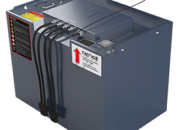

Cho mình hỏi, mấy chiếc xe nâng pallet điện này tình trạng bình acqui còn mới không? Ngoài xe nâng pallet điện, bên công ty có xe nâng pallet bằng tay không?
Chào bạn Hùng!
Phần lớn các dòng xe nâng pallet điện tình trạng Acqui còn sử dụng tốt, Còn những xe Acqui cần thay mới hoặc xuống cấp sẽ có giá khác
Còn xe nâng Pallet tay hiện chúng tôi cũng là nhà phân phối cho một số thương hiệu. Nếu có nhu cầu bạn hãy liên lạc với chúng tôi
Thân
Xe nâng Pallet này bên mình còn xe sẵn không? Giá bán thế nào? Xe bán có bảo hành không?
Chào anh Tuấn Hải
Vâng dòng xe nâng Pallet hiện chúng tôi còn nhiều, đa số là xe điện Linde, xe bán có bảo hành anh nhé
Nếu anh muốn xem xe vui lòng ghé tại phòng trưng bày tại Bình Dương nhé
Thân mến!