Forklift Mitsubishi

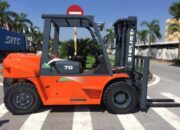
Mitsubishi Forklift forklifts with internal combustion engine, using diesel fuel include: 1.5 ton diesel forklift, 2.5 ton diesel forklift, 3.5 ton diesel forklift, forklift truck 5 ton internal combustion engine, 3 m lifting height, fork allows for expansion and contraction

The cabin system is designed to be comfortable, with a wide field of view, and the power steering allows for light and convenient control. The lifting post and fork use special steel to enhance durability and prevent twisting deformation after 3-4 years of use.

The hydraulic buffer system helps the mast to lower and lower smoothly. The car also has a front-wheel transmission system using a new gearbox with fast transmission effect, low vibration and an additional transmission oil cooling system to help prolong the life of the gearbox and reduce heat. The spindle bearing uses a type that has a life expectancy of twice as long as that of a conventional type.

Due to the compact structure of the vehicle, the rear view of the vehicle is wider than that of the old car, when reversing, the driver can see easily.

The cooling system is larger and has an integrated oil cooler for the gearbox to help the car work well in hot ambient temperatures like in Vietnam.

Samcovina sells 100% new and used forlift forklifts
 

Leave a Reply

Your email address will not be published. Required fields are marked *

Related posts

  • mua-xe-nang-qua-ngan-hang Buying and selling forklifts with installment payments through a loan bank

    Buy and sell forklifts with installment payments through the bank You want to buy a forklift through the bank? Not sure what this should include? The article below will help you understand the basics. Some information when buying a forklift through a bank in the form of installment payment Today, with the rapid development of […]

  • Tips to Reduce Warehouse Forklift Spare Parts Costs for Businesses

    Tips to Reduce Warehouse Forklift Spare Parts Costs for Businesses In the context of constantly fluctuating logistics and warehouse operating costs, effective fleet management of forklifts (Reach Trucks, Pallet Trucks, Forklifts, etc.) has become a mission-critical challenge for businesses. In practice, spare parts replacement costs typically account for 15% to 25% of total forklift operating […]

  • dong-co-volvo-xe-nang Comprehensive Solutions for Volvo Forklift Engines

    Comprehensive Solutions for Volvo Forklift Engines: Supply, Replacement, and Repair   In today’s industrial age, forklifts play a crucial role in transporting and handling goods in warehouses, factories, and ports. Ensuring continuous and efficient operation requires the use of high-quality engines. Among the renowned brands in industrial engines, Volvo stands out for its reliability and […]

  • hu-thuy-luc-xe-nang Common Hydraulic System Failures in Forklifts and How to Handle Them

    Here are some common failures in the hydraulic system of forklifts and the corresponding repair solutions: 1. Oil leakage: Oil leakage is a common issue in hydraulic systems. The causes can be a broken hose, poor sealing, or damaged components. To repair, identify the cause of the leakage and replace the damaged parts or repair the hose. 2. Loss of pressure: If the forklift does not have enough pressure to lift or hold loads, it may be due to a malfunctioning control valve or other issues in the system. Check and repair the control valve, inspect other components such as pumps, relief valves, and hoses to find the cause of pressure loss. 3. Inoperability: Forklifts may not operate due to various reasons, including a non-starting motor, malfunctioning control valve, or damaged components. Inspect and repair any faulty components, check power supply, and ensure all electrical connections are correct. 4. Unusual noise: If you hear strange noises from the hydraulic system, there may be issues with the pump, valve, or hoses. Inspect and repair any damaged or worn-out components and ensure all hoses are securely connected. 5. System instability: If the forklift cannot maintain its position or oscillates while lifting loads, it may be due to a malfunctioning relief valve or improperly adjusted pressure. Check and repair the relief valve, inspect pressure levels, and adjust if necessary. 6. Loss of lifting function: If the forklift cannot lift or lower loads properly, it may be due to a malfunctioning control valve or pump. Check and repair the control valve, inspect the pump and other components to determine the cause of loss of lifting function. 7. Slow response or unresponsiveness: If the forklift moves slowly or does not respond when controlled, it may be due to a stuck control valve or pump issues. Check and clean the control valve, inspect the pump and other components to resolve this issue. 8. Excessive pressure: If the pressure in the hydraulic system is too high, it can cause oil leakage or damage other components. Check and adjust the pressure in the system according to manufacturer’s instructions. 9. System vibration: If the forklift vibrates while moving or lifting loads, it may be due to worn-out or loose components. Inspect and repair any damaged components, ensuring all connections are tightened. 10. Instability during lifting: If the forklift cannot maintain its position or is unstable while lifting loads, it may be due to a malfunctioning relief valve or control valve. Check and repair the relief valve, inspect the control valve, and adjust if necessary. 11. Instability during movement: If the forklift is unstable or skids during movement, it may be due to steering system or wheel issues. Inspect and repair the steering system, check and adjust wheels to ensure safe and stable forklift movement. 12. Loss of control: If you cannot control or maneuver the forklift accurately, it may be due to a malfunctioning control system or steering component. Inspect and repair any faulty components, check and adjust the control system for optimal control ability. 13. Overheating: If the hydraulic system becomes excessively hot after a period of use, it may be due to insufficient oil flow or ineffective cooling. Check and clean oil filters, inspect and adjust oil flow to keep the hydraulic system working well without overheating. 14. Inconsistent operation: If one part of the hydraulic system operates inconsistently compared to others, it may be due to a malfunctioning control valve or damaged component. Check and repair the control valve, inspect and replace any faulty components to ensure consistency in system operation. 15. Inoperability after a period of use: If the forklift does not operate after a period of use, it may be due to worn-out components or the need for lubrication. Inspect and repair any damaged components, lubricate necessary parts to ensure the system always operates well after each use. 16. Inoperability after startup: If the forklift does not operate after startup, it may be due to weak batteries or electrical system issues. Check and recharge batteries, inspect and repair electrical components to ensure the system operates well after startup. 17. Unresponsiveness when lifting loads: If the forklift does not respond when attempting to lift a load, it may be due to a malfunctioning control valve or pump. Check and repair the control valve, inspect and replace the pump if necessary to ensure proper operation when lifting loads. 18. Inoperability after a collision: If the forklift experiences a strong collision and then does not operate, it may be due to damaged components or lost connections. Inspect and repair any damaged components, reestablish connections if necessary. By addressing these common hydraulic system failures in forklifts promptly and effectively, you can ensure smooth operations and maintain safety in your workplace.

  • pin-cho-xe-nang-hang Lithium Batteries for Cold Storage Forklifts Why Are They the Optimal Choice in Sub-Zero Temperatures?

    Lithium Batteries for Cold Storage Forklifts: Why Are They the Optimal Choice in Sub-Zero Temperatures? Cold storage and frozen warehouse environments (with operating temperatures ranging from 0°C down to -30°C) are considered among the harshest working conditions for material handling equipment. The severe performance degradation of forklifts powered by conventional lead-acid batteries has become a […]

Gọi ngay
Chat Zalo