Establish and implement a forklift driver training program

Forklift driver training program

Any forklift driver understands the importance of forklift driver training programs and it is these training programs that are one of the essential elements for a successful forklift operation. labour. In particular, effective safety forklift driver training programs always keep training attention all year round. The program always improves operational efficiency and profitability in manufacturing plants and warehouses.

Some key considerations and best practices help establish and implement a forklift driver training program.

Set up a toolkit.

Training programs not only train forklift drivers to operate large equipment, but also give learners the tools to make the right decisions while driving. This helps drivers better understand the environment in which they are driving, working and providing awareness of all situations where the work environment is always in the warehouse.

Get support from above.

A training program should be supported and promoted by the company’s management team. If the program is not supported by a leadership team, employees will not receive serious training.

Follow the standards.

The training program must conform to all government regulations as well as company standards. Since industry standards can change over time, it is important to maintain the training program to keep it in line with the latest industry standards.

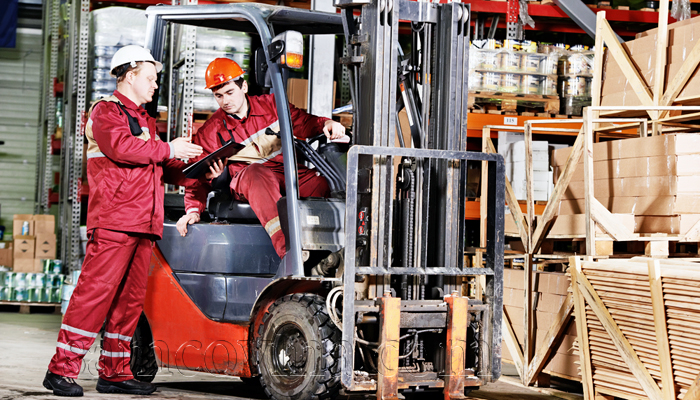
Facilitate programs to be performed directly on specific types of forklifts.

Using training programs that are specific to the specialized forklift equipment you wish to operate will assist employers in meeting their obligation to train cargo forklift operators.
lai xe nang

Things to keep in mind:

– Learning never ends. Training programs should be in place, aimed at reminding operators to help keep training at the forefront of daily operations.

– Use knowledgeable instructors. Those who facilitate training should be experienced not only in operating forklift trucks but also in conducting this type of training, as well as in assessing operators and their competence.

– Coach training. Implementing coach training programs can ensure that trainers are properly trained and can conduct the program according to company standards. Typically, instructors can travel to a forklift company’s headquarters and complete a multi-day training program. This helps ensure coaches are properly trained on the specific cars the company uses and have up-to-date documentation.

– See improved profitability. Often overlooked, good forklift operator training programs are imperative to profitability. Educating operators on how to properly use equipment will save money in the long run, avoiding the cost of product failure later on.

In general, a good training program should be part of a comprehensive truck upgrade program that focuses not only on the training but also on the selection and maintenance of the truck and base equipment.

If every business or operator has best practice in mind when establishing a forklift operator training program, operators will have the tools and training needed to do so. efficiently operate and dispatch forklifts

 ,

Leave a Reply

Your email address will not be published. Required fields are marked *

Related posts

  • ac-qui-xe-nang Measures to improve the life of forklift batteries

    How to extend the life of forklift batteries? The electric forklift charger when charging needs to be equipped with a meter that displays the vehicle lights in normal circumstances. When the battery power drops from 70% to 100%, that is also the best charging time. When the electric forklift’s power source is short, it must […]

  • xe-nang-rut-cong Forklift rental, container loading and unloading trucks

    Forklift rental and container loading and unloading service Container forklifts are one of the essential vehicles in the management and arrangement of goods in the warehouse. In order not to have to raise a large amount of money to buy a car, choosing a forklift truck rental service is the best option for businesses. And […]

  • cty sua xe nang Container Reachstacker Repair Services at Ports – 5 Key Criteria for Choosing a Reliable Provider

    Container Reachstacker Repair Services at Ports – 5 Key Criteria for Choosing a Reliable Provider In the logistics supply chain, if seaports are considered the lifeline, then container handling equipment such as reachstackers and empty container handlers are the most critical assets. Even a minor fault that causes equipment downtime can disrupt the entire yard […]

  • xe-nang-2-tan Forklift 1.5 tons, tons, 2.5 tons, 3 tons

    Forklift 1.5 tons, tons, 2.5 tons, 3 tons – Which one is suitable for your needs? Forklifts are widely used in various fields such as factories, warehouses, ports… for transporting and stacking goods. However, choosing a forklift with the right lifting capacity is not a simple task. Choosing a too small forklift will cause overload, danger and inefficiency. On the other hand, choosing a too large forklift will result in cost waste and space inefficiency. So in the segments of forklifts 1.5 tons, 2 tons, 2.5 tons and 3 tons, which one should you choose to best suit the actual conditions of your business? Factors determining the appropriate lifting capacity: Type and size of goods being transported The first important factor to consider is the type of goods and their weight, size. If most of the goods are in the range of 1-1.5 tons, forklifts with capacities of 1.5-2 tons will be suitable. If you frequently transport heavy materials as steel, wood… then you should choose a forklift from 2.5 tons onwards. In addition, the size of the goods affects the choice of forklift because each type of forklift has different lifting heights and dimensions. Operating environment of the forklift The operating environment is also an important factor to consider when choosing a forklift. In closed warehouses or workshops, lightweight forklifts like 1.5-2 tons can be used to move around easily. On the other hand, if operating outdoors, heavy-duty forklifts like 2.5-3 tons should be chosen to meet load-bearing requirements and operate on rough terrain. For narrow operating spaces, it is best to avoid large cumbersome forklifts. Load capacity and distribution capability of the forklift Each type of forklift has different load limits according to its design. Some types are designed to carry loads evenly across their floors while others are only suitable for concentrated loads. Therefore, you need to understand the load capacity of the forklift and consider how the actual will be distributed. Furthermore, it is necessary to consider production scale and future business expansion plans. If there are plans to expand in scale in the future, it is better to choose a higher load capacity forklift to meet future needs and avoid investing in new equipment. Comparing different segments of forklifts based on lifting capacity: 1.5-ton Forklift Advantages: Low cost, flexible movement in narrow spaces. Disadvantages: Only suitable for transporting light goods under 1 ton. Recommendation: Choose this type if operating space is limited and mainly transporting goods under 1 ton weight. 2-ton Forklift Advantages: Versatile; can transport various types of goods from light to heavy within a load range of 1-2 tons. Disadvantages: Higher cost than a 1.5-ton model; not suitable for loads over 2 tons. Recommendation: A popular choice among small and medium-sized warehouses and manufacturing facilities; suitable for various heavy goods weighing between 1-2 tons such as paper rolls, fabrics, food items… 2.5-ton Forklift Advantages: Superior load capacity compared to lower models; can lift heavy loads. Disadvantages: Requires larger operating space. Recommendation: Ideal choice for large-scale warehouses or manufacturing facilities requiring transportation of heavy goods such as crates or construction materials weighing between 2 – 2.5 tons; especially suitable near coastal areas or ports due to its strong load-bearing capabilities. 3-ton Forklift Advantages: High load capacity; efficient transportation of heavy items. Disadvantages: High cost; difficult maneuverability in small spaces. Based on an analysis of factors influencing choice and comparing advantages/disadvantages among different segments mentioned above: If mainly transporting light goods under 1 ton weight in limited operating spaces – opt for a 1.5-ton model but consider future business expansion plans before making a decision. For shops or small-medium manufacturing facilities needing transportation within a range from light (under) up-to medium-heavy (around) two tonnes – go with a two-ton model which offers cost savings while meeting requirements effectively. For large factories or warehouses frequently moving heavy items like steel beams or cement bags weighing between two-three tonnes – choose a two-and-a-half ton model ensuring productivity & safety standards are met efficiently. In cases where handling super-heavy materials over two-and-a-half tonnes becomes necessary – invest in three-ton models after careful consideration due to their higher load-bearing capabilities. Additionally recommended selecting models with slightly higher loading capacities (10-20%) than anticipated maximum loads prevent overloading ensuring safety measures are maintained properly while considering financial capabilities when making investment decisions possibly opting rental services if regular usage isn’t required saving costs effectively. Moreover once selecting an appropriate model ensure following correct operational procedures maintenance schedules recommended by manufacturers prolonging equipment lifespan significantly catering special transportation needs considering specialized models optimizing operations efficiently.

  • reacchstacker cu nhap khau Experience in Selecting Container Handlers for Logistics Companies

    Experience in Selecting Container Handlers for Logistics Companies In the logistics supply chain, container handling equipment such as Reachstackers or Empty Container Handlers are often considered the “heart” of port terminals and container yards. Investing in a container handler is not merely purchasing equipment; it is a strategic decision that can impact a company’s operations […]